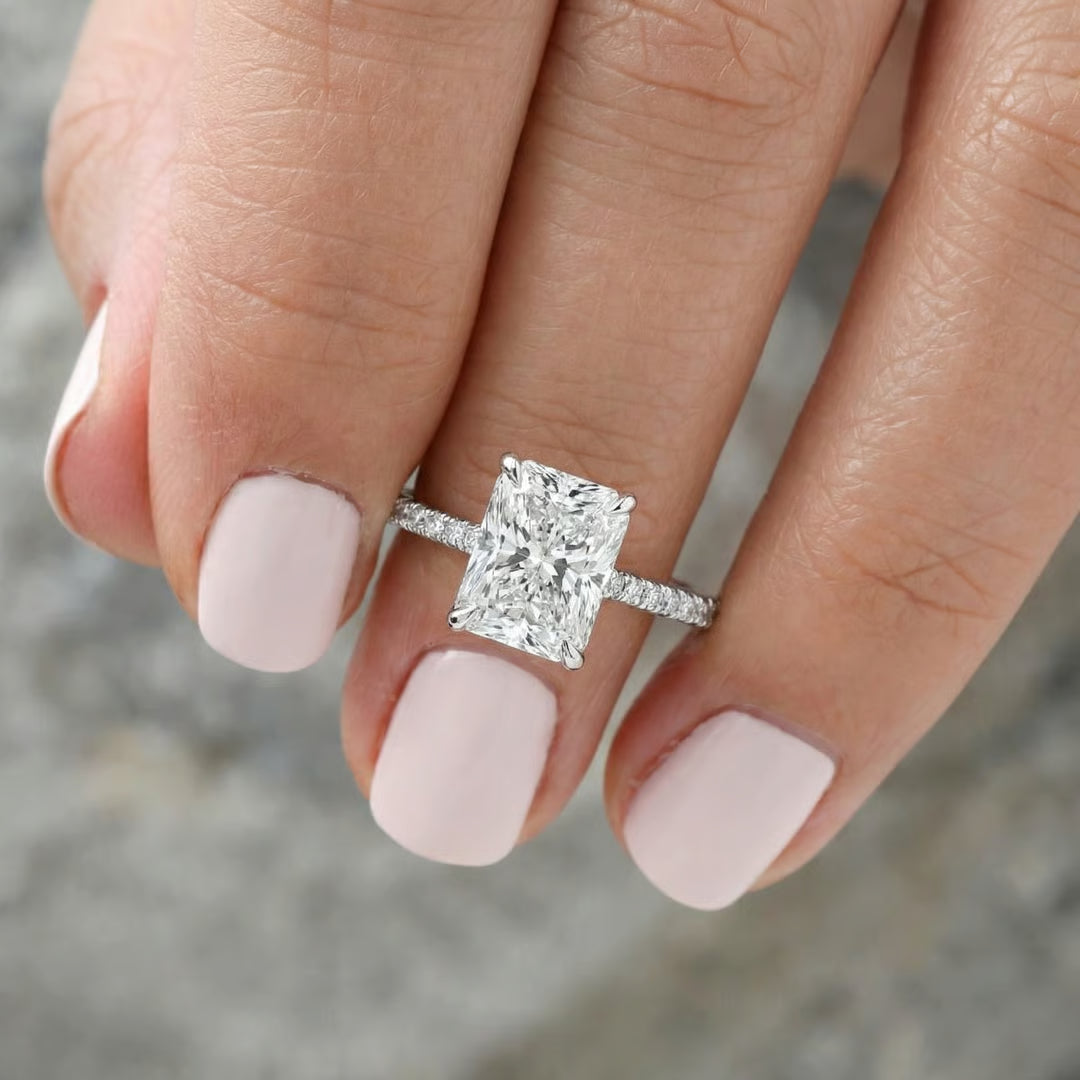
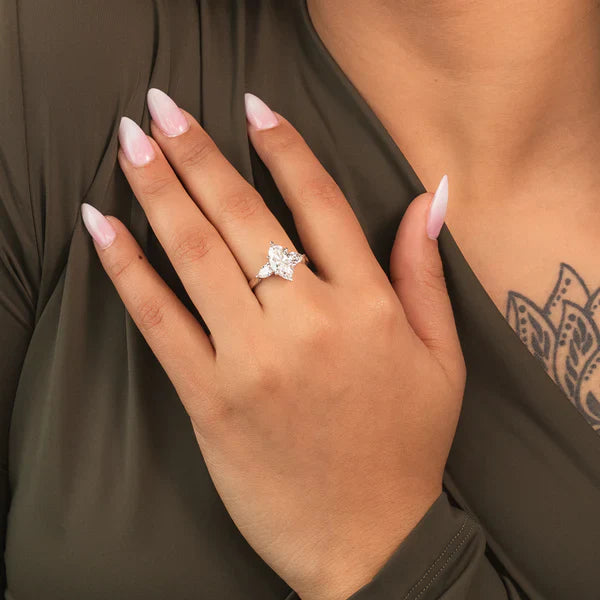
Are Lab Grown Diamonds Real Diamonds?
Yes. A lab grown diamond is real diamond, identical in chemistry, crystal structure, and optics to one pulled from the earth. The only difference is where it grew.
The author is the founder of Draco Diamond. The physical and optical properties cited here are standard gemological constants. Every Draco piece is IGI certified, E to F color, VS2 clarity or better, and the report number is verifiable free at IGI.org.

Mohs hardness: diamond versus the simulants
Lab grown and mined diamond share the top of the scale at 10. Moissanite and cubic zirconia are softer, different materials.
Source: Mohs hardness scale, standard gemological constants. Diamond is the hardest known natural material at 10.
Are lab grown diamonds real diamonds?
Yes. A lab grown diamond is a real diamond by every measure science uses to define one. A diamond is a crystal of pure carbon arranged in a cubic lattice, and a lab grown stone has exactly that, the same element and the same atomic structure as a stone formed in the earth. Because the structure is identical, the properties are identical. Both rate 10 on the Mohs hardness scale, the top of the scale and the hardest known material. Both share a refractive index near 2.42, the figure that governs how light bends and returns as brilliance. Both share the same dispersion that splits white light into fire, and the same density. There is no optical or physical test of the material itself that separates the two.
The single difference is origin. One grew in a controlled chamber over weeks. The other formed under heat and pressure deep underground over a span that is geologic, not human. Origin is a fact of history, not a property of the stone. It does not change what the crystal is. This is why every major gemological authority classifies a lab grown stone as diamond, not as an imitation of one.
"A lab grown diamond is not a copy of a diamond. It is diamond. Same carbon, same lattice, same light. The only thing that changed is the address where it grew."
Garrett McMartin, Founder, Draco Diamond
How is a lab diamond actually grown?
Two methods produce gem quality diamond, and both build the identical crystal. HPHT, high pressure high temperature, recreates the conditions found deep in the earth: a carbon source is pressed and heated around a tiny diamond seed until carbon atoms bond onto it layer by layer. CVD, chemical vapour deposition, places a seed in a chamber filled with a carbon rich gas; energy breaks the gas apart and carbon settles onto the seed and crystallizes. Either way the output is the same material that forms underground, finished in weeks rather than across geologic time.

The growth method leaves microscopic traces, such as strain patterns or trace elements, that a gemological laboratory can read under specialized equipment. Those traces let a lab confirm a stone is lab grown. They do not make it any less diamond, in the same way a birth certificate records where a person was born without changing what they are.
Are lab diamonds the same as moissanite or cubic zirconia?
No, and this is the distinction that matters most. Moissanite is silicon carbide. Cubic zirconia is zirconium dioxide. Neither is carbon, neither has the diamond crystal structure, and neither is a diamond. They are simulants: different materials chosen because they look something like diamond to the eye. A lab grown diamond is not in that category. It is the same material as a mined diamond, so calling it an imitation is a category error.
The properties make the gap clear. Diamond rates 10 on the Mohs scale; moissanite is about 9.25 and cubic zirconia about 8, so both scratch and dull where diamond does not. Moissanite is markedly more dispersive, which is why it throws a rainbow flash that trained eyes read as not diamond. Cubic zirconia is far denser and softer. These are different stones. A lab diamond shares none of these gaps with mined diamond because it is the same stone, grown elsewhere.

How do experts verify a diamond is real?
A standard handheld diamond tester measures thermal or electrical conductivity. A lab grown diamond reads as diamond on that tester because it is diamond; only a stone like moissanite or cubic zirconia can trip it. That means the everyday tester confirms real diamond but cannot, by itself, separate lab grown from mined. To tell those two apart you need a gemological laboratory with specialized instruments that read the microscopic growth signatures. The eye cannot do it, and neither can a jeweller without that equipment.

The reliable proof of what you own is the certificate. Both IGI and GIA grade lab grown diamonds and state laboratory grown on the report alongside the carat, color, clarity, and cut. Each report carries a number you can check free at IGI.org. That report is the document that settles the question in writing, not a backroom test.
What does Draco certify?
Every Draco stone is a real, IGI certified lab grown diamond, E to F color and VS2 clarity or better. The certificate is included with every order, and on request we will confirm the report details of a specific stone before it ships so you can verify the number at IGI.org yourself. Draco is a Canadian brand, globally sourced, and the grading is done by an independent laboratory, not by us. The point is simple: you are buying a real diamond with the paperwork to prove it, at a price that reflects how it was made rather than how it was marketed.
To see certified stones set in rings, browse the women's rings collection or build your own with the ring builder.
Lab grown diamond FAQ
Are lab grown diamonds real diamonds?
Yes. A lab grown diamond is pure crystallized carbon with the same crystal structure as a mined diamond, so it shares the same hardness of 10 on the Mohs scale, the same refractive index of about 2.42, and the same dispersion and density. The only difference is that it was grown in weeks by HPHT or CVD rather than formed underground over geologic time. Both are diamond.
Are lab diamonds fake?
No. Fake would mean a different material imitating diamond, like cubic zirconia or moissanite. A lab grown diamond is the same material as a mined diamond, identical in chemistry, structure, and optical properties. It is real diamond, simply grown rather than mined.
Can a jeweler tell a lab diamond from a natural one?
Not by eye and not with a standard tester. Because the material is identical, separating lab grown from mined requires a gemological laboratory with specialized equipment that reads microscopic growth signatures. The everyday proof is the certificate, which states laboratory grown and is verifiable free at IGI.org.
Do lab diamonds pass a diamond tester?
Yes. A standard diamond tester reads thermal or electrical conductivity, and a lab grown diamond passes as diamond because it is diamond. The tester confirms a stone is real diamond but cannot distinguish lab grown from mined; that takes laboratory instruments.
Are lab diamonds the same as moissanite or cubic zirconia?
No. Moissanite is silicon carbide and cubic zirconia is zirconium dioxide; both are different materials that only imitate the look of diamond. A lab grown diamond is crystallized carbon, the same material as a mined diamond, with the diamond crystal structure and properties they do not share.
References
- Mohs hardness scale, standard gemological constant. Diamond is the hardest known natural material at 10; moissanite about 9.25; cubic zirconia about 8.
- Refractive index of diamond, approximately 2.42, standard gemological constant governing brilliance.
- International Gemological Institute, lab grown diamond reports verifiable at IGI.org. Accessed June 2026.
- Draco Diamond published catalog, dracodiamond.com. Accessed June 2026.
A real diamond, with the paperwork
Every Draco piece is IGI certified, E to F color, VS2 clarity or better, in 10K to 18K gold, platinum, or silver. The certificate is included with every order. Free insured worldwide shipping, free ring resizing, 30 day returns, Lifetime Authenticity Guarantee.