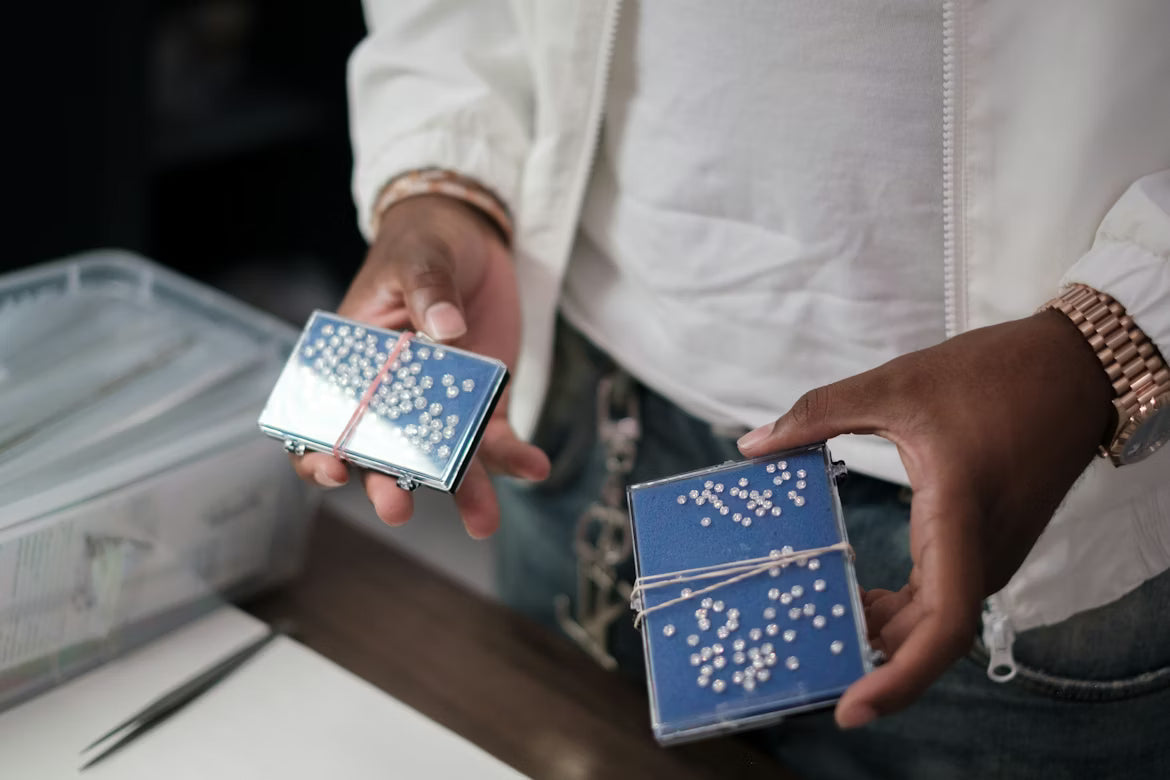
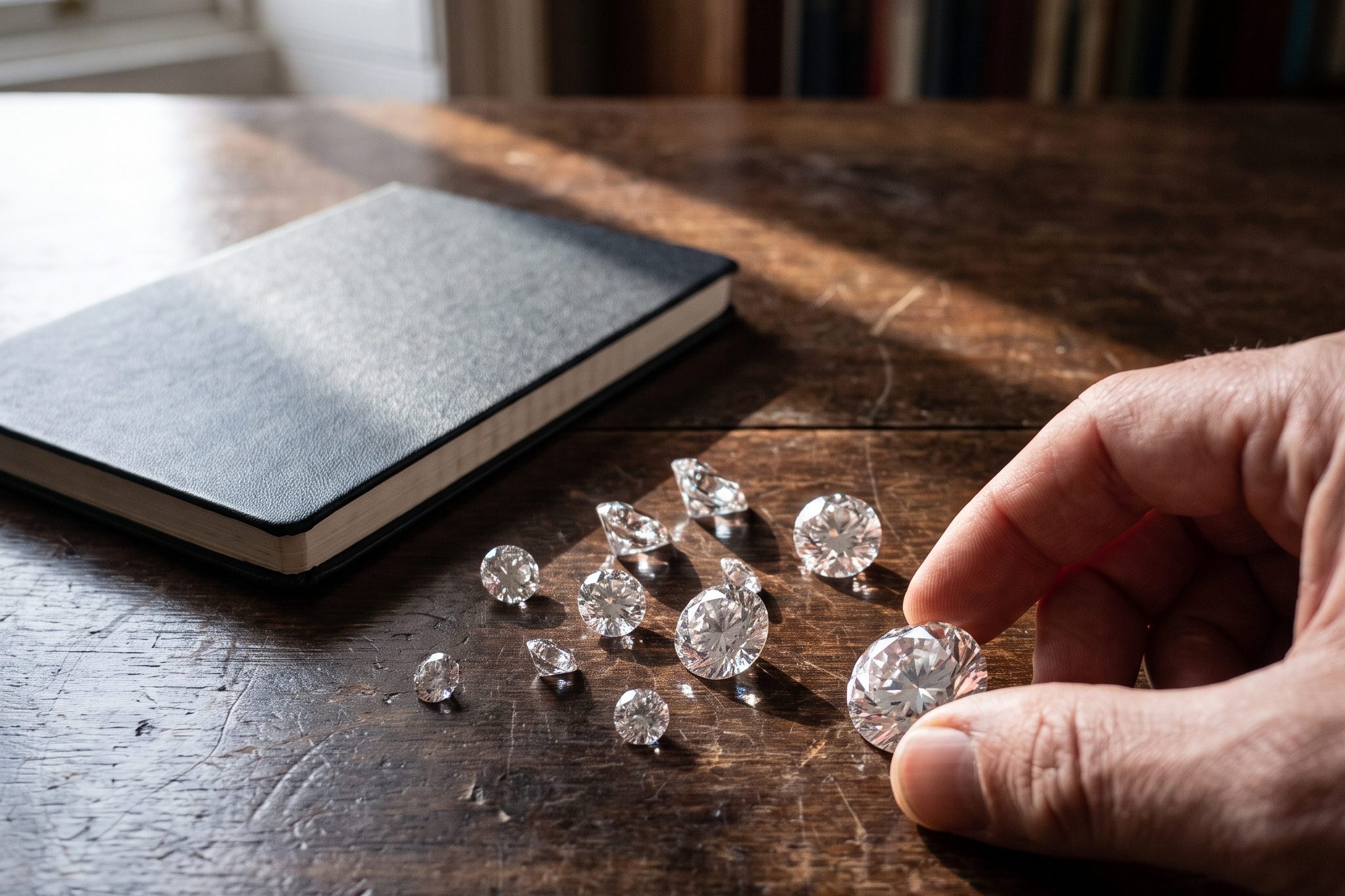
The Rejection Report: Why 12 of Our Last 100 Certified Stones Never Made the Catalog
Every one of the 100 arrived with a legitimate IGI certificate at E to F color, VS2 or better. The certificate did its job on every stone. Twelve still did not list. This report explains the second filter.
The author is the founder of Draco Diamond. The 100 stone dataset is Draco's own catalog review record. Every IGI report referenced is verifiable free on the IGI public database at IGI.org.

What is the rejection report?
A count of catalog decisions. Of the last 100 certified stones reviewed for the Draco catalog, 88 were listed. Twelve were not. Every one of the 100 arrived with a legitimate IGI certificate at E to F color, VS2 clarity or better. The certificate did its job on every stone. The review that follows it is a second, narrower filter, and this report explains what that filter looks for and why 12 stones stopped there.
Every stone that reaches the Draco review is already IGI certified at E to F color, VS2 or better. That is the minimum for consideration, not the deciding vote. After certification, each stone is reviewed further against the same set of criteria, and stones that sit at the weak end of their bands are not listed. Over the most recent 100 stones, that second review held back 12. No per stone details are published here, and the count is the entire dataset.
Catalog review outcome, last 100 certified stones
All 100 stones were IGI certified E to F color, VS2 or better before the review began.
Draco Diamond catalog review record, most recent 100 stones, July 2026.
Is the certificate the problem?
No. IGI certification is accurate and rigorous for what it measures. Every one of the 100 certificates was correct.

A grading report assigns color, clarity, cut, and carat weight to defined bands, and IGI does that work with discipline and consistency. Draco certifies with IGI across the entire catalog for exactly that reason. What a certificate is not designed to do, and what no grading document anywhere is designed to do, is rank a stone within its band. E color is a range. VS2 is a range. Excellent cut is a range. Certification tells you which band a stone occupies. It does not tell you whether the stone sits at the strong end or the weak end of that band. That is not a flaw in IGI. It is the boundary of what certification is built to answer, and it is where a seller's own review begins.
"The certificate is the floor, not the finish line. Twelve of 100 stones meeting the floor on paper were still not listed."
Garrett McMartin, Founder, Draco Diamond
What does the review look at after certification?
Four qualities that live inside the bands, not on the report. Each one is visible in hand.

Excellent is a band, not a point. Two excellent cut rounds can differ in facet precision and proportion balance, and the difference reads as light return. One stone is crisp. The other is slightly flat. The review keeps the crisp one.
Fluorescence is recorded on the certificate, and the review takes it further: how the stone actually presents under daylight. Where the strength deadens light return or dulls how the stone faces up, the stone is not listed.
A color grade measures depth of color on the standard scale. Some lab grown stones carry a faint blue or gray nuance inside a high color grade. It is common in lab grown material and rarely disclosed at retail. The review checks every stone against a neutral white reference.
Where an inclusion sits matters more than its grade letter. A VS2 with the inclusion tucked at the edge, where a prong can cover it, wears differently from a VS2 with the same significance centered under the table. The grade is identical. The stone is not.
What does the certificate confirm, and what does the review add?
Two different jobs. The certificate establishes the band. The review decides within it.
| What the certificate confirms | What the catalog review adds |
|---|---|
| Color: E or F, graded on the standard scale | Tint character against a neutral white reference, including faint blue or gray nuance |
| Clarity: VS2 or better, inclusion significance graded | Where the inclusion sits, and whether the stone faces up clean in a setting |
| Cut: graded to a defined band | Light return within the band, under normal room light, not studio loops |
| Fluorescence: strength recorded | How the stone actually presents in daylight at that strength |
| Carat weight: measured precisely | Whether the stone faces up true to its weight |
| Identity: lab grown diamond, verifiable at IGI.org | Whether this specific stone earns a place in the catalog |

Why does a seller's own standard matter?
Because most certified lab grown stones now share one band. The difference between sellers is the line drawn inside it.

GIA stated that more than 95 percent of lab grown stones fall in one narrow color and clarity band, and stopped applying 4Cs nomenclature to lab grown diamonds on October 1, 2025, moving to premium and standard tiers. When nearly every stone certifies into the same band, a certificate alone no longer separates one seller's inventory from another's. Many sellers list whatever certifies. That is a coherent business model, and it explains most of the market. A seller who reviews within the band is running a different model: fewer stones, a slower intake, and a catalog where the weak end of each band has been filtered out before a customer ever sees it. The 12 of 100 figure is what that filter costs. It is also what it buys. For the pricing side of the same structural shift, see the lab diamond retail markup report.
How is the review applied?
The Draco Diamond catalog floor is IGI certified, E to F color, VS2 clarity and better. Every stone considered for the catalog is certified first, then reviewed further against the same four criteria before listing: light performance within its cut grade, tint character against a neutral white reference, fluorescence behavior in daylight, and inclusion placement. The criteria are applied to every stone before listing, no exceptions. Over the most recent 100 stones, 88 were listed and 12 were not.
Every listed piece ships with its IGI certificate; the report can be provided on request before purchase, and verified free at IGI.org. The trust stack behind every listed piece: 30 day returns, Lifetime Authenticity Guarantee, free ring resizing, free insured worldwide shipping to 25 markets, signature on delivery, IGI certified E to F color VS2 and better.
Rejection report FAQ
Does a rejected stone mean the IGI certificate was wrong?
No. Every certificate on all 100 stones was accurate. IGI grading is rigorous for what it measures. The 12 stones were held back for qualities inside their grade bands, such as light performance nuance and tint character, which no grading document anywhere is designed to score.
What happens to the stones that do not make the catalog?
They are returned to the supply chain. They remain genuine, certified lab grown diamonds, and other sellers can and do list stones like them. They simply do not meet the line Draco draws inside the grade band.
Why review stones that are already certified E to F, VS2 or better?
Because each grade is a band, not a point. Certification confirms the band. The review decides where in the band a stone sits: how it returns light within its cut grade, whether it carries a blue or gray nuance, how fluorescence presents in daylight, and where the inclusion sits. Stones at the weak end of their bands are not listed.
Is a 12 percent hold back rate high?
There is no industry benchmark to compare it against, because most sellers do not publish review numbers and many list whatever certifies. The figure is published so buyers can see that a standard above the certificate exists and is applied. It reflects the most recent 100 stones and will move as the next stones are reviewed.
Does this mean certified stones from other sellers are lower quality?
Not necessarily. It means a certificate places a stone in a band and sellers differ in where they draw the line inside that band. GIA stated more than 95 percent of lab grown stones fall in one narrow color and clarity band, so the seller's own review is where inventories diverge. Ask any seller what they check beyond the report.
What should I ask a seller before buying a certified lab grown diamond?
Ask for video under normal room light, the clarity plot or a magnified image showing where the inclusion sits, the fluorescence strength and how the stone presents in daylight, and whether anyone reviewed the stone in hand before listing it. A seller who inspected the stone answers directly.
References
- Gemological Institute of America. GIA to discontinue 4Cs nomenclature for laboratory grown diamonds, moving to premium and standard descriptors; more than 95 percent of lab grown stones fall in one narrow color and clarity band. GIA press statements, gia.edu. Effective October 1, 2025.
- International Gemological Institute. Grading standards and the Verify Your Report public database. IGI.org. Accessed July 2026.
- Draco Diamond catalog review record, most recent 100 stones, dracodiamond.com. July 2026.
88 of the last 100 made the catalog
Every piece in the Draco catalog cleared the same review: IGI certified E to F color, VS2 and better, then reviewed in hand before listing. The stones at the weak end of their bands never reach the page.