


Lab Grown Diamond Price Per Carat 2026: $87 Wholesale, $800 Retail
At wholesale, a one carat lab grown diamond now trades for under $100 a carat. At retail, the same carat sells for about ten times that. This is where the difference goes, size by size.
The author is the founder of Draco Diamond. Wholesale and retail figures are Edahn Golan Diamond Research's, in US dollars. Draco prices are in Canadian dollars at the 10K gold base, read October 13, 2026. Every figure was checked against its source that day.

A lab grown diamond has three prices per carat
A lab grown diamond has three prices per carat, and most quotes blur them. Wholesale is what traders pay for a loose stone. Retail is what a shop charges for the same loose stone. A set price adds the metal, the setting and the work.
Here is each layer for 2026, all from one research house so the figures line up.12 The spread runs from under $100 a carat to $900.
| Price layer | What it is | Per carat |
|---|---|---|
| Wholesale, one carat D VVS | Traders buying a loose, IGI certified stone | $87 |
| Wholesale, round range | One to three carat, IGI certified | $73 to $142 |
| Retail, high grade | A shop selling the same kind of loose stone | $800 to $900 |
| Retail, lower grade | Lower colour and clarity, loose | $200 to $250 |
Set jewellery sits on top of the retail layer, because a ring or a bracelet also prices metal, labour and finishing. Draco's set prices are in section six, in Canadian dollars.
The layer is the first question to ask of any number you are quoted. A wholesale figure makes every retail price look inflated. A loose retail figure makes a set ring look expensive. Neither comparison is fair until the layers match.
Wholesale rose in the third quarter of 2026
After years of quarterly declines, lab grown wholesale prices moved up. One to three carat rounds rose about 2 percent from the second quarter of 2026 to the third. Three carat stones led, up 7.5 percent.
| Category | Change on the quarter |
|---|---|
| One carat rounds | Up 1.3% |
| One and a half carat rounds | Down 3.0% |
| Two carat rounds | Up 2.3% |
| Three carat rounds | Up 7.5% |
| Fancy and square shapes | Up more than 7.5% |
| One to three carat rounds, overall | Up about 2% |
The year on year picture is still down. Round prices sit 9 percent below the third quarter of 2025, and two carat rounds 20 percent below. The wholesale index is down 10 percent on the year and 92 percent since tracking began in July 2018.1
The slowdown was visible earlier. In the last quarter of 2025 wholesale fell 4.7 percent, the smallest quarterly drop since lab grown diamonds reached the market, after a 26 percent fall over the year.3
The research house reads the turn as possible stabilisation, not a boom. Growers are holding rough prices steady and in some cases raising them, and larger manufacturers now run more of the chain, from growing to setting.1
Demand is part of it. US unit sales of jewellery set with lab grown diamonds rose 25 percent in September, and close to 23 percent so far this year.1
"Wholesale rose 2 percent in the third quarter of 2026. Waiting for the next price drop stopped being a sure thing."
Garrett McMartin, Founder, Draco Diamond
Size has almost stopped costing extra per carat
In 2018 a two carat lab grown diamond cost about two thirds more per carat than a one carat stone at wholesale. By mid 2026 that premium had shrunk to about 6 percent. Size used to carry a price. Now it barely does.
Both stones fell more than 97 percent over the seven years.2 The two carat stone fell further, so the premium for size nearly disappeared.
That changes the maths of trading up. At wholesale, moving from one carat to two once more than tripled the cost of the stone. Today it roughly doubles it.
Set jewellery adds a second effect. Metal and labour are spread over more diamond in a larger piece, so Draco's larger pieces cost less per carat than its smaller ones, as section six shows.

Why does retail cost ten times wholesale?
Retail carries everything wholesale leaves out. A high grade loose lab grown diamond sells for $800 to $900 per carat at retail, about ten times the $87 a one carat D VVS fetched at wholesale in the third quarter of 2026.
Some of that gap is real cost. A retailer pays for showrooms or advertising, holds stock, accepts returns, insures shipments and stands behind the grade. Some of it is margin, and margin is where two shops selling the same certified stone differ most.
Grade moves retail too. Lower grade loose stones sell for $200 to $250 per carat, about a quarter of the high grade price.2 By Draco Diamond's arithmetic, the grade alone can move a one carat quote by more than $500.
The honest test of a retail price is simple. Ask what you are paying per carat, then ask what the grade is. A quote that will not answer both is hiding the margin.

Lab grown costs 82 to 89 percent less than natural
In 2025 a typical one carat round lab grown diamond sold for 82 percent less than a natural diamond of the same size and shape. At two carats the discount was 89 percent. The bigger the stone, the wider the gap.
Lab grown retail prices also fell hard on their own. A popular one carat stone lost more than 76 percent of its retail price between early 2020 and mid 2025, and a two carat stone 80 percent.2
Natural diamonds still charge a steep premium per carat as size rises. Lab grown, as section three showed, barely does. That is why the discount widens from one carat to two.

What a carat costs at Draco, set in gold
At Draco a carat of lab grown diamond costs CAD 433 to CAD 844 once it is set in 10K gold, depending on the piece. The price includes the metal, the setting and the IGI report.
| Piece | Diamond weight | Price | Per carat |
|---|---|---|---|
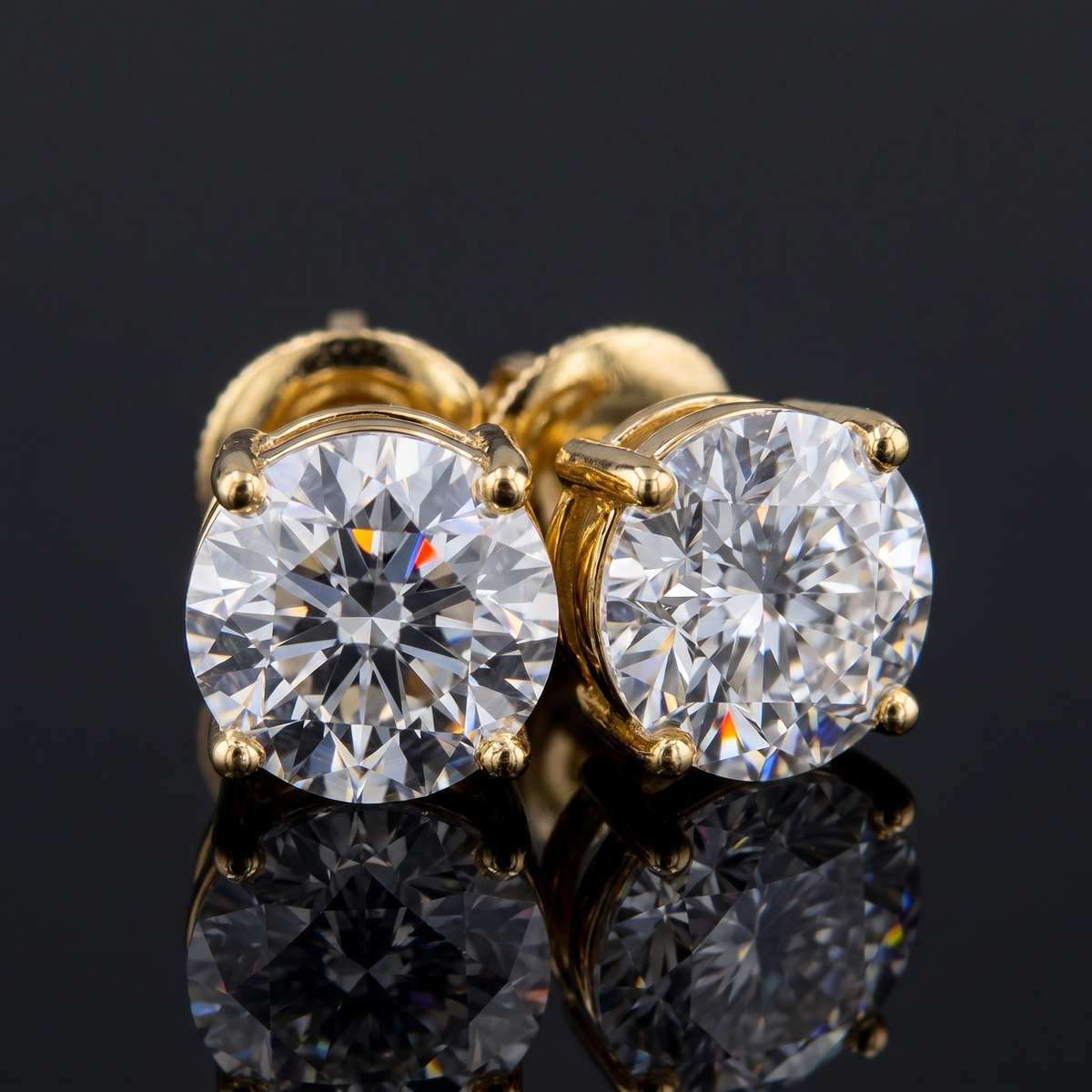
| 1 carat round stud earrings | 1.00 ct, two stones | CAD 711 | CAD 711 |
| 2 carat round stud earrings | 2.00 ct, two stones | CAD 999 | CAD 500 |
| 3 carat round stud earrings | 3.00 ct, two stones | CAD 1,299 | CAD 433 |
| 2.25 carat radiant solitaire ring | 2.25 ct, solitaire, pavé band | CAD 1,899 | CAD 844 |
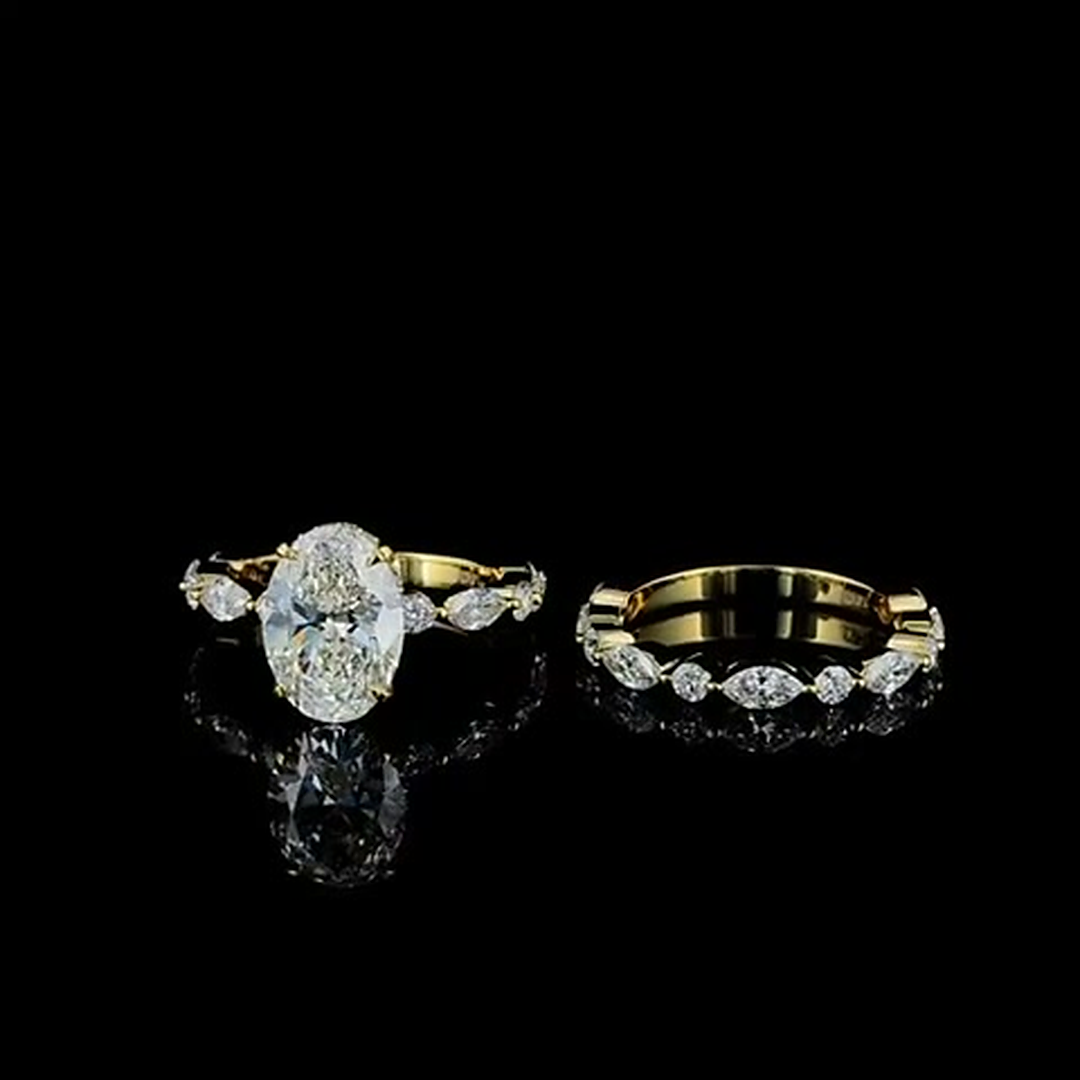
| 5.1 carat oval engagement ring | 5.10 ct, oval, hidden halo | CAD 2,753 | CAD 540 |
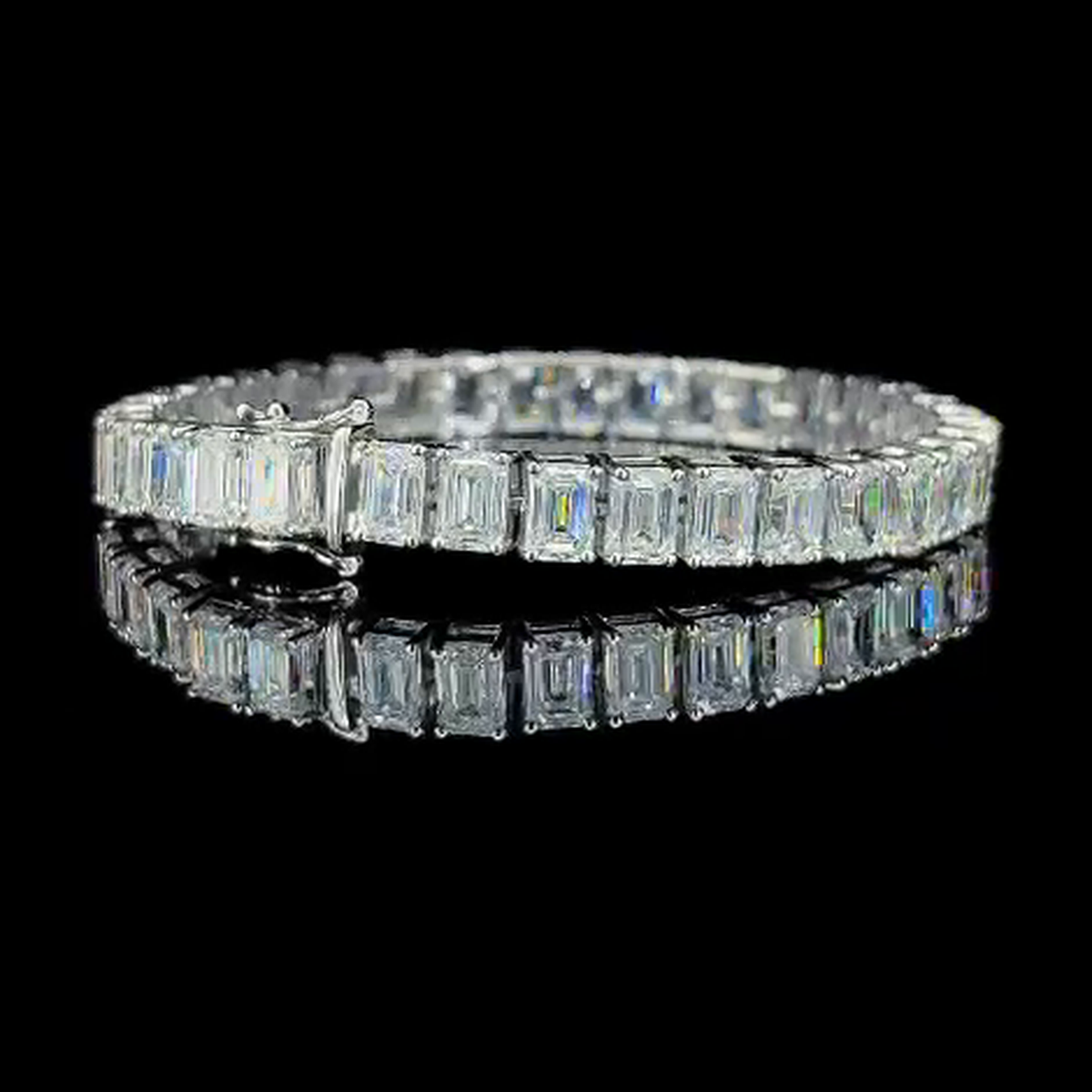
| 3 carat round tennis bracelet | 3.00 ct, many small stones | CAD 2,201 | CAD 734 |
| 5 carat round tennis bracelet | 5.00 ct, many small stones | CAD 2,920 | CAD 584 |
Per carat of diamond weight, Draco set pieces
Canadian dollars, 10K gold base price, read October 13, 2026. Pieces built from many small stones cost less per carat.
Source: Draco Diamond catalogue, October 13, 2026. Price divided by total diamond weight.
Two patterns stand out. Larger pieces cost less per carat than smaller ones, because the metal and the work are spread over more diamond. Pieces built on one large stone, like the radiant solitaire, cost more per carat than pieces built from many small ones.
Even the highest figure here, CAD 844 per carat for a solitaire set in gold, converts to about US$593 at the Bank of Canada rate of October 13, 2026. That is below the US$800 to US$900 a high grade loose stone costs at retail, before any metal. Grades differ by piece, so compare the report.

The pieces are the 1 carat round studs, the 2 carat studs, the 3 carat studs, the radiant solitaire, the 5.1 carat oval, the 3 carat tennis bracelet and the 5 carat round tennis bracelet.5 Each piece ships with its IGI report. The report can be provided on request before purchase and verified free at IGI.org.
How do you judge a price per carat?
Judge a lab grown diamond price per carat with five checks: the layer, the weight, the grade, the metal and the date. Each one can move a quote by more than the stone is worth at wholesale.
Wholesale, loose retail and set jewellery are three different numbers. A per carat figure without its layer cannot be compared with anything.
Total weight spread across many small stones costs less per carat than one large stone. Compare a solitaire with a solitaire and a bracelet with a bracelet.
A lower grade loose stone sells for about a quarter of a high grade one, per carat. Compare colour and clarity on the IGI report first, then compare price.
At Draco, 14K gold adds 18 percent to the 10K base on rings and bracelets, and platinum adds 45 percent. Ask any retailer for the same split.
Wholesale rose about 2 percent in the third quarter of 2026 after years of declines. A price list from last year is no longer a fair yardstick.
Every Draco piece carries 30 day returns, the Lifetime Authenticity Guarantee, free resizing, and free insured worldwide shipping to 25 markets, delivered duty paid with nothing collected at the door, and signature on delivery. Nothing is held in finished inventory, so a stone in another size, shape or grade is a change of brief. Start one at create your piece, or browse the full collection.
For the price history behind these numbers, see the lab diamond price trend report. For the natural comparison in full, the lab grown vs natural price comparison. For reading the certificate, how to read an IGI report.

Price per carat, answered
How much does a lab grown diamond cost per carat?
At retail, a high grade loose lab grown diamond typically sells for $800 to $900 per carat in 2026, and lower grades for $200 to $250, in US dollars. At wholesale, round IGI certified stones traded at $73 to $142 per carat in the third quarter of 2026.
What is the wholesale price of a 1 carat lab grown diamond?
About $87 per carat for a one carat D VVS round in the third quarter of 2026, per Edahn Golan Diamond Research's price list of October 7, 2026. That is a wholesale price between traders, before any retail margin, setting or metal.
Are lab grown diamond prices still falling?
Not at wholesale in the third quarter of 2026. One to three carat rounds rose about 2 percent from the second quarter, led by three carat stones at 7.5 percent. Year on year, round prices are still 9 percent lower.
Does a bigger lab grown diamond cost more per carat?
Barely, at wholesale. In 2018 a two carat stone cost about 67 percent more per carat than a one carat. By mid 2026 the premium was about 6 percent, roughly $85 against $80 per carat.
How much cheaper is a lab grown diamond than a natural one?
In 2025 a typical one carat round lab grown diamond sold for 82 percent less than a comparable natural diamond, and a two carat for 89 percent less. The gap widens with size because natural diamonds charge a steep premium per carat as they get larger.
Why is retail so much higher than wholesale?
Retail covers what wholesale leaves out: grading checks, showrooms or advertising, stock, returns, insured shipping and margin. High grade retail runs about ten times the one carat wholesale rate, which is why the margin is the number worth asking about.
What does a carat of lab grown diamond cost at Draco?
Set in 10K gold, CAD 433 to CAD 844 per carat of diamond weight as of October 13, 2026: CAD 711 for 1 carat round studs, CAD 1,899 for a 2.25 carat radiant solitaire and CAD 2,920 for a 5 carat round tennis bracelet. Every piece is IGI certified.
References
- Edahn Golan Diamond Research, Was the Bottom Reached? Lab-Grown Wholesale Prices Rise in Q3 2026, October 7, 2026.
- Edahn Golan Diamond Research, Lab-Grown Diamond Statistics: Background, Trends, Prices (updated August 2026), accessed October 13, 2026.
- Edahn Golan Diamond Research, Lab-Grown Diamond Wholesale Prices Down 26% in 2025, Signs of Stabilization Emerge, accessed October 13, 2026.
- International Gemological Institute, IGI laboratory grown diamond reports, accessed October 13, 2026.
- Draco Diamond, Draco Diamond catalogue, live prices, October 13, 2026.
Send us a comparable band and we will beat it almost every time
Same IGI certified specification, direct pricing, about half the listed price of Blue Nile and Brilliant Earth on bridal sets (55 percent below at the median, October 2026). Founder reviewed, no obligation, a quote back in one to three business days. Every Draco band is IGI certified, E to F colour, VS2 and better, with 30 day returns, a Lifetime Authenticity Guarantee, free resizing, free insured worldwide shipping to 25 markets, and signature on delivery.