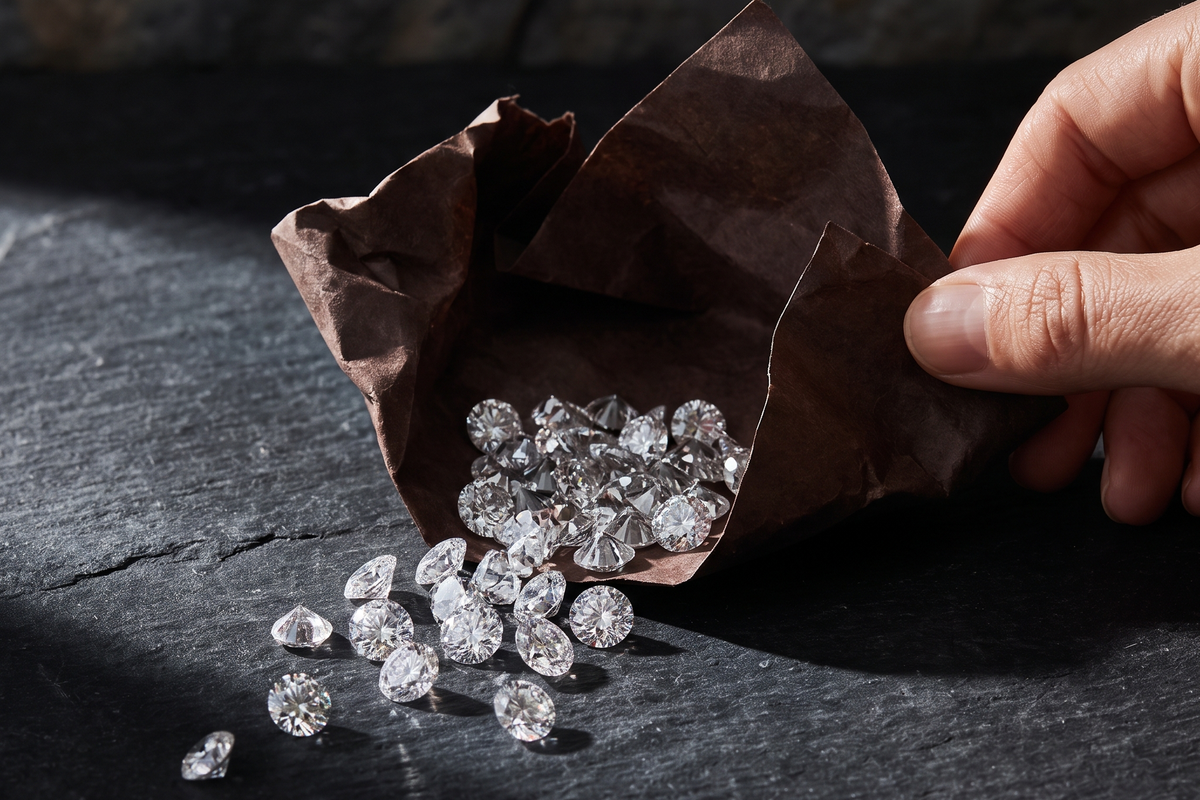
Why Lab Diamond Prices Vary on Identical Specs
Two IGI certificates can read E color, VS2, excellent cut and describe visibly different stones. What the report measures, what sits outside its scope, and what to verify before you buy.
The author is the founder of Draco Diamond. Market figures are cited to named sources with dates in the References section. Source averages from StoneAlgo are USD and stated as USD.

What does a grading certificate actually tell you?
It tells you which band the stone falls into for color, clarity, cut, and carat weight, measured accurately and to a rigorous standard. What it does not do, by design, is rank the stone within that band.
Each grade is a range. E color spans a range of whiteness. VS2 spans a range of inclusion types, sizes, and positions. Excellent cut spans a range of proportion sets. A stone at the top of each band and a stone at the bottom of each band carry the same letters on the report, and both reports are correct. The market has noticed how compressed those bands have become for lab grown. GIA stopped applying 4Cs nomenclature to lab grown diamonds on October 1 2025, moving to premium and standard tiers, and stated that more than 95 percent of lab grown stones fall in one narrow color and clarity band.1 When most certificates read nearly the same, the differences that move price live outside the designed scope of the document.

| Grade on the report | The range it covers |
|---|---|
| Color: E | A band of whiteness between D and F reference stones |
| Clarity: VS2 | A band of inclusion types, sizes, and positions of similar significance |
| Cut: Excellent | A band of proportion sets and facet alignments that meet the threshold |
| Carat: 1.00 | A precise weight, silent on how the stone carries it face up |
"The certificate tells you the band. The stone tells you where in the band it sits. Price follows the stone."
Garrett McMartin, Founder, Draco Diamond
Why do two stones with identical grades look different?
Because five properties vary inside the grades. Each sits outside the scope of the headline letters, and your eye picks up every one of them.
Excellent is a band, not a point. Two excellent cut rounds can differ in facet alignment and proportion balance, and that difference shows up as light return. One stone reads crisp and lively. The other reads slightly flat under the same light. Both reports say excellent, and both are right.
Some stones react to ultraviolet light. Depending on strength, fluorescence can subtly change how a stone presents in daylight. IGI records it on the report, but buyers rarely read past the headline grades, and sellers rarely volunteer it.
A color grade measures depth of color on the standard scale. Hue nuance is a different property and sits outside that scale's designed scope. Some lab grown stones carry a faint blue or gray nuance, so two E color stones can sit side by side and read as different shades of white.
VS2 describes inclusion significance, not placement. A VS2 with a small inclusion centered under the table is a different purchase from a VS2 with the same significance tucked at the edge, where a prong can cover it. Same grade, different stone.
Lab grown diamonds are grown, and growth methods can leave their own subtle signatures, such as faint graining or nuance tied to how the crystal formed. These artifacts sit outside the headline grades entirely.

Why do prices vary on paper identical specs?
Because the trade prices the stone, not the paper. Dealers see the variation inside each grade and bid accordingly.
A top of band stone with clean undertone, edge placed inclusions, and strong light performance commands more than a bottom of band stone with the same letters. That spread is invisible if you shop by certificate line items alone. It also means a cheap stone with great specs is not automatically a bargain. Sometimes it is simply the weaker stone within its band, priced where the trade thinks it belongs.
Context matters here. Wholesale lab grown prices fell roughly 74 percent from 2020 to 2025, per Edahn Golan Diamond Research.2 StoneAlgo's May 2026 averages put a 1 carat lab diamond at 564 USD per carat, against 3,410 USD per carat in 2020, with the year over year decline slowing to 2.59 percent, the smallest quarterly declines in two years, and premium certified stones at a production cost floor.3 As headline prices converge near cost, the remaining price differences between stones increasingly reflect quality inside the grade, not market noise.
Average lab diamond price per carat, USD
StoneAlgo, May 2026. Averages compress the spread; within any size and grade, individual stones price above or below the average on quality inside the band.
Source: StoneAlgo average sale prices, May 2026. Figures are USD.
What should you verify beyond the certificate?
Ask to see the stone, not just the report. This table maps each certificate line to the question that actually settles it.
| What the certificate says | What to verify |
|---|---|
| Color: E | Whether the stone carries a blue or gray undertone. Ask for video or photos in neutral daylight, next to another stone if possible. |
| Clarity: VS2 | Where the inclusion sits. Centered under the table, or at the edge where a setting can cover it. Ask for the plot or a magnified image. |
| Cut: Excellent | Actual light performance. Ask for video under normal lighting, not just studio sparkle loops. |
| Fluorescence: noted | The strength, and how the stone presents in daylight. Ask the seller to state it plainly. |
| Carat weight | How the weight is carried. Ask for measurements and whether the stone faces up true to its weight. |
| Report number | That the report matches the stone. Verify the number free at IGI.org and confirm the laser inscription if present. |
Comparing two stones with the same specs comes down to four steps:
Enter each report number in the verification tool at IGI.org and read every field, not just the headline grades. Fluorescence, polish, symmetry, and proportions all sit below the four letters most listings quote.
Ask the seller to state the fluorescence strength for each stone and how each presents in daylight. The answer is on the report; a direct seller will confirm it plainly.
Ask whether either stone carries a blue or gray nuance against a neutral white reference. Hue nuance is a separate property from the color grade, so the letter alone will not answer this.
Judge light performance under normal lighting, not studio sparkle loops. Between two excellent cut stones, the livelier stone in ordinary light is the stronger stone within the band.

A seller who answers these questions directly is telling you they inspected the stone. A seller who keeps pointing back at the letter grades is telling you they did not.
How does Draco hold its catalog beyond the certificate?
The Draco Diamond catalog is held to IGI certified E to F color, VS2 and better. The certificate is the floor, not the standard. Before a stone is listed, it is reviewed beyond the report: light performance within its cut grade, undertone against a neutral white reference, inclusion placement and whether the stone faces up clean, and fluorescence presentation. Stones that carry the right letters but sit at the weak end of their bands do not make the catalog.

Every piece ships with its certificate; the report can be provided on request before purchase, and verified free at IGI.org. The trust stack behind every listing: 30 day returns, Lifetime Authenticity Guarantee, free ring resizing, free insured worldwide shipping to 25 markets, delivered duty paid with nothing collected at the door, signature on delivery, IGI certified E to F color VS2 and better. Browse the reviewed catalog or start with the women's rings collection.
Same spec, different price FAQ
Can two diamonds with the same IGI grades look different?
Yes. Each grade is a band, not a point. Two stones can share E color, VS2 clarity, and excellent cut while differing in light performance, undertone, fluorescence presentation, and inclusion placement. The differences are visible in person and reflected in price.
Why is one E color VS2 stone cheaper than another with the same specs?
The trade prices where a stone sits inside its bands. A stone at the weak end of its color, clarity, or cut band costs less than one at the strong end, even though both certificates read the same. A low price on matching specs often signals the weaker stone, not a bargain.
Does the price difference mean the certificate missed something?
No. IGI grading is accurate and rigorous for what it measures, and fluorescence is recorded right on the report. The price spread comes from qualities such as hue nuance, inclusion placement, and light performance within the cut grade, which sit outside the designed scope of any grading document.
Does fluorescence matter in a lab grown diamond?
It can. Fluorescence is a reaction to ultraviolet light, and depending on strength it can subtly affect how a stone presents in daylight. It is recorded on the certificate. Ask the seller to state the strength and show the stone in normal light.
What is clarity character and why does inclusion placement matter?
Clarity character is where and what the inclusion is, not just its grade significance. A VS2 inclusion centered under the table is more noticeable than the same significance at the edge of the stone, where a prong can cover it. Ask for the clarity plot or a magnified image before buying.
Do lab grown diamonds carry tints the color grade does not show?
Some do. The color grade measures depth of color on the standard scale, and hue nuance is a separate property, so a faint blue or gray nuance can sit inside a high color grade. Reviewing the stone against a neutral white reference is the reliable check.
What does Draco check before listing a stone?
Every stone is IGI certified E to F color, VS2 and better, and then reviewed beyond the certificate: light performance within its cut grade, undertone against a neutral reference, inclusion placement, and fluorescence presentation. Stones at the weak end of their bands are not listed. Each piece ships with its certificate; the report can be provided on request before purchase, and verified free at IGI.org.
References
- Gemological Institute of America. GIA to describe laboratory grown diamonds as premium or standard, retiring 4Cs nomenclature for lab grown stones; more than 95 percent fall in one narrow color and clarity band. Effective October 1 2025. gia.edu.
- Edahn Golan Diamond Research and Data. Wholesale lab grown diamond price decline of roughly 74 percent, 2020 to 2025. edahngolan.com.
- StoneAlgo. Lab grown diamond average sale prices by carat size, May 2026: 1ct 564 USD, 2ct 1,265 USD, 3ct 1,865 USD, 5ct 2,588 USD; year over year decline 2.59 percent. stonealgo.com.
- International Gemological Institute. Report verification and grading standards. Accessed July 2026. IGI.org.
Reviewed beyond the report, before it is listed
Every piece in the Draco catalog is IGI certified E to F color, VS2 and better, and reviewed beyond the certificate for light performance, undertone, and inclusion placement before it is listed.