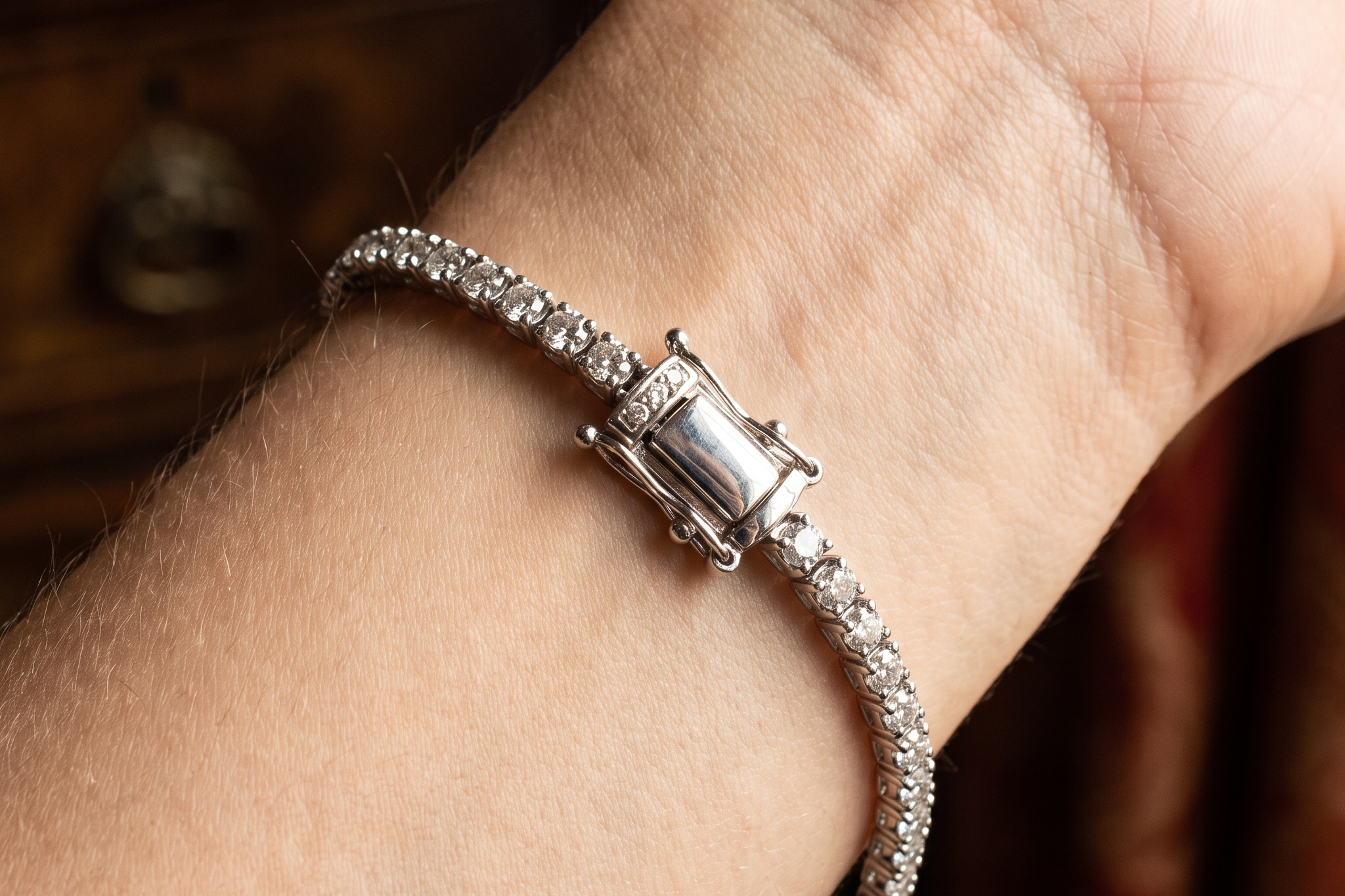
What Does Eye Clean Mean for Lab Diamonds?
The trade term that decides whether a clarity grade actually matters, what it means, which grades qualify, and how to check a stone before you buy.
The author is the founder of Draco Diamond. Clarity definitions referenced are published by GIA and IGI. Every Draco diamond is IGI certified and verifiable free at IGI.org.

What does eye clean actually mean?
Eye clean means the inclusions inside a diamond cannot be seen with the unaided eye at a normal viewing distance, commonly taken as about 25 to 30 centimetres, roughly where a ring sits when you look at your own hand. The inclusions still exist. Under the 10x loupe a grader uses, they are plotted, named, and mapped on the certificate. To the naked eye, they vanish.
The distinction matters because clarity is graded and eye clean is observed. GIA and IGI assign clarity grades under 10x magnification by trained graders, so the scale describes what a microscope sees, not what a person sees. Eye clean is the trade's translation of that scale back into human terms. It is the point where clarity stops being visible and becomes purely a line item on the report.

Which clarity grades are eye clean?
Eye clean likelihood tracks the clarity scale, but not evenly. The scale has a cliff, and it sits between VS2 and SI1. Above the cliff, eye clean is effectively guaranteed by the grade definition itself. Below it, eye clean becomes a stone by stone question that depends on where and what the inclusions are.
| Grade | Lab definition (under 10x) | Eye clean likelihood |
|---|---|---|
| FL / IF | No inclusions visible to a skilled grader | Always |
| VVS1 / VVS2 | Inclusions so slight they are difficult for a skilled grader to see | Always |
| VS1 | Minor inclusions, difficult to see under 10x | Virtually always |
| VS2 | Minor inclusions, somewhat easier to find under 10x | Usually, and reliably so in well selected stones |
| SI1 | Noticeable inclusions under 10x | Sometimes, judged stone by stone |
| SI2 | Noticeable inclusions, easier to see under 10x | Rarely, often visible unaided |
The eye clean cliff
Qualitative likelihood that a stone of each grade looks clean to the unaided eye. The break sits between VS2 and SI1.
Qualitative likelihoods derived from GIA and IGI clarity grade definitions. Individual stones vary with inclusion type, position, and size.
This is why eye clean is the single most useful clarity concept for a buyer. It converts an eleven step laboratory scale into one practical question: is the stone at or above the line where inclusions stop being visible? The grade definitions themselves, published by GIA and applied by IGI, do most of the answering.
"Clarity is graded under a microscope. Nobody wears a microscope. Eye clean is the grade your eyes actually give the stone."
Garrett McMartin, Founder, Draco Diamond
Why is VS2 the eye clean threshold?
GIA defines VS clarity as inclusions that are minor and range from difficult to somewhat easy for a skilled grader to see under 10x magnification. Read that definition carefully: even the grader with the loupe has to work to find them. Inclusions that challenge a trained eye at ten times magnification are, in almost every stone, invisible at one times magnification from arm's length.
SI clarity is defined differently. Inclusions are noticeable under 10x, and in SI2 they are easy to see. Noticeable under magnification means some of them cross into naked eye visibility, particularly dark crystals near the center of the table. That definitional shift is the cliff in the chart above, and it is why the trade converged on VS2 as the last grade where eye clean can be treated as the expectation rather than the exception.
This threshold is also why Draco Diamond's catalog floor sits where it does. Every stone Draco sells is IGI certified at E to F color and VS2 clarity or better. The floor is not arbitrary. It is set exactly at the point where clarity stops affecting what the wearer sees, which means no stone in the catalog carries a visible inclusion, and no customer pays for a grade below the line hoping to get lucky. How those grades interact with the rest of the report is covered in the lab diamond 4Cs guide.

How do you check a diamond is eye clean?
You do not need gemological training to run this check. You need the certificate, decent light, and a minute of attention.
Find the clarity grade on the certificate and verify the report number free at IGI.org. VS2 or better puts the stone at or above the eye clean threshold before you look at anything else.
The report's clarity plot maps each inclusion. Marks near the edge of the stone hide under prongs and crown facets. Marks in the center of the table are the ones worth a closer look, especially if the key lists a crystal rather than a feather or cloud.
Look at the diamond face up from about 25 to 30 centimetres in ordinary indoor light, then tilt it. On a listing, use the seller's video at normal zoom rather than the magnified view. If nothing catches your eye in either pass, the stone is eye clean by the standard the term was built on.
A direct question works: is this exact stone eye clean face up? A seller who inspects inventory will answer plainly. Draco ships every diamond with its IGI certificate; the report can be provided on request before purchase and verified free at IGI.org.

What decides whether a VS2 looks clean?
Two stones with the same clarity grade can look different, because the grade summarizes inclusions the eye weighs unevenly. Four factors do most of the deciding:
Dark crystals contrast against a white stone and draw the eye. White feathers, pinpoints, and clouds blend into the brilliance and are the easiest to hide. The certificate's key to symbols names each one.
Center of the table is the worst seat in the house; under the crown facets or near the girdle, the same inclusion disappears into facet reflections or sits under a prong once set.
Bigger stones have bigger facets and a bigger table, which makes the same grade of inclusion easier to spot. Buyers stepping past two carats often move the personal threshold up one grade for that reason.
Brilliant cuts scatter light and camouflage inclusions. Step cuts like emerald and asscher have open, mirror-like facets that conceal almost nothing, so the eye clean bar sits higher for those shapes.

What should eye clean mean for your budget?
Eye clean draws a line through the price list. Below the line, a discount buys a visible flaw. Above the line, a premium buys a difference only a grader will ever see. The rational move is to buy at the line: an eye clean VS2 delivers the identical face up appearance of a VVS stone, and the savings go where the eye actually looks, into carat weight, cut quality, or the setting.
The same logic explains why identically graded stones can carry very different prices between sellers, a dynamic broken down in why lab diamond prices vary on the same specs. Clarity is one line on the report, and the report is the whole story; the IGI certificate guide walks through every field. If you would rather answer three questions than read three guides, the diamond quiz routes you to matching stones directly.
Eye clean FAQ
What does eye clean mean in diamonds?
Eye clean means a diamond's inclusions cannot be seen with the unaided eye at a normal viewing distance of about 25 to 30 centimetres, even though they are visible under the 10x magnification labs use to grade clarity. It is a trade term describing real world appearance, not an official laboratory grade.
Is VS2 clarity eye clean?
Usually, yes. GIA defines VS2 inclusions as minor and hard to find even under 10x magnification, so they are almost never visible to the naked eye. Exceptions are stones with a dark crystal centered in the table, which is why well selected VS2 stones, checked against the certificate plot, are the standard eye clean buy. Draco's catalog floor is VS2 for exactly this reason.
Is SI1 ever eye clean?
Sometimes. SI1 inclusions are noticeable under 10x magnification by definition, and a portion of them cross into naked eye visibility, particularly dark inclusions near the center of the stone. An SI1 must be judged stone by stone using the plot diagram and a video at normal zoom. It is a case by case gamble rather than a threshold you can rely on.
Do lab grown diamonds have inclusions?
Yes. Lab grown diamonds are real diamond crystal grown under intense heat and pressure, and the growth process creates inclusions just as the earth does, commonly metallic remnants, pinpoints, feathers, and clouds. IGI grades lab grown clarity on the same FL to I scale as mined diamonds, and the eye clean threshold of VS2 applies identically.
Is paying for VVS or flawless clarity worth it?
Not for appearance. Once a stone is eye clean, higher clarity changes nothing the eye can detect; a VVS1 and a clean VS2 look identical face up at normal distance. VVS and flawless grades are purchases of rarity and certificate prestige. If the goal is the most beautiful stone per dollar, buy eye clean and spend the difference on cut or carat.
Does eye clean matter more on bigger diamonds?
Yes. Larger stones have larger tables and facets, so an inclusion of the same grade is easier to spot than in a smaller stone. Step cuts such as emerald and asscher magnify the effect because their open facets hide very little. For large stones and step cuts, many buyers treat VS1 rather than VS2 as their personal eye clean floor.
References
- Gemological Institute of America. Diamond clarity scale and grade definitions, graded under 10x magnification. GIA.edu. Accessed July 2026.
- International Gemological Institute. Diamond clarity grading and report verification. IGI.org. Accessed July 2026.
- Draco Diamond published catalog and grading standard, IGI certified E to F color, VS2+ clarity. dracodiamond.com. Accessed July 2026.
Every stone above the threshold
Draco's entire catalog is IGI certified at E to F color and VS2 clarity or better, the eye clean standard, priced direct at up to 64 percent below legacy retail. Free insured worldwide shipping, 30 day returns, and a Lifetime Authenticity Guarantee on every piece.