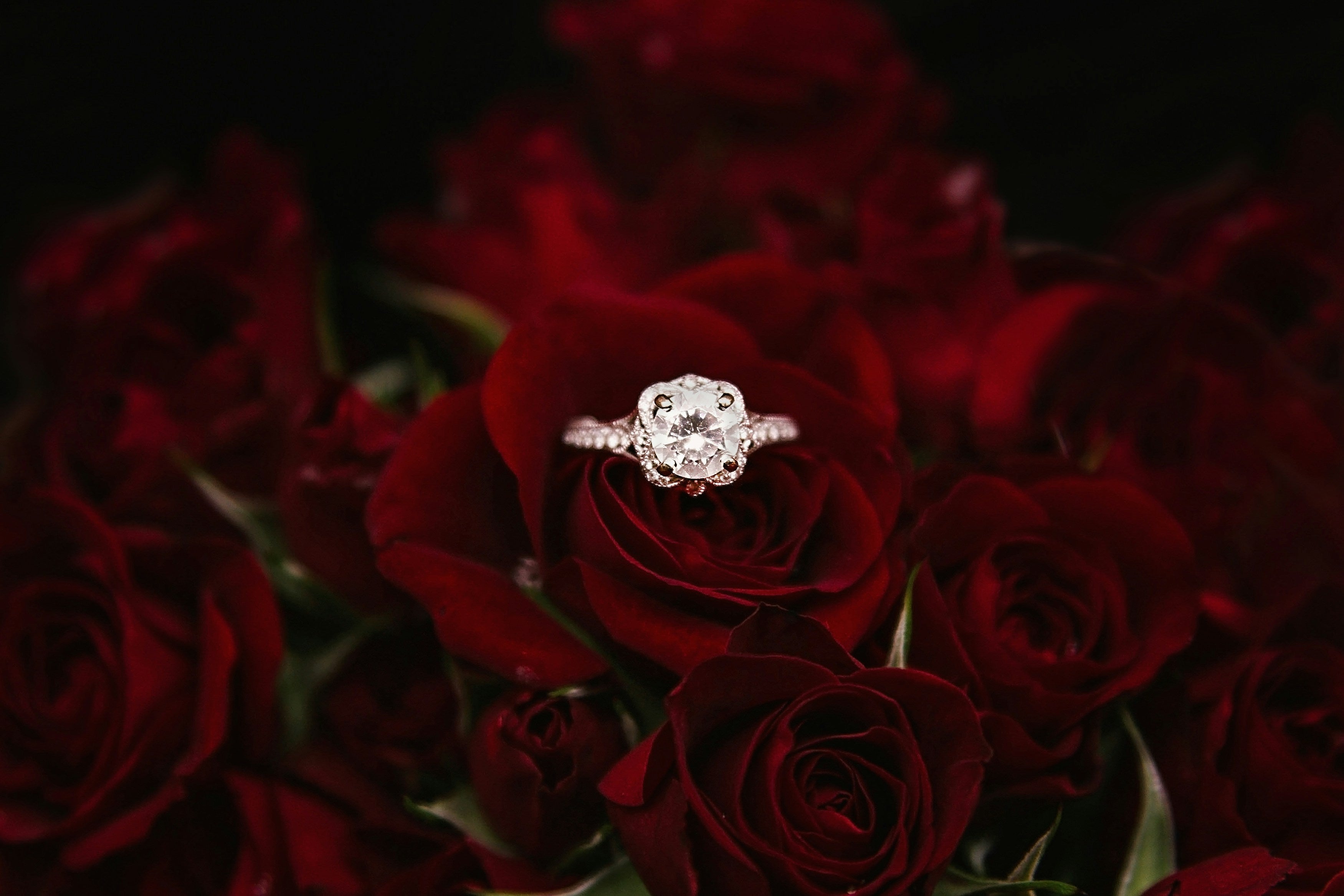
CVD vs HPHT: The Two Ways Lab Diamonds Are Grown
Your certificate says CVD or HPHT. Here is what each method actually does, what it changes for the finished stone, and why an equal grade means an equal diamond.
The author is the founder of Draco Diamond. Growth method and any treatment are disclosed on every IGI and GIA report and verifiable free at IGI.org. All prices in CAD.

What is a CVD diamond and how is it grown?
CVD stands for chemical vapour deposition. It grows a diamond from gas. A thin slice of diamond, called a seed, is placed inside a sealed chamber. A carbon rich gas, typically a methane and hydrogen mixture, is heated until it breaks into a glowing plasma. Carbon atoms release from the gas and settle onto the seed, bonding into the diamond lattice and building the crystal upward, layer by layer, at moderate pressure.
The output is a single crystal diamond that grows in a broadly tabular block. Because the process runs at lower pressure than the alternative, the equipment is comparatively compact, which is one reason CVD scaled quickly across the lab grown market. The stone is then cut and polished exactly like any other rough, and sent for independent grading.
"The growth method tells you how the diamond was made. The certificate tells you what it is. Only one of those changes the price you should pay."
Garrett McMartin, Founder, Draco Diamond
What is an HPHT diamond and how is it grown?
HPHT stands for high pressure high temperature. It recreates the conditions under which natural diamonds form deep inside the earth. A diamond seed and a carbon source sit inside a heavy press alongside a molten metal that acts as a solvent. Intense pressure and heat dissolve the carbon and carry it onto the seed, which grows outward in the classic cuboctahedral shape as the crystal builds on every face.
HPHT is the older of the two production routes and the closer analogue to how the earth makes a diamond. It is used both to grow diamonds from scratch and, separately, as a finishing step on some already grown stones. That second use is the source of most of the confusion buyers run into, and the next sections separate the two clearly.

CVD vs HPHT, compared
The two methods differ in process and equipment. They converge on the same finished product: a gradable, certifiable diamond of pure carbon.
| Aspect | CVD | HPHT |
|---|---|---|
| Full name | Chemical vapour deposition | High pressure high temperature |
| How it grows | Carbon gas turns to plasma and settles on a seed | Carbon dissolves in molten metal and deposits on a seed |
| Environment | Moderate pressure chamber | Very high pressure press |
| Crystal habit | Grows upward, broadly tabular | Grows outward, cuboctahedral |
| Typical look | Identical once cut and polished | Identical once cut and polished |
| Common finishing | Sometimes HPHT treated to lift colour | As grown, or colour treated |
| Price driver | Yield, size, treatment | Yield, size, treatment |
| On the report | Noted laboratory grown, method disclosed | Noted laboratory grown, method disclosed |
Read the table by column and the point becomes obvious. The rows that describe the machine differ. The rows that describe the diamond you receive do not.
Does the growth method change the finished diamond?
No. A CVD diamond and an HPHT diamond are both pure crystallised carbon, with the same Mohs 10 hardness, the same optical properties, and no aging mechanism. GIA grades both on the identical criteria. The method is a footnote on the manufacturing, not a property of the gem.
Two methods, one identical result
Process and equipment differ. The graded, certified stone that reaches you does not.
Illustrative. Based on GIA guidance that lab grown diamonds share the physical and optical properties of mined diamonds.
This is why the grading world treats the method as background. On the four grades that determine colour, clarity, and value, growth route does not appear. GIA stopped applying the separate 4Cs nomenclature to lab grown diamonds on October 1 2025, moving to premium and standard tiers, and stated that more than 95 percent of lab grown stones fall in one narrow colour and clarity band. Only specialised laboratory equipment can separate a lab grown diamond from a mined one, and even that is a lab versus natural test, not a CVD versus HPHT test. If you want the underlying science, start with whether lab grown diamonds are real diamonds.

Why can CVD and HPHT prices differ?
Prices can differ between two stones grown by different methods, but the cause is production economics, not authenticity. Yield, crystal size, growth time, and whether a stone was treated all move the cost. Neither method is inherently the cheap one or the premium one across the whole market.
The larger price story sits above the method entirely. Wholesale lab grown prices fell roughly 74 percent between 2020 and 2025, and a finished lab stone now costs 80 to 90 percent less than its mined equivalent. Two diamonds of the same shape and the same certified grades belong in the same price conversation whether one is CVD and the other HPHT. When a listing pushes the growth method as a reason to pay more, treat that as a sales angle and go back to the certificate. The mechanics of identical specs at different prices are covered in why lab diamond prices vary on the same specs.
As grown vs treated, the real nuance
Here is the distinction worth learning, and it is not CVD versus HPHT. It is as grown versus treated.
The colour and clarity are exactly as the stone came out of the reactor or the press, with no post growth intervention. Both CVD and HPHT stones can be as grown.
A separate, post growth step that applies high pressure and heat to an already finished diamond to improve its colour. It is most often used on CVD stones that carried a brown or grey tint. It is legitimate and it is disclosed.
HPHT the growth method and HPHT the treatment are different things that share a name. A CVD diamond can be HPHT treated. The growth method and any treatment are listed as separate fields on the report.

So the buyer checklist is short. Confirm the stone is independently certified, read the growth method for context, and read the treatment line for the disclosure that actually affects value. If both stones are certified, as grown or clearly disclosed, and matched on carat, colour, clarity, and cut, then CVD or HPHT is a preference, not a quality gap. To translate the rest of the report, use the field by field IGI certificate guide.
CVD vs HPHT FAQ
Which is better, CVD or HPHT?
Neither is better as a diamond. A certified CVD and a certified HPHT stone of equal carat, colour, clarity, and cut are equally real diamonds and grade on the same scale. Choose on the four grades and the price, not on the growth method. If two stones match on specs, the method is a preference, not a quality difference.
Is a CVD diamond a real diamond?
Yes. A CVD diamond is pure crystallised carbon with the same hardness and optical properties as a mined diamond, per GIA. It is graded by IGI and GIA using the same criteria as any other diamond. The only distinction from a mined stone is detectable through specialised laboratory equipment, and that is a lab versus natural point, not a real versus fake one.
Can you tell CVD and HPHT apart by looking?
No. Once cut and polished, a CVD and an HPHT diamond of the same grade look identical to the eye and under a loupe. Identifying the growth method requires specialised gemological equipment in a laboratory. That is exactly why the method is disclosed on the certificate rather than left to inspection.
What does HPHT treated mean, and is it a problem?
HPHT treatment is a post growth step that applies high pressure and heat to an already finished diamond to improve its colour, most often on CVD stones with a slight tint. It is a legitimate, standard, and disclosed process. It is different from HPHT as a growth method. The certificate lists growth method and treatment as separate fields, so you always know which applies.
Does Draco sell CVD or HPHT diamonds?
Draco supplies IGI certified lab grown diamonds, E to F colour and VS2 and better across the catalogue, sourced by grade rather than by a single growth method. Every stone ships with its certificate, and the report can be provided on request before purchase and verified free at IGI.org. The grade and the certificate are the promise, not the method.
Should I pay more for one method over the other?
Not on the basis of the method itself. Price differences between comparable CVD and HPHT stones come from yield, size, and treatment, not from one being more genuine. Compare two certified diamonds on carat, colour, clarity, and cut, then on price. If a seller frames the growth method as a reason to pay a premium, return to the certificate.
References
- Gemological Institute of America. Lab grown diamond growth methods and identification, and October 1 2025 nomenclature change to premium and standard tiers. gia.edu. Accessed August 2026.
- International Gemological Institute. Grading of laboratory grown diamonds, growth method and treatment disclosure, Verify Your Report. IGI.org. Accessed August 2026.
- Edahn Golan Diamond Research. Wholesale lab grown price decline roughly 74 percent, 2020 to 2025. Accessed 2026.
- BriteCo. Finished lab grown diamond costs 80 to 90 percent less than a mined equivalent. Accessed 2026.
- Draco Diamond published catalogue and grading standard, dracodiamond.com. Accessed August 2026.
Buy the diamond, not the method
Every Draco diamond is IGI certified, E to F colour, VS2 and better, and ships with its certificate. Bring us almost any comparable quote and we will beat it almost every time on the same certified specification, up to 64 percent below Blue Nile. Trust stack, verbatim: 30 day returns, Lifetime Authenticity Guarantee, free ring resizing, free insured worldwide shipping to 25 markets, signature on delivery, IGI certified E to F colour VS2 and better.