How to Choose a Lab Diamond Engagement Ring: A Buyer's Guide
The step by step decision process, from setting a budget to confirming the certificate, so you buy the right ring once and never second guess it.
The author is the founder of Draco Diamond. Prices are in CAD and reflect the published catalog at the time of writing. Every Draco piece is IGI certified, E to F color, VS2 clarity or better, and verifiable at IGI.org. The certificate is included with every order.

The buying order that protects your budget
Decisions ranked by impact on the finished ring. Settle the top of the list first; the rest follows.
Source: Draco Diamond buyer framework, 2026. Cut is weighted above carat because it governs light return and apparent size.
How do you set the budget?
Start with the number, not the stone. Lab grown changed the math: because production scales, a certified lab diamond costs a fraction of a natural stone of the same grade, so the budget that once bought a modest ring now buys a clear statement. A 2 carat pear halo at Draco starts at $1,801 CAD, and a 2.25 carat radiant solitaire from $1,899 CAD. Forget the old two month salary rule; it was a marketing line, not a law, as the two month salary myth breakdown shows. Decide what you are comfortable spending, then for the full picture of what each carat costs, see the lab diamond engagement ring cost guide.
With the budget fixed, the next move is shape, because shape sets the entire look before any other choice. Round is the classic and returns the most light; oval, pear, and marquise are elongated and read larger per carat by covering more of the finger; emerald and Asscher are step cut and quietly architectural; princess, radiant, and cushion sit between brilliance and shape. Match the shape to the wearer's taste first, then size it to the finger. The full visual reference is in the lab diamond shapes guide.

"Budget first, then shape, then cut. Get the order right and the ring almost designs itself. Get it wrong and you overspend on grades no eye can see."
Garrett McMartin, Founder, Draco Diamond
Why does cut come before everything else?
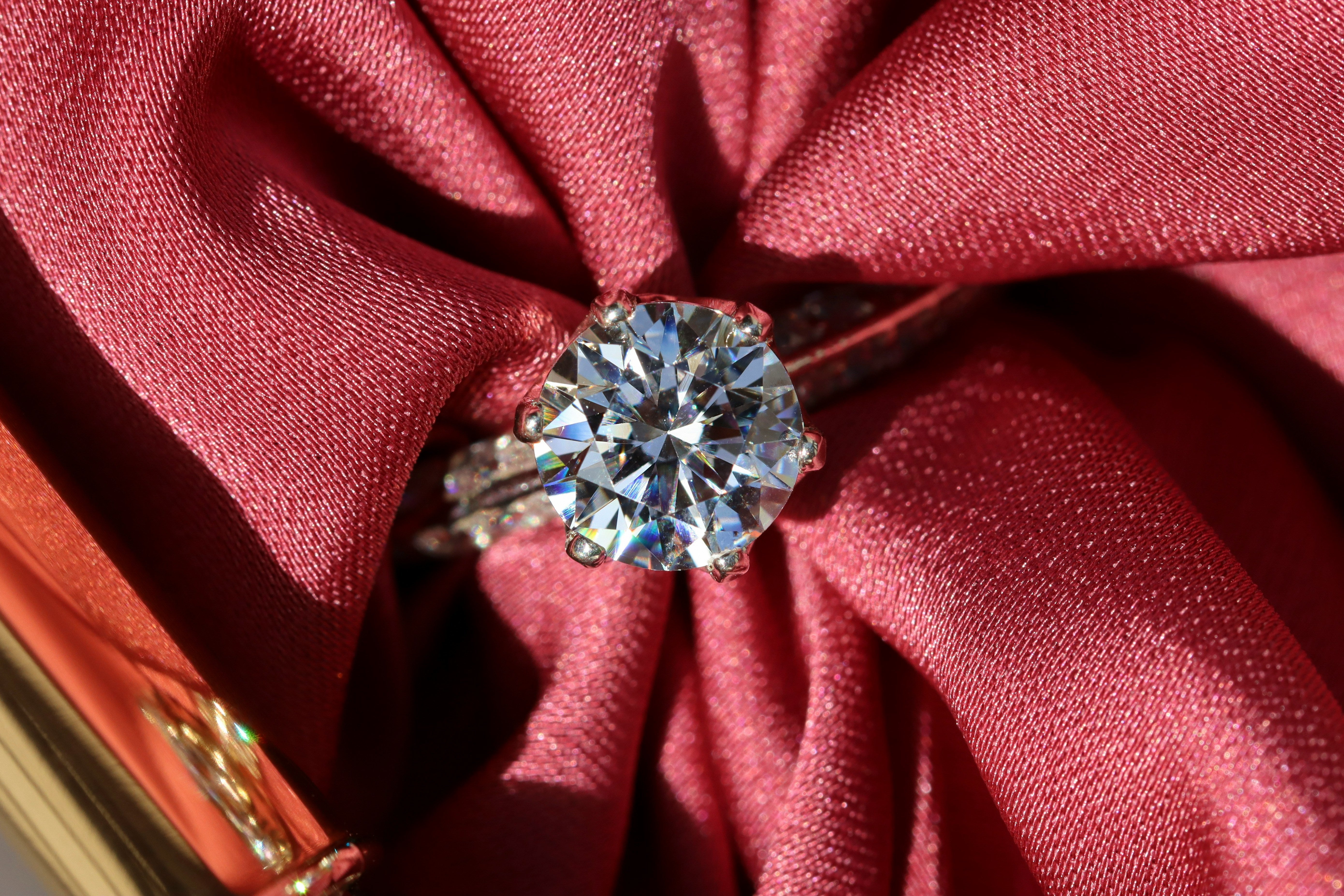
Cut is the single decision that decides whether a diamond sparkles. It governs how light enters, bounces, and returns to the eye, so a well cut stone looks brighter, whiter, and larger than a poorly cut one of the same carat. This is why cut ranks above carat and clarity in the buying order. Spend here first. A 2.25 carat radiant solitaire reads bigger and livelier than a dull 2.5 carat because the cut, not the weight, is doing the work. Do not trade cut for size; a smaller stone with excellent light return wins every time.
| Decision | Target | Why it matters |
|---|---|---|
| Cut | Strong light return | Drives sparkle and apparent size |
| Color | E to F | Reads white in any setting |
| Clarity | VS2 or better | Eye clean, no visible inclusions |
| Carat | The look you want | Size for proportion, not the number |

What color, clarity, and carat should you choose?
After cut, the goal is a stone that reads flawless and white without paying for grades the eye cannot detect. For color, E to F sits in the near colorless to colorless band and looks white in any metal; going higher adds cost no one will notice. For clarity, VS2 or better is the eye clean threshold, meaning no inclusions are visible without magnification. These two grades, set by Draco as the floor on every piece, are where smart buyers stop. The mechanics of how grading works are covered in the 4Cs color and clarity guide.
Carat comes after, not before, because size should serve the look rather than chase a number. Lab pricing makes more carat affordable, so the constraint is proportion: an elongated shape reads larger per carat, a slimmer finger carries a 1 to 1.5 carat with presence, and a wider finger holds 2 carats and up with ease. Choose the carat that looks right on the hand, protected by the cut you already prioritised.
| Carat | Representative ring | From (CAD) |
|---|---|---|
| 1 ct | 1ct toi et moi pear ring | $1,501 |
| 2 ct | 2ct pear halo ring | $1,801 |
| 2.25 ct | 2.25ct radiant solitaire | $1,899 |
| 3 ct | 3ct marquise ring | $2,799 |
| 5 ct | 5ct radiant pavé ring | $3,111 |

Which metal and setting finish the ring?
Metal sets the tone and the budget floor. Silver is the most accessible and shows the stone with a bright white frame; 10K to 18K gold in white, yellow, or rose balances durability and warmth; platinum is the densest and most enduring, a white metal that never needs rhodium. Every Draco setting is offered from silver through platinum, so the metal is a style and longevity choice, not a compromise. White metals keep an E to F stone reading icy; yellow and rose add warmth around it. For an all white look on a tighter budget, the silver lab diamond engagement ring guide covers the tradeoffs.
Setting is the last design choice and it changes how the stone reads. A solitaire is the purest, letting cut and shape speak alone. A halo rings the center with pavé and can make a 1 carat read like 1.5. A pavé band lines the shank with small stones for extra light. A three stone flanks the center with two side stones for a story of past, present, and future. Pick the setting that matches the wearer and the carat you chose. To pair shape, carat, metal, and setting and see the price before you commit, use the ring builder, or browse the full lab grown diamond engagement rings collection.

How do you confirm it is real and protect the purchase?
A lab grown diamond is a real diamond, chemically and optically identical to a mined one, and the certificate is how you prove the grade. Every Draco stone is IGI certified, with the certificate included with every order and the grading verifiable at IGI.org by report number. Confirm the report lists the cut, color of E to F, clarity of VS2 or better, and carat you agreed to. A certificate from a recognised lab is the difference between a graded asset and an unverified claim. The full walkthrough is in the IGI certificate guide.
Finally, read the terms before you buy. Draco backs every ring with 30 day returns, a full refund with no restocking fee, free ring resizing, and a Lifetime Authenticity Guarantee, plus free insured worldwide shipping with signature on delivery. Returns within 30 days are refunded in full; the customer covers return shipping. Strong terms turn a large decision into a low risk one, which is the point of the framework: choose with confidence, and have the guarantee behind you if anything changes.
Engagement ring FAQ
How do I choose a lab diamond engagement ring?
Work in order: set a budget, pick a shape, prioritise cut for sparkle, then choose VS2 clarity or better with E to F color, select carat for the look, pick the metal from silver to platinum, choose a setting such as solitaire or halo, and confirm IGI certification and the return terms. Cut ranks above carat because it drives light return and apparent size.
How much should I spend on a lab diamond engagement ring?
Spend what you are comfortable with; the old two month salary rule was marketing, not a standard. Because lab grown costs a fraction of natural, a 2 carat pear halo at Draco starts at $1,801 CAD and a 2.25 carat radiant solitaire from $1,899 CAD. For a full per carat breakdown, see the lab diamond engagement ring cost guide.
What shape and setting should I pick?
Match the shape to the wearer's taste first. Round returns the most light; oval, pear, and marquise read larger per carat; emerald and Asscher are architectural. For setting, a solitaire shows the stone purely, a halo makes the center read larger, a pavé band adds light, and a three stone tells a past, present, future story. Use the ring builder to pair them and see the price.
What color and clarity should an engagement ring be?
Aim for E to F color, which reads white in any metal, and VS2 clarity or better, which is eye clean with no visible inclusions. These are the grades the eye can actually see; paying for higher adds cost without a visible difference. Every Draco stone meets E to F color and VS2 clarity or better as the floor.
How do I know it is real and certified?
A lab grown diamond is a real diamond, identical to mined in chemistry and optics. Proof comes from the certificate. Every Draco stone is IGI certified, the certificate is included with every order, and the grading is verifiable at IGI.org by report number. Confirm the cut, color, clarity, and carat on the report match what you agreed to.
References
- International Gemological Institute, grading and report verification, accessed June 2026.
- Draco Diamond published catalog, dracodiamond.com. Accessed June 2026. Prices CAD.
- Draco Diamond buyer framework, 2026. Decision order weighted by impact on the finished ring.
The right ring, certified and guaranteed
Every Draco piece is IGI certified, E to F color, VS2 clarity or better, in silver, 10K to 18K gold, or platinum. The certificate is included with every order. Free insured worldwide shipping with signature on delivery, free ring resizing, 30 day returns with a full refund and no restocking fee, and a Lifetime Authenticity Guarantee.