Lab Diamond Shapes Guide 2026: How to Choose Your Cut
The ten shapes that matter, what each one actually looks like on the hand, which reads largest per carat, and how to choose the cut that fits your finger, your eye, and your budget.
The author is the founder of Draco Diamond. Shape behaviour is general gemology and varies with individual cut and proportions. Draco prices are in CAD and reflect the published catalog at the time of writing. Every Draco piece is IGI certified, E to F color, VS2 clarity or better, and verifiable at IGI.org.

How the ten shapes behave
Grouped by faceting style and relative face-up spread per carat. Brilliant cuts hide inclusions and sparkle; step cuts show clarity and read as a hall of mirrors.
Source: standard cut-style gemology, 2026. Brilliant cuts scatter light into sparkle and mask inclusions; step cuts use long parallel facets that reward higher clarity. Spread per carat is qualitative and varies with proportions.
Which diamond shape should you choose?
Shape is the first and most personal diamond decision. It sets character before carat, color, or metal does. A round brilliant is the safe classic and the most brilliant shape; an oval gives that same brightness with more size and a finger-lengthening line; a step cut like emerald or asscher trades sparkle for clean architectural elegance. The table below answers the shape question in one row each: the look, who it suits, and a real Draco starting price. Every piece named is IGI certified.
| Shape | The look | Best for | From (CAD) |
|---|---|---|---|
| Round | Maximum brilliance, the benchmark | Classic buyers who want the most sparkle | $711 |
| Oval | Round brilliance, elongated and larger looking | Wanting size per carat and a slimming line | $1,099 |
| Emerald | Step cut, hall of mirrors, clean and elegant | Understated, architectural taste | $801 |
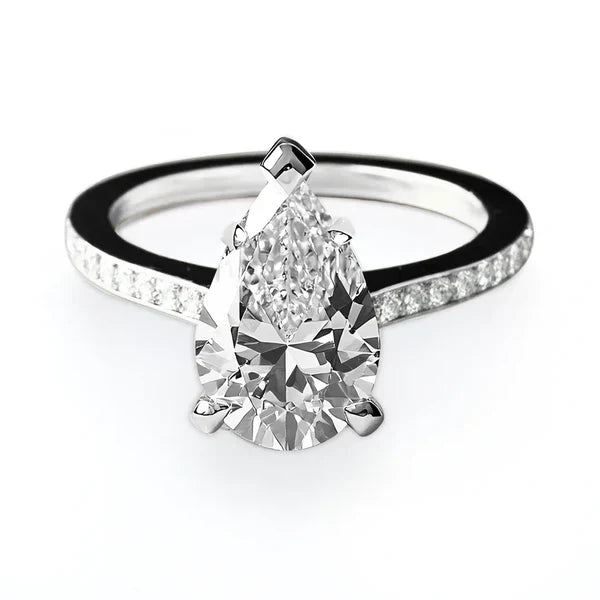
| Pear | Teardrop, elongating and distinctive | Individual style, slimming the finger | $1,081 |
| Marquise | Pointed oval, maximum finger coverage | The largest look per carat | $949 |
| Cushion | Soft squared corners, romantic, good fire | Vintage warmth with sparkle | $3,550 |
| Princess | Square brilliant, modern, sharp corners | Clean contemporary lines | $1,399 |
| Radiant | Squared with brilliant faceting, a hybrid | Emerald shape with round sparkle | $1,899 |
| Asscher | Step cut, vintage, geometric, symmetrical | Art Deco and clarity lovers | $1,199 |
| Heart | Romantic, needs strong symmetry | A statement of sentiment | $1,955 |
"Carat is the number people ask about, but shape is the one the eye remembers. Choose the silhouette first and the rest follows."
Garrett McMartin, Founder, Draco Diamond
The brilliant cuts: round, princess, cushion
Brilliant cuts use triangular and kite shaped facets that scatter light into the white flash and rainbow fire most people picture when they think of a diamond. They sparkle hardest and they forgive inclusions, because all that returned light hides small imperfections. The round brilliant is the benchmark: its 57 or 58 facet pattern returns more light than any other shape, which is why it is the most popular and the safest first diamond. The princess takes that brilliant faceting into a sharp square, modern and crisp, with corners to protect in a setting. The cushion rounds those corners into a soft pillow, a romantic shape with strong fire that suits vintage taste.

The step cuts: emerald and asscher
Step cuts use long, straight, parallel facets that run like stairs toward the center. They do not sparkle the way a brilliant does. Instead they produce broad flashes of light and dark, the hall of mirrors effect, an understated elegance that reads as quiet confidence rather than fire. The emerald is a rectangular step cut with cropped corners, long and architectural. The asscher is its square cousin, deeply geometric and tied to Art Deco. The trade is clarity: because the table is an open window, a step cut shows inclusions a brilliant would hide, so buy a cleaner clarity in these shapes. Every Draco stone is VS2 or better, which suits step cuts well.

The radiant bridges these two worlds. It takes the squared or elongated outline of an emerald and applies brilliant faceting, so it sparkles like a round while keeping a clean rectangular silhouette. It is the shape for someone who loves the emerald outline but wants the fire.

The elongated and fancy shapes: oval, pear, marquise, heart
The fancy shapes trade the round's symmetry for personality and a longer line. The oval is the standout of 2026: it keeps the round brilliant facet pattern, so its sparkle is close to a round, but its elongated outline covers more finger and reads larger per carat, while the long axis slims the hand. The pear is a teardrop, a round on one end tapering to a point, elongating and distinctive, often worn with the point toward the nail. The marquise is the boldest of all: a pointed oval that spreads its weight along the finger and covers the most surface of any shape, so it looks the largest per carat. The heart is a modified brilliant for the romantic, a shape that lives or dies on symmetry, so even matched lobes and a crisp cleft matter most.


Which shape looks biggest, and which hides flaws
Two questions decide more purchases than any other. First, which shape looks biggest. Because carat is weight and not surface area, elongated shapes that spread their weight across the finger read larger than a compact round of the same carat. The order, largest looking first, runs marquise, then oval, then pear, all of which cover more finger than a round, princess, or asscher of equal weight. If a large look is the goal, an elongated shape buys it without adding carat.
| Group | Shapes | Inclusions |
|---|---|---|
| Brilliant | Round, oval, pear, marquise, cushion, princess, radiant, heart | Hidden by returned light, more forgiving |
| Step | Emerald, asscher | Shown by the open table, buy cleaner clarity |
Second, which shape hides flaws. Brilliant cuts scatter light and conceal small inclusions, so a slightly lower clarity still faces up clean. Step cuts, the emerald and asscher, are open windows that reveal everything, so they reward a higher clarity. Every Draco stone is VS2 or better, which carries any shape, but the gap matters most when you choose a step cut.
How to choose your shape
Work the choice in order. Start with the look you love, because shape is taste before it is anything else: classic round, slimming oval or pear, bold marquise, vintage cushion or asscher, modern princess or radiant, sentimental heart. Then match it to the hand: elongated shapes lengthen and slim a finger, while compact shapes suit longer fingers. Then weigh size against sparkle: if the largest look matters most, go elongated; if maximum fire matters most, go round. Then set clarity to the shape: a step cut wants a cleaner stone. Finally confirm the certificate, because shape never replaces an IGI report that verifies E to F color and VS2 clarity or better.

To pair a shape with a setting and carat and see the price before you commit, use the ring builder, or browse the full range in women's rings.
Diamond shape FAQ
Which diamond shape should I choose?
Choose a round brilliant for the most sparkle and the safest classic. Choose an oval if you want the round look with more size per carat and a finger-lengthening line. Choose an emerald or asscher for clean step-cut elegance over fire, a marquise for the largest look per carat, or a heart for a romantic statement. Start with the silhouette you love, match it to your finger, then confirm the IGI certificate.
Which diamond shape looks the biggest?
Elongated shapes look biggest per carat because they spread their weight across the finger. Largest looking first, the order is marquise, then oval, then pear. Each covers more surface than a round, princess, or asscher of the same carat, so an elongated shape buys a larger look without adding weight.
What is the difference between brilliant and step cuts?
Brilliant cuts use triangular and kite shaped facets that scatter light into sparkle and fire, and they hide small inclusions. Round, oval, pear, marquise, cushion, princess, radiant, and heart are brilliant cuts. Step cuts use long parallel facets that produce broad flashes, the hall of mirrors effect, rather than sparkle. Emerald and asscher are step cuts, and because their tables are open they show inclusions, so buy a cleaner clarity.
Which diamond shape hides inclusions best?
Brilliant cuts hide inclusions best because the returned light masks small imperfections, with round, cushion, and princess among the most forgiving. Step cuts, the emerald and asscher, hide the least because their open tables act as windows, so those shapes reward a higher clarity. Every Draco stone is VS2 or better, which carries any shape cleanly.
Is an oval or round more brilliant?
A round brilliant is the most brilliant shape, because its facet pattern returns the most light. An oval uses a similar brilliant faceting and comes close, so its sparkle is bright, while its elongated outline reads larger per carat and lengthens the finger. If maximum fire is the priority, choose round; if size and a slimming line matter more, choose oval.
References
- Standard diamond cut-style gemology, 2026. Brilliant versus step cut faceting and inclusion visibility. Shape behaviour varies with individual cut and proportions.
- GIA, diamond cut and shape reference, accessed June 2026.
- Draco Diamond published catalog, dracodiamond.com. Accessed June 2026. Draco prices CAD.
The right shape, the right stone
Every Draco piece is IGI certified, E to F color, VS2 clarity or better, in 10K to 18K gold, platinum, or silver. The certificate is included with every order. Free insured worldwide shipping, free ring resizing, 30 day returns with a full refund and no restocking fee, Lifetime Authenticity Guarantee.