0.5 Carat vs 1 Carat Diamond: Size, Price, and Which to Buy
The half carat to one carat decision is the most common first size question in the lab diamond market. Here is the real difference on the hand, what the 2026 price data says, and how to choose.
The author is the founder of Draco Diamond. Loose stone averages are USD figures from StoneAlgo, May 2026. Draco catalog prices are CAD. Size figures reference standard round brilliant proportions.

How much bigger is a 1 carat than a 0.5 carat diamond?
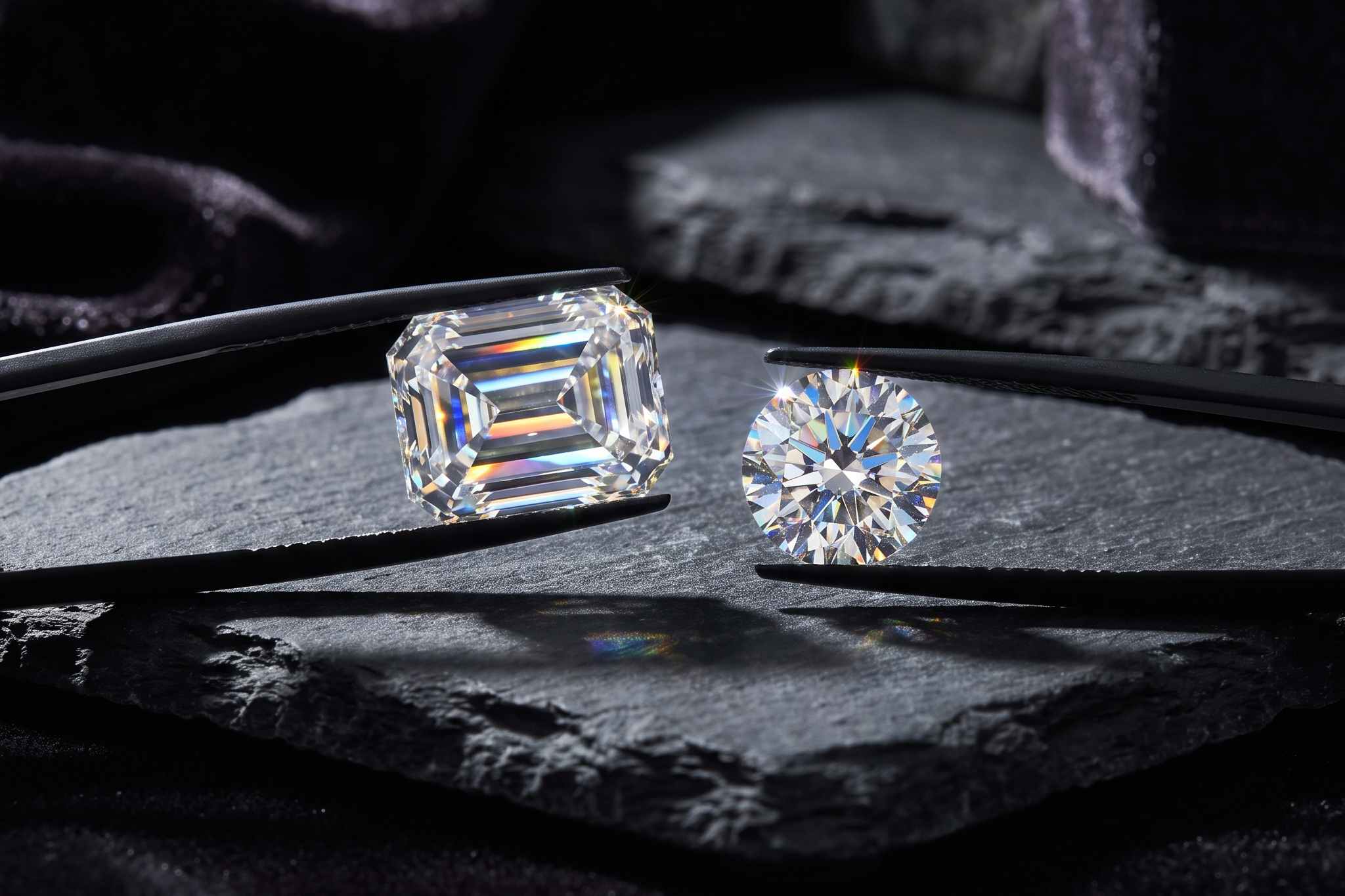
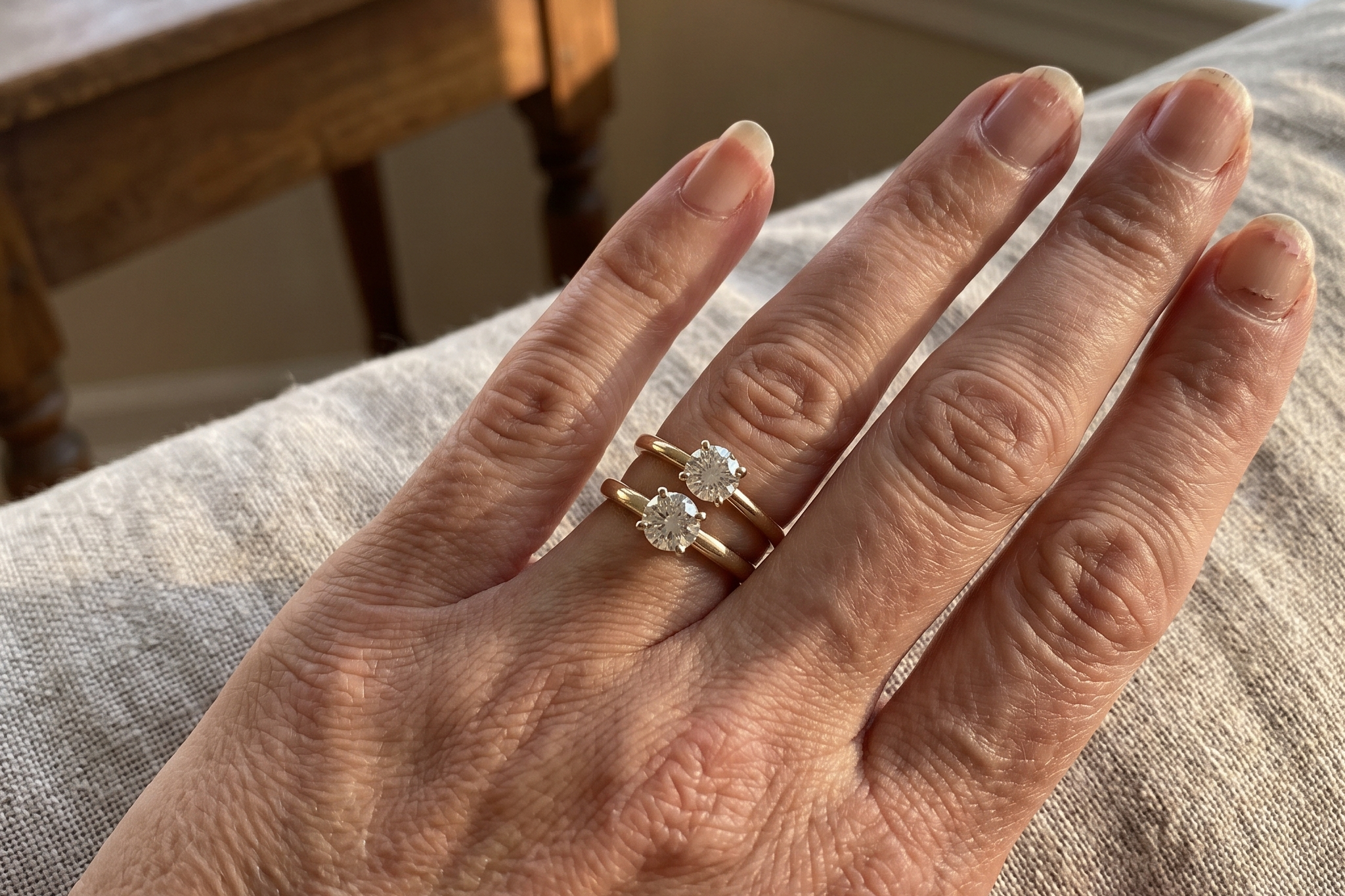
Carat measures weight, and weight grows in three dimensions. That is why doubling the carat does not double the look. A round 0.5 carat brilliant faces up at about 5.1mm across, while a 1 carat faces up at about 6.5mm. The eye sees the diameter, so the visible upgrade is roughly 27 percent, clearly noticeable side by side but far less dramatic than the 100 percent weight increase suggests.
| Measure | 0.5 Carat | 1 Carat |
|---|---|---|
| Face-up diameter | about 5.1mm | about 6.5mm |
| Depth | about 3.1mm | about 3.9mm |
| Everyday reference | Pencil eraser | Small shirt button |
| In a halo setting | Appears near 7mm | Appears near 8.5mm |
| Reads on its own in a solitaire | With a slim band | Yes, at any band width |
Two practical notes follow from the geometry. First, band width changes everything at the half carat level: a 5.1mm stone on a 1.6mm band looks generous, and the same stone on a 3mm band looks modest. Second, spread varies with cut quality, so two stones of identical weight can face up differently. The measurements line on the IGI report states the exact millimetres, which is why it is worth reading before the price tag. Our IGI certificate guide walks through that field by field.
What do 0.5ct and 1ct lab diamonds cost in 2026?
The honest answer starts with the anchor the market actually tracks. Per StoneAlgo, the average price of a loose 1 carat lab grown diamond in May 2026 was 564 USD. Half carat stones do not have a comparable published average, but they consistently trade well below the 1 carat figure, because price per carat falls as stones get smaller and half carat rough is abundant. In lab grown, the 0.5ct to 1ct upgrade is measured in hundreds of dollars, not the thousands the same jump costs in mined stones.
Loose lab diamond averages by carat, May 2026
USD averages for loose lab grown diamonds, per StoneAlgo. The curve is nearly linear per carat, unlike mined pricing which climbs exponentially.
Source: StoneAlgo lab grown diamond price averages, May 2026. USD, loose stones.
Read the curve carefully and the 1 carat case makes itself. Moving from 1ct to 2ct adds 701 USD on average, and even a 5 carat loose average sits at 2,588 USD. Against that backdrop, the half carat to one carat step is the cheapest meaningful size upgrade on the ladder. The full carat by carat breakdown lives in our price per carat analysis, and if you want a benchmark before shopping, start with how much you should pay for a lab diamond in 2026.
One caution: finished jewelry prices include the setting and metal, so a finished ring or pair of studs costs more than the loose averages above. What matters is that the stone portion of the price tracks these anchors. When it does not, you are paying for the retail structure, not the diamond.
"The eye sees diameter, not carats. A 27 percent wider face is what a 100 percent weight upgrade actually buys."
Garrett McMartin, Founder, Draco Diamond
What does each size look like on the hand?
A 0.5 carat stone reads as deliberate and refined. It sits flush to the finger, does not catch on gloves or pockets, and pairs naturally with stacked bands. It is the size that professionals often choose precisely because it never announces itself first.

On the ear the half carat size has a different meaning. A 1 carat total weight pair of studs carries a 0.5ct stone on each ear, which is the classic everyday stud proportion: visible in profile, comfortable to sleep in, and balanced on most lobes.

The 1 carat stone is the threshold where a diamond reads confidently on its own. At 6.5mm it is unmistakable in a plain solitaire, holds its presence across a table, and photographs clearly. That is why 1ct remains the reference size for engagement rings, and why the carat ladder above it, covered in our 1.5ct vs 2ct comparison, starts from this benchmark.
Which size should you choose?
The decision is less about budget than about how the piece will be worn. Four buyer profiles cover most cases:
Choose 0.5ct. It sits low, survives keyboards and gym bags, and in a halo or pavé setting gains enough spread to read close to a full carat.
Choose 1ct. At 6.5mm the stone carries a plain band without support. This is the size where a solitaire stops needing a halo to feel finished.
Choose a 0.5ct centre in a halo. The halo adds roughly 2mm of apparent spread, which closes most of the visual gap to a 1ct solitaire at a lower total price.
Choose 1ct. Because the loose 1 carat average sits at 564 USD per StoneAlgo, the entry point already includes the benchmark size, and resale friction is not part of the plan.
Pendants follow their own rule. A 1 carat pendant hangs at the collarbone and reads larger than the same stone on a finger, because nothing competes with it for attention. For a first pendant, 0.5ct to 1ct is the range that stays office appropriate.

How do you avoid overpaying at either size?
Size is only half the value equation. The same three checks protect a 0.5ct purchase and a 1ct purchase equally:
Every Draco diamond is IGI certified, E to F color, VS2+ clarity, and ships with its certificate. The report can be provided on request before purchase and verified free at IGI.org.
An Excellent cut 0.5ct returns more light than a poorly cut 1ct. Cut is the one grade that governs sparkle, and it costs the least to protect at these sizes.
With the loose 1ct average at 564 USD, a quote for the stone portion far above the anchors deserves a written explanation. Identical IGI grades at different prices reveal markup, not quality.

The good news for this segment of the market: both sizes sit comfortably in entry level territory. Draco's under $2,000 collection covers the full 0.5ct to 1ct range in rings, studs, and pendants, all IGI certified, from silver through 10K, 14K, and 18K gold to platinum. For the wider entry level landscape, see our guide to entry level luxury diamond jewelry.
0.5ct vs 1ct FAQ
What is the size difference between a 0.5 carat and 1 carat diamond?
A round 0.5 carat diamond measures about 5.1mm across the face and a round 1 carat about 6.5mm. That is a 27 percent increase in visible diameter for a 100 percent increase in weight, clearly noticeable side by side but less dramatic than the weight figure suggests.
How much does a 1 carat lab grown diamond cost in 2026?
Per StoneAlgo, the average price of a loose 1 carat lab grown diamond in May 2026 was 564 USD. Finished jewelry adds the setting and metal on top of the stone. Half carat stones trade well below the 1 carat average, though no comparable published average exists for them.
Is a 0.5 carat diamond too small?
No. At 5.1mm a half carat reads elegantly, especially on a slim band or in a halo setting that adds roughly 2mm of apparent spread. It can look modest on a wide plain band. Buyers who want a stone that reads confidently without any setting support usually step up to 1 carat at 6.5mm.
Is the jump from 0.5ct to 1ct worth it?
In lab grown diamonds, usually yes. The upgrade buys 27 percent more visible diameter, and with the loose 1 carat average at 564 USD in May 2026 per StoneAlgo, the step costs hundreds of dollars rather than the thousands the same jump costs in mined stones. The exception is a buyer who prefers a low set everyday ring, where 0.5ct is the better fit regardless of price.
Should I buy a 0.5ct or 1ct diamond for an engagement ring?
Choose 1ct if the ring is a plain solitaire, because 6.5mm is the size where the stone carries the design alone. Choose 0.5ct if the design includes a halo or pavé, or if the wearer prefers a lower, snag free profile for daily wear. Both should be IGI certified with an Excellent cut.
Does a halo setting really make a 0.5ct look like a 1ct?
Close to it. A halo adds roughly 2mm of apparent spread, taking a 5.1mm half carat to near 7mm of visual presence, which is larger than a bare 6.5mm 1 carat face. The look differs, a halo reads as a cluster rather than a single stone, but the on hand footprint is comparable at a lower total price.
References
- StoneAlgo, lab grown diamond price averages by carat weight, May 2026. USD, loose stones. stonealgo.com.
- Standard round brilliant size to weight reference, 2026. Face-up diameter varies with cut and proportions; the IGI report states exact measurements per stone.
- Draco Diamond published catalog, dracodiamond.com. Accessed July 2026. Draco prices CAD.
0.5ct to 1ct, priced under $2,000
Every Draco diamond is IGI certified, E to F color, VS2+ clarity, and the certificate is included with every order. Priced direct, up to 64 percent below legacy retail, with free insured worldwide shipping and 30 day returns.