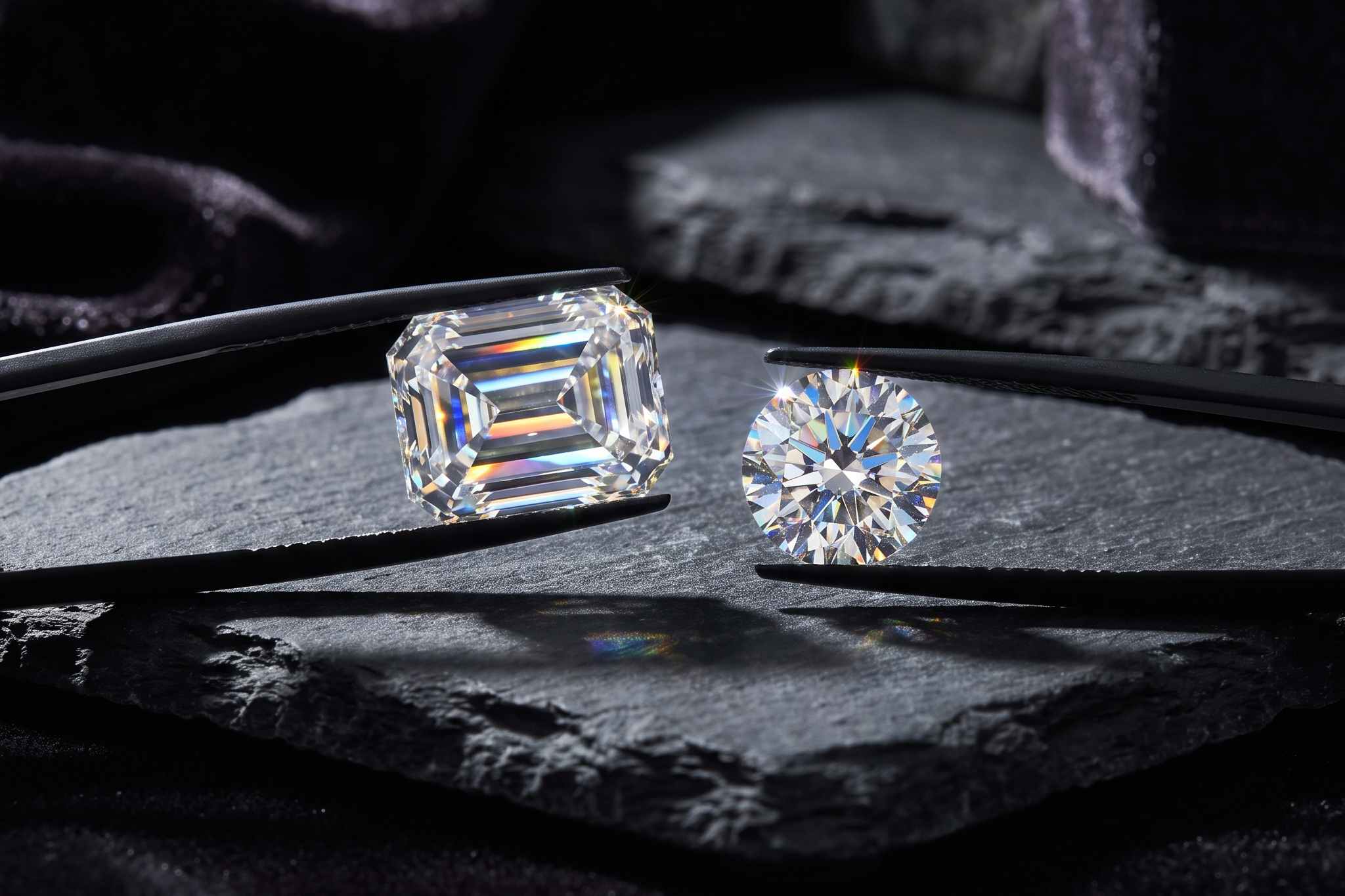
2ct vs 3ct Diamond: Size, Price, and Which to Buy
A 3 carat round reads 9.4mm against 8.1mm for a 2 carat. What that 16% difference looks like on the hand, what each size costs in 2026, and how to choose.
The author is the founder of Draco Diamond. Face-up diameters are standard round brilliant references and vary with cut. Draco prices are in CAD and reflect the published catalog at the time of writing; loose stone averages are in USD from StoneAlgo. Every Draco piece is IGI certified, E to F color, VS2 clarity or better, and verifiable at IGI.org.

Average loose lab diamond price by carat, USD
Market averages for loose lab grown diamonds, May 2026. The 2ct to 3ct step adds roughly USD $600, not the multiples natural pricing would demand.
Source: StoneAlgo lab grown diamond price averages, May 2026. Loose stones, USD. Finished jewelry pricing varies by setting and metal.
How much bigger does a 3ct diamond actually look?
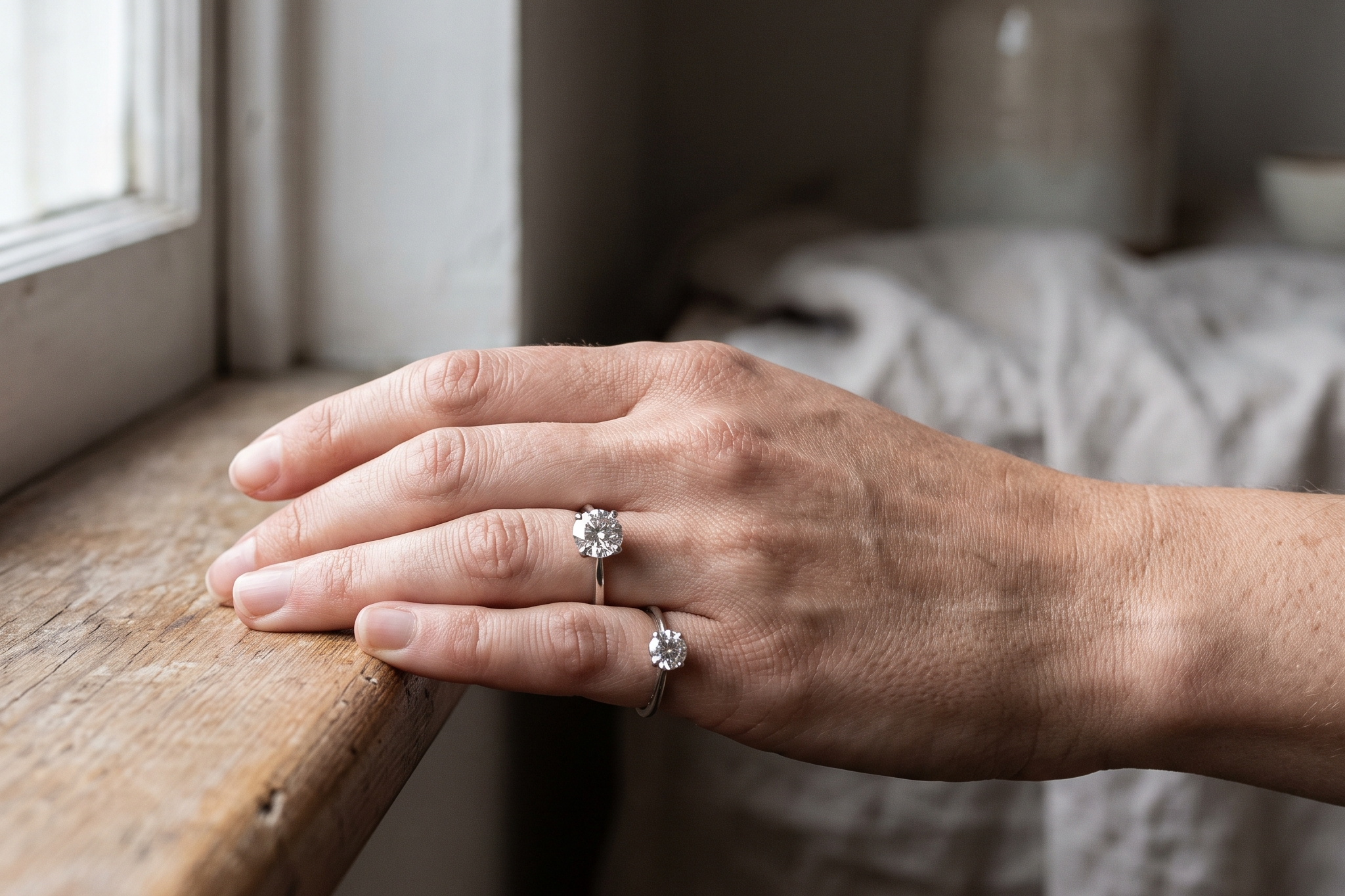
Carat measures weight, not the size the eye reads. A well cut round 2 carat sits near 8.1mm across the face; a 3 carat near 9.4mm. That 1.3mm sounds modest, but it is a 16% wider face, and unlike the subtle step from 2ct to 2.5ct, the jump to 3ct reads as a different size category both side by side and on the hand at normal viewing distance. Depth grows with it, from roughly 4.9mm to 5.7mm, which is why a 3ct also sits noticeably taller in a setting.
| Factor | 2 carat | 3 carat |
|---|---|---|
| Face-up diameter | ~8.1mm | ~9.4mm |
| Depth | ~4.9mm | ~5.7mm |
| Approx. finger coverage | ~40% of average finger | ~47% of average finger |
| Reads as | Statement, still daily wear | Bold, commanding |
| In a halo, appears | ~10.5mm | ~12mm |

"The 2ct to 3ct jump is the most visible step in the standard carat ladder. In lab grown it costs about six hundred US dollars more at loose stone averages. In natural it costs multiples."
Garrett McMartin, Founder, Draco Diamond
How much more does a 3ct cost?
In natural diamonds, 3 carats crosses a threshold where per-carat pricing climbs steeply. Lab grown flattens that curve. Per StoneAlgo's May 2026 averages, a loose lab grown diamond ran USD $564 at 1ct, $1,265 at 2ct, $1,865 at 3ct, and $2,588 at 5ct. The step from 2ct to 3ct is roughly USD $600 at market averages, which is why buyers who arrive planning a 2ct so often leave with a 3ct. For the full per-carat curve, see the price per carat report; for what a fair finished price looks like, see how much you should pay in 2026.
| Piece | Carat | From (CAD) |
|---|---|---|
| 2ct pear halo engagement ring | 2ct | $1,801 |
| 2.25ctw radiant solitaire ring | 2.25ct | $1,899 |
| 3ctw tennis bracelet, 14K white gold | 3ct total | $1,801 |
| 3ct Cuban weave band | 3ct total | $2,477 |
| 3ct marquise engagement ring | 3ct center | $2,799 |

Every piece above is IGI certified, E to F color, VS2 clarity or better, and available from silver through 10K to 18K gold and platinum. Prices are the published catalog at the time of writing and exclude sale pricing.
Should you buy a 2ct or a 3ct?
Choose 2ct if you want maximum presence that stays practical. At 8.1mm it is immediately striking, sits at the 2026 lab grown average, and wears comfortably every day on most hand sizes. Choose 3ct if you specifically want a statement. At 9.4mm, covering roughly 47% of an average finger width, it is unmistakably large from across a room, and buyers who choose it are choosing exactly that presence.
Hand proportions matter more than rules. On slimmer fingers a 2ct already reads very large and a 3ct becomes a deliberate contrast; on average to wider fingers a 3ct sits proportionally and reads confident rather than oversized. The honest variable is lifestyle: a 3ct sits taller and catches more, so gloves, gym, and hands-on work favour the 2ct or a lower profile setting.

To pair either size with a cut, setting, and metal and see the price before you commit, use the ring builder or browse the women's rings collection.
What is the best setting for each size?
At 2ct, a four prong solitaire on a slim 1.5 to 2mm pavé band keeps the eye on the stone and maximises light; a low profile bezel trades a little apparent size for real durability in daily wear. At 3ct, a clean cathedral or plain solitaire is the strongest choice: the elevated arches match the stone's scale and a plain band leaves it the undisputed centre. The counterintuitive rule is the halo. It makes a 1ct look larger, but at 3ct a halo adds clutter, not size; the 9.4mm face does not need help being seen.

For settings in depth across every size, see the best lab diamond engagement rings guide.
What do buyers get wrong at this decision?
Four errors repeat. First, pricing 3ct with natural diamond logic: in natural, 3 carats is an exponential price threshold, so buyers assume it is out of reach when the lab grown step is roughly USD $600 at loose averages. Second, paying brand premium for identical certificates: an IGI certificate specifies the stone regardless of the retailer's name on the box, so compare certificates, not brands. Third, band width: a 3mm or wider band under a 2ct or 3ct visually shrinks the centre; a 1.5 to 2mm band lets it dominate. Fourth, buying a 3ct without an individual certificate for that specific stone. Every Draco piece ships with its IGI certificate; the report can be provided on request before purchase, and every certificate is verifiable free at IGI.org.
One more expectation to set: a 3ct reads larger in person than in product photography. Most buyers are delighted by that, but it is worth knowing before the box opens.
2ct vs 3ct FAQ
What is the size difference between a 2 carat and 3 carat diamond?
A round 2 carat reads about 8.1mm across the face and a round 3 carat about 9.4mm, a 16% wider look for 50% more carat weight. It is the most visible single step in the standard carat ladder and reads as a different size category on the hand.
How much does a 3 carat lab grown diamond cost in 2026?
The average loose 3ct lab grown diamond ran about USD $1,865 in May 2026, per StoneAlgo, versus $1,265 for a 2ct. Finished pieces at Draco start at $1,801 CAD for a 3ctw IGI certified tennis bracelet and $2,477 CAD for a 3ct ring.
Is a 3 carat diamond too big for an engagement ring?
No, but it is a deliberate choice. At 9.4mm a 3ct is unmistakably a statement piece, covering roughly 47% of an average finger width. On slimmer fingers it reads dramatically large; on average to wider fingers it sits proportionally. Buyers who choose 3ct are usually choosing exactly that presence.
Should I buy a 2 carat or 3 carat diamond?
Choose 2ct for a bold stone that stays easy to wear daily; choose 3ct for maximum visual impact. Because lab grown pricing is flat, the loose stone difference is roughly USD $600 at May 2026 averages, so the decision is about proportion and lifestyle, not budget.
What is the best setting for a 3 carat diamond?
A clean cathedral or plain four prong solitaire on a slim band. A 3ct at 9.4mm carries its own presence, so a halo adds clutter rather than size at this scale. A 1.5 to 2mm band keeps the stone the undisputed centre.
Is the jump from 2ct to 3ct noticeable?
Yes, clearly. The 1.3mm diameter increase from 8.1mm to 9.4mm is a 16% wider face, visible side by side and on the hand at normal viewing distance. Unlike the subtle 2ct to 2.5ct step, 2ct to 3ct reads as a genuinely different size category.
References
- StoneAlgo, lab grown diamond price averages by carat, May 2026. Loose stones, USD.
- Standard round brilliant size to weight reference, 2026. Face-up diameter and depth vary with cut quality and proportions.
- Draco Diamond published catalog, dracodiamond.com. Accessed July 2026. Draco prices CAD, regular non-sale pricing.
Two carats or three, certified either way
Every Draco piece is IGI certified, E to F color, VS2 clarity or better, in silver, 10K to 18K gold, or platinum. 30 day returns, Lifetime Authenticity Guarantee, free ring resizing, and free insured worldwide shipping to 25 markets with signature on delivery.