1ct vs 1.5ct Diamond: Size, Price, and Which to Buy
The most common upgrade question in the lab diamond market, answered with millimeters and verified market prices instead of guesswork.
The author is the founder of Draco Diamond. Face-up diameters are standard round brilliant references and vary with cut. Market averages cite StoneAlgo data, May 2026, in USD. Draco catalog prices are in CAD, verified against the live store in July 2026.

How much bigger is a 1.5ct diamond than a 1ct?
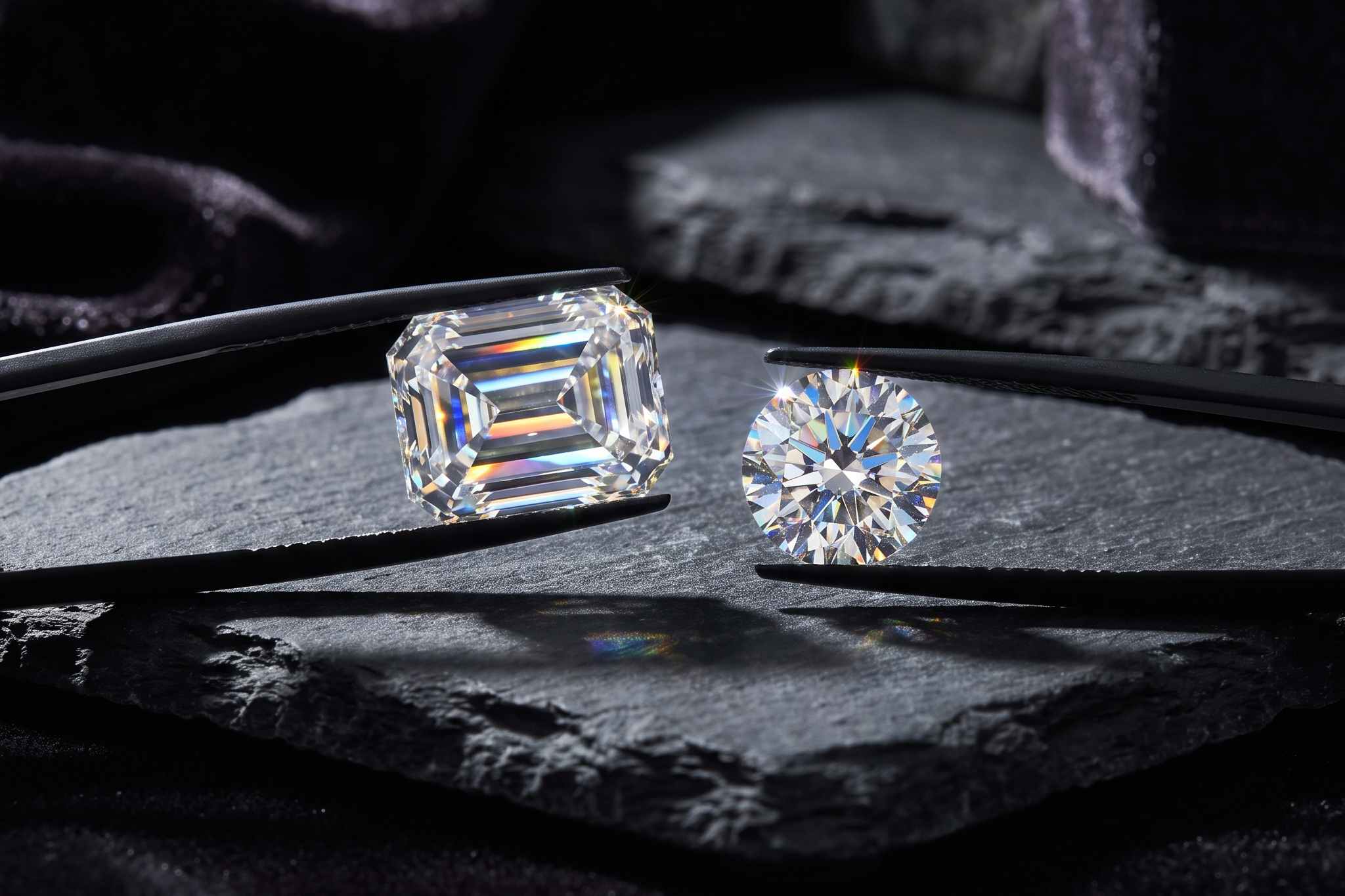
Carat is a unit of weight, not size, and that single fact explains most of the surprise in this comparison. A well cut 1ct round brilliant faces up at about 6.5mm in diameter. A well cut 1.5ct faces up at about 7.4mm. That is 50 percent more diamond by weight, but only about 14 percent more width, because the extra material also grows downward into the pavilion where it is invisible from above.
Face-up area is the better lens. Widening the circle from 6.5mm to 7.4mm grows the visible surface by roughly 30 percent, which is why a 1.5ct reads as a clear step up in a solitaire even though the raw diameter gap is under one millimeter. Standard proportion figures for both sizes:
| Measurement | 1 Carat | 1.5 Carat |
|---|---|---|
| Face-up diameter | ~6.5mm | ~7.4mm |
| Approximate depth | ~3.9mm | ~4.5mm |
| Carat weight | 1.00ct | 1.50ct, 50% more |
| Width increase | Baseline | ~14% wider |
| Face-up area | Baseline | ~30% more |
The proportions matter more than the weight. A shallow-cut 1.5ct can face up barely larger than a well cut 1ct while leaking light, which is why the cut grade on the IGI certificate is the one field never to compromise when moving up the carat ladder.

What does the price gap actually look like?
Lab grown pricing collapsed the penalty that used to make this decision painful. According to StoneAlgo's aggregate of online listings in May 2026, the average 1ct lab grown diamond sold for US$564, the average 2ct for US$1,265, the average 3ct for US$1,865, and the average 5ct for US$2,588. There is no equally verified average for 1.5ct, but the shape of the curve places it squarely between the 1ct and 2ct anchors: expect to pay meaningfully more than a 1ct and meaningfully less than a 2ct for the loose stone.
Average online lab grown diamond price by carat
USD, loose stones, May 2026. The 1.5ct decision sits on the first and steepest segment of the curve, between the two gold anchors.
Source: StoneAlgo aggregate online listing data, May 2026. Averages for loose lab grown diamonds, USD.
Two things follow from those numbers. First, price per carat rises as stones get larger, so a 1.5ct costs more than one and a half times a 1ct of the same grades. Second, the absolute dollars at stake in the 1ct to 1.5ct step are small by jewelry standards, a few hundred dollars on the loose stone rather than the thousands the same step commands in mined diamonds. The full curve, carat by carat, is charted in the lab grown diamond price per carat analysis, and fair benchmarks by budget are in the 2026 pricing guide.
"Carat weight is the most overpaid-for number in jewelry. Buy the millimeters you can see and the cut grade that lights them up."
Garrett McMartin, Founder, Draco Diamond
How do the two sizes compare on the hand?
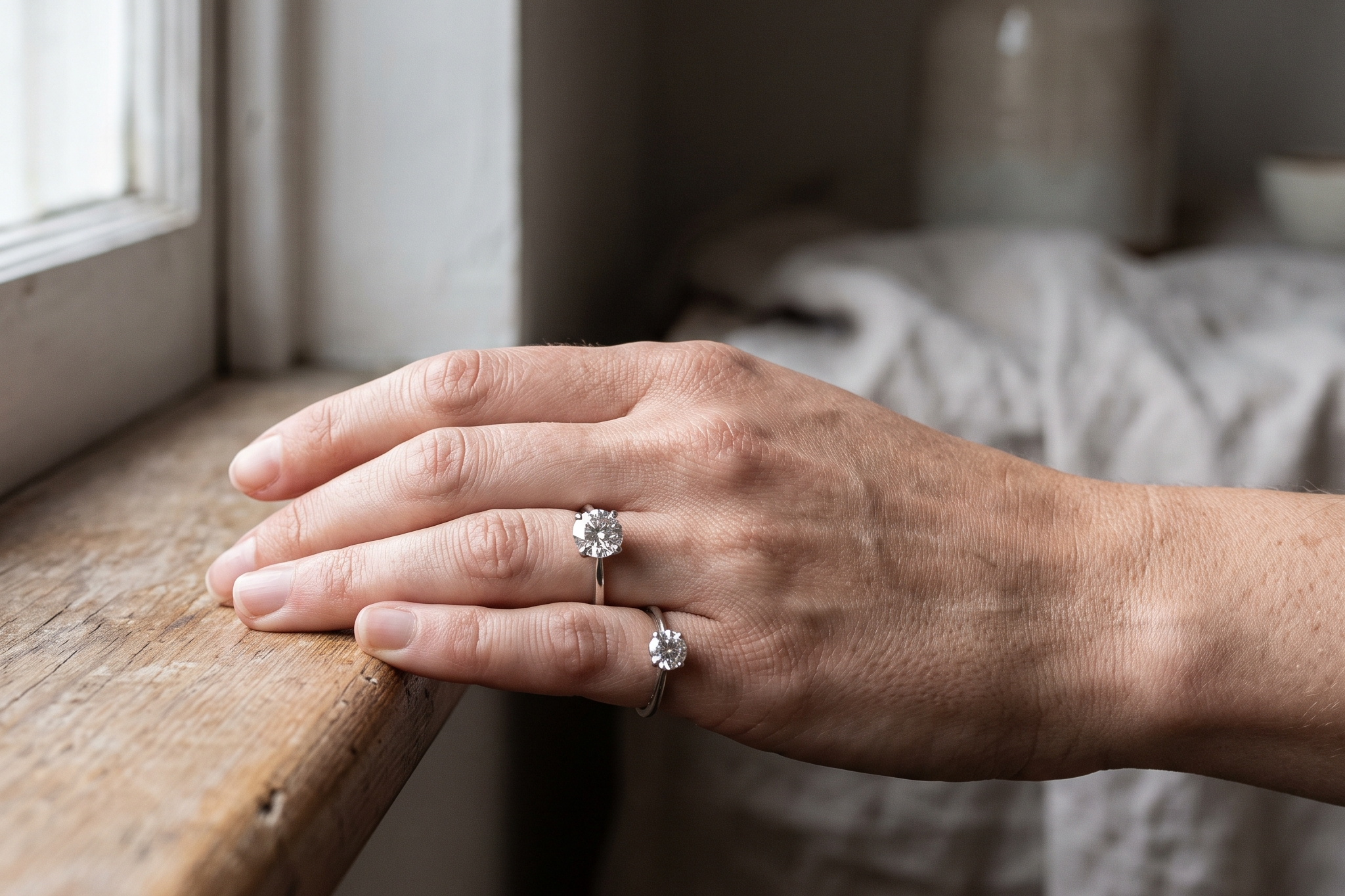
Side by side on a grading tray, the difference is obvious. On a moving hand at conversational distance, it is subtler than the 50 percent weight gap suggests. The 1.5ct is unmistakably the larger stone in a plain solitaire, where nothing competes with the center. In a halo or a pavé-heavy setting, the surrounding melee narrows the visual gap, because a halo adds apparent size to whichever center it frames.
Setting choice is therefore part of the size decision. Buyers set on maximum presence per dollar often do better with a 1ct center in a halo than a 1.5ct solitaire, while purists who want the stone to carry the ring alone are the natural 1.5ct buyers.

Which size should you buy?
The right answer depends on what the piece is for, not on which number sounds better. Four buyer profiles cover almost every case:
In a plain solitaire the extra 0.9mm and 30 percent face-up area read clearly, in person and in photographs. At lab grown prices the premium over a 1ct is a few hundred dollars, not a few thousand, so the buyer who wants the larger stone should simply buy it.
A 1ct sits lower on the finger, catches on knitwear and gloves less, and costs less to insure. It is the default engagement size for a reason, confident without asking for accommodation from the rest of your day.
Studs are specified in total weight split across two settings, so 1ctw means 0.5ct per ear and 2ctw means 1ct per ear. A 2ctw pair puts a full one carat stone on each lobe. The 2026 stud earrings guide covers the tier by tier choice.
A halo adds apparent size to any center, which narrows the visible gap between 1ct and 1.5ct. If the design already carries melee, a 1ct center plus a better metal or band is often the stronger allocation of the same budget.
Buyers who keep climbing should read the next rung on the ladder, the 1.5ct vs 2ct comparison, where the price curve steepens and the wearability tradeoffs grow with it.

What does each size cost at Draco?
Draco Diamond prices in CAD, verified against the live catalog in July 2026. Every piece is IGI certified, E to F color, VS2+ clarity, and available across the full metal range from silver through 10K to 18K gold and platinum:
| Piece | Carat | Price from |
|---|---|---|
| Round stud earrings | 1ctw | $711 |
| Round stud earrings | 2ctw | $999 |
| Toi et moi two stone ring | 1ct | $1,081 |
| Open French pavé band | 1ct | $1,410 |
| Seven stone anniversary ring | 1ct | $1,488 |
The entire 1ct tier lives comfortably inside the under $2,000 collection, and the full ring range is in women's rings. Each piece ships with its IGI certificate; the report can be provided on request before purchase and verified free at IGI.org.

1ct vs 1.5ct FAQ
What is the size difference between a 1ct and a 1.5ct diamond?
A well cut 1ct round brilliant measures about 6.5mm across and a well cut 1.5ct about 7.4mm, roughly 14 percent more diameter and about 30 percent more face-up area for 50 percent more carat weight. The rest of the added weight grows downward into the pavilion, where it is invisible from above.
How much more does a 1.5ct diamond cost than a 1ct?
In lab grown, the gap is a few hundred dollars rather than thousands. StoneAlgo's May 2026 averages put the online 1ct lab diamond at US$564 and the 2ct at US$1,265, with 1.5ct landing between those anchors. Price per carat rises with size, so a 1.5ct costs more than one and a half times a 1ct of identical grades.
Is a 1.5ct diamond noticeably bigger than a 1ct?
Yes in a plain solitaire, where the 0.9mm of extra width and 30 percent more face-up area read clearly. The gap narrows in halo and cluster settings, where surrounding melee adds apparent size to either center. Buyers expecting a 50 percent visual jump to match the weight are the ones who come away surprised.
Is 1.5ct a good size for an engagement ring?
It is the natural choice for a statement solitaire: visibly above the 1ct default at 7.4mm, still elegant on most hands, and priced below the 2ct tier. In lab grown the premium over a 1ct is modest, so buyers who want the larger stone rarely regret taking it.
Which is better for everyday wear, 1ct or 1.5ct?
The 1ct. It sits lower on the finger, snags less on fabric, and carries a lower insured value. The 1.5ct earns its keep on occasions and in photographs; the 1ct earns its keep every day. Both are available IGI certified at E to F color and VS2+ clarity at Draco.
Should I buy a 1ct or a 1.5ct lab grown diamond?
Decide by intent. Statement engagement solitaire, buy the 1.5ct, because the lab grown price gap is small enough that compromising on size saves little. Daily-wear ring or studs, buy the 1ct tier and put the difference into cut grade, metal, or the setting. If you are still climbing, read the 1.5ct vs 2ct comparison before deciding.
References
- StoneAlgo. Aggregate online listing averages for loose lab grown diamonds, USD: 1ct US$564, 2ct US$1,265, 3ct US$1,865, 5ct US$2,588. stonealgo.com. May 2026.
- International Gemological Institute. Grading standards and Verify Your Report. IGI.org.
- Draco Diamond published catalog, CAD pricing verified July 2026. dracodiamond.com.
The 1ct tier, priced direct
Every Draco diamond is IGI certified, E to F color, VS2+ clarity, priced up to 64 percent below legacy retail. 30 day returns, Lifetime Authenticity Guarantee, free ring resizing, free insured worldwide shipping to 25 markets, signature on delivery.