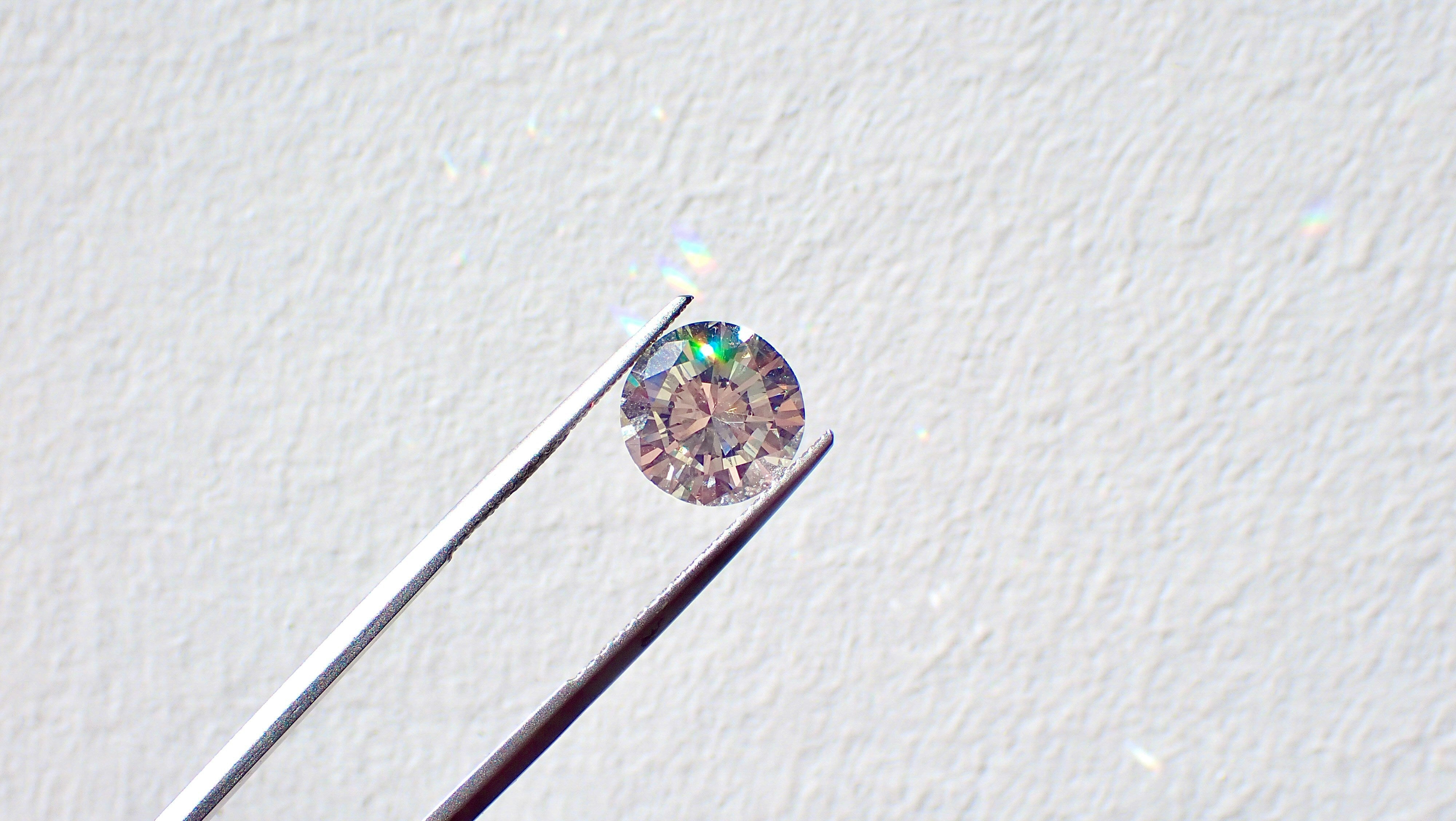
Are Lab Grown Diamonds Actually Eco Friendly? The Honest Answer
Lab grown wins decisively on land, water, and waste. The carbon story is more complicated, and most brands will not tell you why.
The author is the founder of Draco Diamond, a Canadian lab grown diamond brand. Every environmental figure below is attributed to a named, dated third party source. Draco makes no carbon neutral claim.

Are lab grown diamonds better for the environment?
Yes on most measures, with one honest caveat. Compared with mining a natural diamond, growing one disturbs no land, moves no waste rock, and uses far less water. Those wins are structural and hard to dispute. The single measure where lab grown does not automatically win is carbon, because the greenhouse gas total depends entirely on the electricity used to run the reactor.
This matters because the category is full of absolute claims. Some brands call lab grown diamonds sustainable or carbon neutral without qualification. Regulators are now scrutinising exactly that language. The United States Federal Trade Commission treats an unqualified environmental claim as something a seller must be able to substantiate, and its Green Guides are under review.7 The responsible position is to state what the evidence supports and to flag what it does not.
Those first three figures come from an environmental analysis published by Frost & Sullivan in 2014.1 They are quoted everywhere, and they favour lab grown. Read section three before you treat any of them as settled.
Why insist on the caveat at all? Because trust compounds and slogans evaporate. A buyer who is told a diamond is simply green, then later learns the carbon depended on a coal grid, feels sold to. A buyer who is told the truth up front, that the land, water, and waste case is strong and the carbon case is conditional, can make a decision they will not regret. The honest answer is less quotable. It is also the only one that survives scrutiny.
"The honest answer is not simply sustainable. It is better on land, water, and waste, and only as clean as the power grid that grew it."
Garrett McMartin, Founder, Draco Diamond
How much less land, water, and waste?
This is the strongest part of the case, and it is the part almost no one disputes. Diamond mining is a large scale earth moving operation. Open pit and alluvial mines displace enormous volumes of rock and soil to recover a small quantity of gem. Growing a diamond in a reactor removes that entire step.
The most quoted comparison comes from Frost & Sullivan. Its 2014 analysis reported that, per carat, mining produced about 4,383 times more mineral waste than growing, used about 6.8 times as much water, and consumed about 2.14 times the energy.1 The United States Geological Survey has long documented that recovering a single carat by mining requires moving very large quantities of ore.4

The land story is the most visible of all. A large mine reshapes landscape, waterways, and habitat for decades, and the tailings and overburden it leaves behind do not disappear when the gems are sorted. Reactor growth takes place inside a facility measured in square metres, not square kilometres. Even critics of the lab grown carbon case rarely argue that growing disturbs more land or moves more rock than mining. On that axis the comparison is not close.
Here is the necessary honesty about that Frost & Sullivan figure. The report drew its manufacturing data from a single producer and some inputs dated to 2012, and the trade publication JCK criticised it in 2019 for being narrow and out of date.2 So treat 4,383 as a directional headline, not a precise universal constant. The direction is sound. Mining moves vastly more material and water per carat than growing. The exact multiple for any given stone will vary.
Where lab grown wins, and where it depends
How much more, per carat, mining uses than growing. Log scale, because waste dwarfs the others. Carbon is shown separately because it depends on the energy grid, not the method alone.
Waste, water, and energy: Frost & Sullivan, 2014. Carbon: contested between Frost & Sullivan and Trucost, 2019. See references.
Is the carbon footprint actually lower?
Not automatically. This is where honesty separates a trustworthy brand from a marketing one. Growing a diamond takes sustained high temperature energy over weeks. If that energy comes from coal or gas, the carbon total can be high. If it comes from hydro, solar, or wind, it can be very low.
The counter argument to the lab grown case came from Trucost, in research commissioned by the Diamond Producers Association, the mining side of the industry. Its 2019 report estimated that greenhouse gas emissions from lab grown production were roughly three times greater than from mined diamonds.3 Reporting has echoed the same warning: a diamond grown on a coal heavy grid can carry a footprint far higher than buyers expect, and many reactors still run on grid electricity.5

A fair comparison would measure the full life cycle of each stone, from energy input through cutting, polishing, and transport, using current data and a disclosed grid mix. Very few consumer facing claims do that. Most quote a single stage and present it as the whole. The practical problem for a buyer is that grid disclosure is rare. A brand that runs on hydro or solar has every reason to say so and to have it verified. Silence on the question usually means the honest answer is grid electricity of unknown mix.
Now hold both studies to the same standard. The lab favourable figures came from research associated with a grown diamond trade group. The mined favourable figures came from research paid for by the mining producers. Each headline was funded by the side it flatters. That is precisely why no single percentage should be repeated as gospel, and why the accurate statement is a conditional one: lab grown carbon depends on the grid. Where a producer runs on clean power and discloses it, the carbon case is strong. Where it does not, the honest answer is that you do not know.
What does greenwashing look like here?
Greenwashing in this category tends to follow a few patterns. Learn them and most inflated claims fall apart on sight.

A low number that covers reactor growth but quietly leaves out cutting, polishing, sorting, and shipping is not a full life cycle figure. Ask what the number includes.
These words carry weight only with independent verification and disclosed offsets. On their own they are a slogan. The Federal Trade Commission expects sellers to substantiate them.7
One producer has promoted a figure close to 99.98 percent less carbon than mining. That claim is contested and traces to a single interested source, so it should not be treated as an industry fact.6
None of this means lab grown is a con. It means the credible environmental case is the specific one, land, water, and waste, plus carbon when clean energy is used and disclosed. The moment a brand reaches past that into blanket sustainability language, ask for the evidence.
What can you actually verify as a buyer?
You cannot audit a reactor from your living room. You can, however, verify the things that actually protect you, and weigh the claims that cannot be checked accordingly.

Require an IGI or GIA report and confirm the stone is disclosed as lab grown. Independent grading is verifiable free at IGI.org. This is the one claim you can check in minutes.
If a seller claims a low carbon footprint, ask whether growth used renewable power and whether that is independently verified. A brand that cannot answer should not be making the claim.
Credit lab grown for the land, water, and waste advantages, which hold at identical specification. Treat unqualified sustainable, carbon neutral, or conflict free labels as marketing until a third party confirms them.
On ethics, there is a genuine structural win worth stating plainly. A lab grown diamond does not fund armed conflict and carries no exposure to artisanal mining child labour, because there is no mine.6 That is real. What remains marketing, absent verification, is the blanket word sustainable. Every Draco diamond is IGI certified, E to F colour, VS2 and better, so the grade and origin you are told are the grade and origin you can confirm. For the wider context on why the two markets are splitting, see our analysis of the natural diamond bifurcation, and for the underlying science, whether lab grown diamonds are real diamonds.
Sustainability FAQ
Are lab grown diamonds better for the environment than mined?
On land disturbance, waste rock, and water use, yes, clearly. A Frost & Sullivan analysis put mining at roughly 4,383 times more waste, 6.8 times more water, and 2.14 times more energy per carat, though that report is dated and lab favourable, so treat the multiples as directional. On carbon, it depends on the electricity used to grow the stone, so lab grown is not automatically lower on greenhouse gas.
Are lab grown diamonds carbon neutral?
Not by default, and no honest seller should claim it without independent verification. Carbon depends on the power grid. Growth on renewable energy can be very low, while growth on a coal heavy grid can rival or exceed mined diamonds. Draco does not make a carbon neutral claim.
Do lab grown diamonds use a lot of water?
Far less than mining. The most cited comparison reported mining using about 6.8 times as much water per carat as growing. Reactor growth does not require the large scale water handling of an open pit or alluvial mine.
Why do some reports say lab grown has three times the carbon of mined?
That figure comes from a 2019 Trucost report commissioned by the Diamond Producers Association, the mining side of the industry. The lab favourable figures come from research tied to the grown diamond side. Each headline was funded by the side it flatters, which is why the accurate statement is conditional: carbon depends on the grid, not on the method alone.
Are lab grown diamonds ethical and conflict free?
Structurally there is a real win. Because there is no mine, a lab grown diamond does not fund armed conflict and carries no artisanal mining child labour exposure. The word sustainable, however, is marketing unless a brand can show independent verification. Insist on IGI or GIA certification and clear lab grown disclosure.
How can I tell if a brand is greenwashing?
Watch for a footprint number that omits cutting, polishing, and shipping, for unqualified carbon neutral or net zero labels, and for a single dramatic percentage from an interested source. Ask what the figure includes and whether it is independently verified. Credible claims survive that question.
References
- Frost & Sullivan. Environmental Impact Analysis, Comparison of Grown and Mined Diamonds. November 2014.
- JCK. "Please Don't Use Frost & Sullivan's Lab-Grown Eco-Impact Report." jckonline.com. June 21, 2019.
- Trucost, for the Diamond Producers Association. The Socioeconomic and Environmental Impact of Large-Scale Diamond Mining. May 2019.
- Earth911. "The Environmental Impact of Lab-Grown Diamonds," citing United States Geological Survey data. earth911.com. Accessed August 2026.
- Triad City Beat. "Are Lab-Grown Diamonds Truly Greener in 2025?" triad-city-beat.com. 2025.
- Prins & Prins. "Greenwashing in Lab-Grown Diamonds, a Global Warning for the Industry." prinsandprins.com. 2025.
- United States Federal Trade Commission. Guides for the Use of Environmental Marketing Claims, 16 CFR Part 260 (Green Guides), under review. ftc.gov. Accessed August 2026.
- International Gemological Institute. Verify Your Report. igi.org. Accessed August 2026.
Certified, disclosed, and priced direct
Every Draco diamond is IGI certified, E to F colour, VS2 and better, and clearly disclosed as lab grown. We make no carbon neutral claim we cannot verify. What we do offer is 30 day returns, a Lifetime Authenticity Guarantee, free ring resizing, free insured worldwide shipping to 25 markets, and signature on delivery. Rated 4.8 out of 5 across 866 verified reviews. Bring us a comparable quote and we will beat it almost every time.