The De Beers Collapse and Lab Diamond Prices in Canada
Why lab grown prices are not coming back, where the savings actually went, and what the gap looks like for a Canadian buyer in 2026.
The author is the founder of Draco Diamond, a Canadian brand. Wholesale data is from Edahn Golan Diamond Research; lab versus natural pricing from BriteCo. Draco prices are in CAD; wholesale figures are USD as published.

Wholesale 1 carat lab diamond, 2020 to 2026
F color, VS2, round. The decline that reset what a diamond costs in Canada. USD.
Source: Edahn Golan Diamond Research wholesale tracking, 2020 to 2026.
Why prices are not coming back
The decline in lab grown prices is permanent, and the reason is simple economics. Between 2020 and 2023, global manufacturing capacity expanded more than 300 percent, and the technology kept improving. Supply outpaced demand, wholesale for a 1 carat stone fell from around $3,410 in 2020 to near $680 in 2026, and the price now sits close to the cost of production. You cannot un-build a factory or un-learn a process. The De Beers writedowns, $6.8 billion over three years, are the natural side of the same story: the scarcity that propped up prices is gone on both sides of the market.
"This was never a sale. It is the new floor, set by the cost of making the stone, and it does not move back up."
Garrett McMartin, Founder, Draco Diamond
Where the savings actually went
A falling wholesale price only helps a buyer if the seller passes it on. Direct to consumer brands rebuilt their pricing on the new, lower cost basis, so their prices fell with the market. Many traditional retailers did not; they kept prices closer to the old wholesale and pocketed the difference as margin. That is why the same IGI certified specification can cost far more at a legacy jeweler than direct, and why a Canadian buyer who shops on the certificate rather than the storefront captures the full benefit of the collapse.

Three questions to ask before buying
Whatever you are comparing in Canada, three questions separate a fair price from markup. First, is every stone independently IGI or GIA certified, with a report you can verify yourself. Second, does the price map to the 4Cs, so the same specification costs the same wherever you check. Third, what protects you after the sale: returns, free ring resizing, insured shipping, and a lifetime guarantee. A seller that answers all three cleanly is passing on the collapse; one that cannot is keeping it.

What the gap looks like in Canada
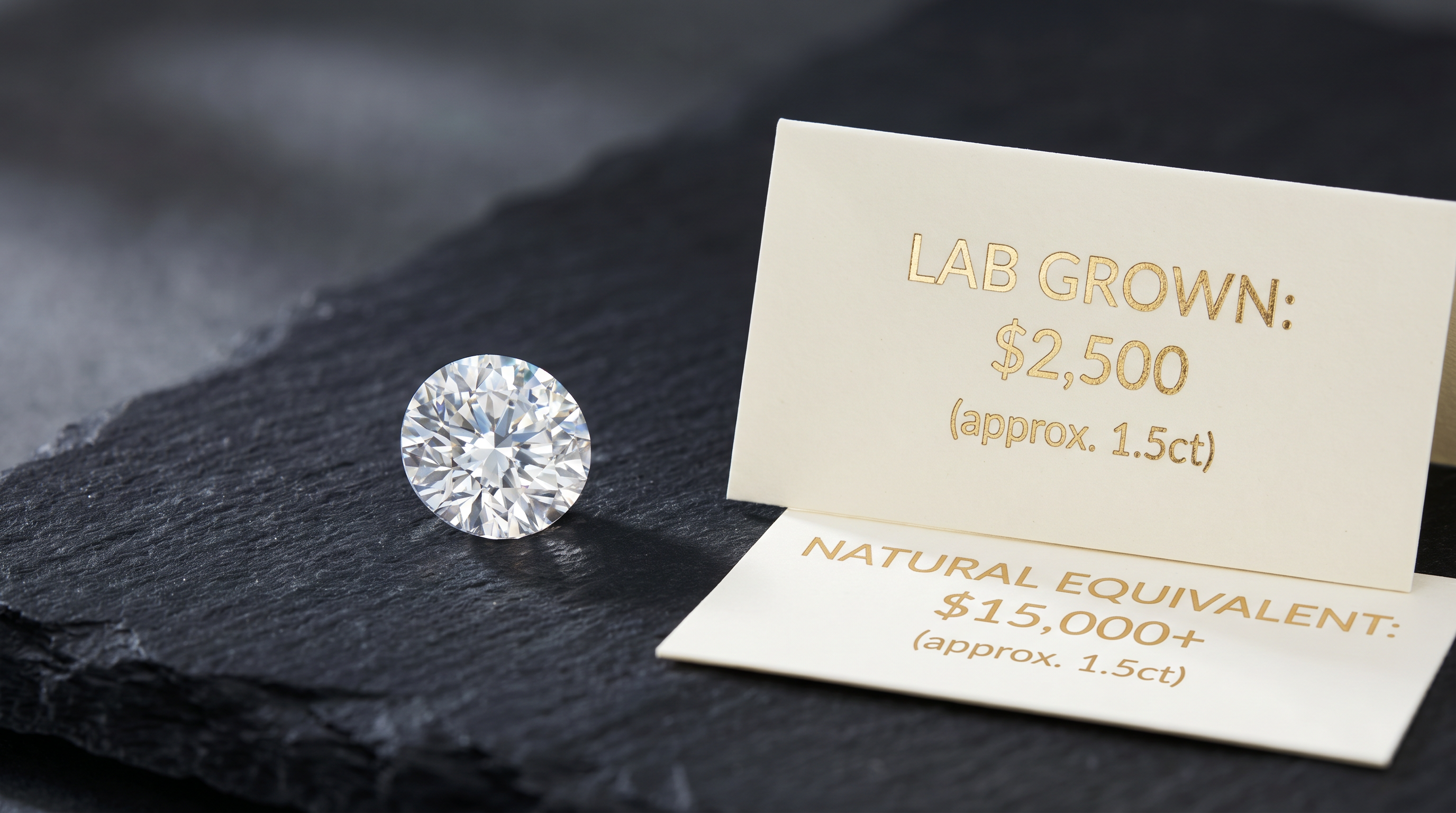
For a Canadian buyer in 2026, the gap is concrete. Direct to consumer, a 1 carat IGI certified lab diamond starts under $1,000 CAD, a 2 carat ring near $1,801 CAD, and a 5 carat ring near $3,111 CAD, every stone E to F color, VS2 clarity or better. The same specifications at a traditional jeweler, priced closer to the old wholesale, run multiples higher. Lab grown also costs 80 to 90 percent less than the natural equivalent per BriteCo, so the saving compounds against both legacy lab retail and natural. Buy direct, on the certificate, in CAD. See the full breakdown in price per carat, or browse certified rings.
Lab diamond prices in Canada FAQ
Will lab grown diamond prices go back up?
No. The decline is structural: production capacity grew more than 300 percent and wholesale fell roughly 80 percent from 2020 to 2026, with prices now near production cost. Scaled manufacturing cannot be reversed, so the floor holds rather than rebounding.
How much is a lab grown diamond in Canada in 2026?
Direct to consumer, a 1 carat IGI certified lab diamond starts under $1,000 CAD, a 2 carat ring near $1,801 CAD, and a 5 carat ring near $3,111 CAD, all E to F color and VS2 clarity or better. Traditional retailers price the same specifications higher.
Why are lab diamonds cheaper direct than at a Canadian jeweler?
Direct brands rebuilt pricing on the new lower wholesale cost, while many traditional retailers kept prices closer to the old wholesale and kept the difference as margin. The same IGI specification therefore costs more at a legacy jeweler than direct.
Does the De Beers collapse affect Canadian diamond prices?
It confirms the trend. De Beers was written down $6.8 billion over three years as scarcity pricing broke down. For Canadian buyers it means both lab grown and natural are under price pressure, and the certificate, not the brand, is what should set value.
How do I buy a lab diamond safely in Canada?
Confirm every stone is independently IGI or GIA certified and verifiable, check that the price maps to the 4Cs, and confirm the terms: returns, free ring resizing, insured shipping, and a lifetime guarantee. Draco meets all three and ships IGI certified pieces in CAD.
References
- Edahn Golan Diamond Research, wholesale 1 carat lab diamond price tracking, 2020 to 2026.
- BriteCo, November 2025, lab grown versus natural diamond pricing (80 to 90 percent less).
- Draco Diamond published catalog, dracodiamond.com. Accessed June 2026. Draco prices CAD.
The collapse, passed on to you
Every Draco piece is IGI certified, E to F color, VS2 clarity or better, priced to the 4Cs in CAD. The certificate is included with every order. Free insured worldwide shipping, free ring resizing, 30 day returns, Lifetime Authenticity Guarantee.