Silver, 10K, 14K, 18K or Platinum
Every Draco piece is offered in five metals, and the adjustment is a fixed percentage of the 10K base price. The same arithmetic works on a pair of studs and on a fifty carat necklace.
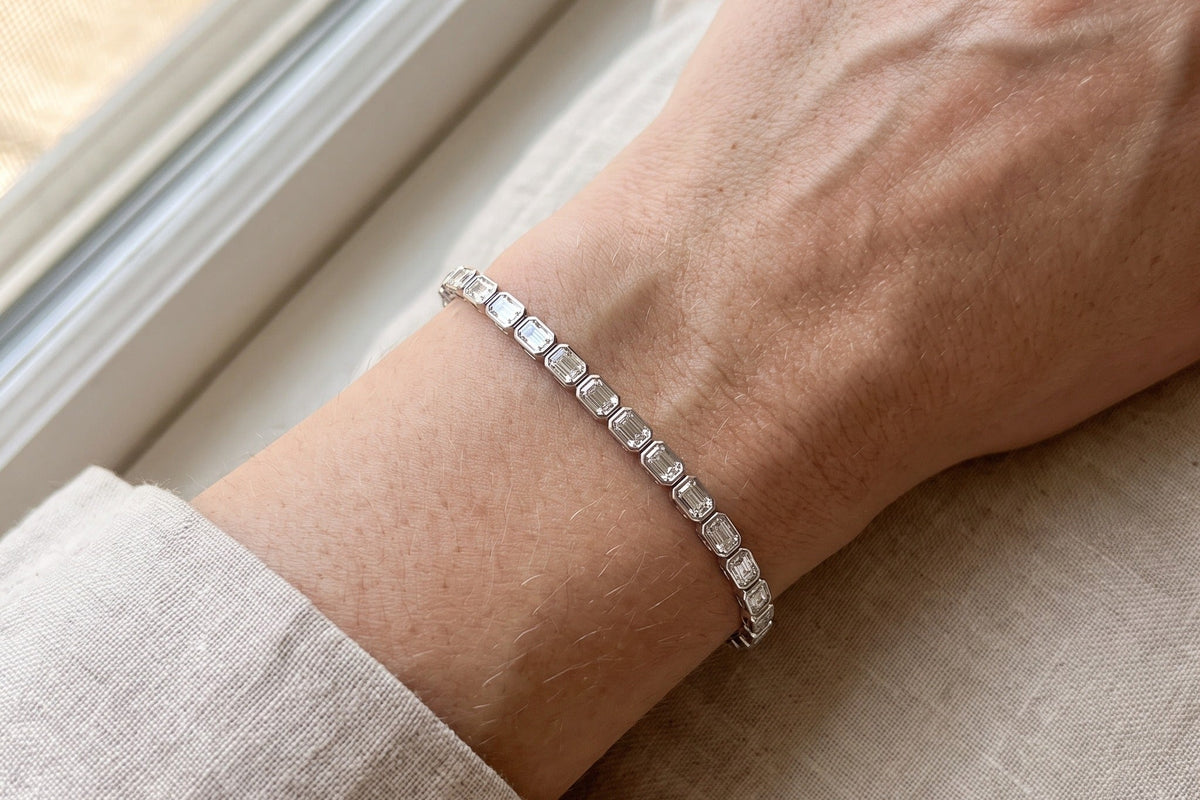
Percentages read directly from the Draco product configurator on August 27, 2026. Worked examples use the 5 carat emerald cut tennis bracelet, the 1 carat round stud earrings and the 3 carat tennis bracelet. Precious metal content figures are the standard hallmarking standards.

How much does each metal add?
Every Draco catalogue price is quoted in 10K gold. The other four metals are a fixed percentage of that figure, which means one multiplication gives you any piece in any metal.
That is worth stating plainly because most jewellers quote metal upgrades as flat dollar amounts that appear arbitrary and change from piece to piece. A percentage is predictable and it scales. If you know the 10K price of anything in the catalogue, you know all five prices for it.
| Metal | Adjustment | 5ct bracelet | 1ct studs | 3ct bracelet |
|---|---|---|---|---|
| Sterling silver | -30% | 1,904 | 497 | 1,261 |
| 10K gold, any colour | base | 2,720 | 711 | 1,801 |
| 14K gold, any colour | +18% | 3,210 | 839 | 2,125 |
| 18K gold, any colour | +38% | 3,754 | 981 | 2,485 |
| Platinum | +45% | 3,944 | 1,031 | 2,611 |
What each metal costs on the same 5 carat bracelet
Draco catalogue, August 2026, CAD. The 10K price is the base and every other metal is a fixed percentage of it.
Source: Draco Diamond product configurator, read August 27, 2026.
Notice that the gap widens in absolute terms as the piece gets more expensive but stays identical in percentage terms. On the 1 carat studs the spread between silver and platinum is CAD 534. On the 5 carat bracelet it is CAD 2,040. The decision costs more on bigger pieces, which is precisely when it deserves more thought.
Colour is free. White, yellow and rose gold cost the same as each other at any given karat, because gold alloys of equal purity cost effectively the same to produce. The only reason to choose one over another is how it looks against your skin and against the stones.

What does karat actually mean?
Karat measures gold content out of 24 parts. Pure gold is 24 karat, and it is too soft for jewellery that gets worn, so it is alloyed with harder metals such as copper, silver, nickel and palladium.
Ten karat gold is 10 parts gold in 24, which is 41.7 percent. Fourteen karat is 58.3 percent. Eighteen karat is 75 percent. The remainder in each case is the alloy, and that alloy is doing two jobs at once. It hardens the metal and it determines the colour.
| Metal | Precious content | Character | Best for |
|---|---|---|---|
| Sterling silver | 92.5% silver | Softest, tarnishes | Largest carat per dollar |
| 10K gold | 41.7% gold | Hardest gold alloy | Most scratch resistant |
| 14K gold | 58.3% gold | Daily wear standard | Best balance |
| 18K gold | 75.0% gold | Richest colour, softer | Colour depth |
| Platinum | 95% platinum | Densest, no plating | Security and permanence |
Colour comes from the alloy rather than the gold. Yellow gold uses silver and copper in balance. Rose gold uses more copper, which is why deeper rose tones are usually found at lower karats where there is more alloy to work with. White gold uses palladium or nickel, then gets plated to achieve the bright white finish most buyers expect.
This produces a counterintuitive result worth knowing. An 18 karat rose gold will be paler and less pink than a 10 karat rose gold, because the higher gold content leaves less room for the copper that creates the colour. If you want a strong rose tone, a lower karat delivers it better and costs less.

Which metal lasts longest in daily wear?
There is a genuine trade off here, and it runs opposite to price.
More gold means softer metal. Ten karat gold is the hardest of the three alloys because it contains the most hardening alloy, so it resists scratching best. Eighteen karat is the softest and marks most easily. Fourteen karat sits between them, which is exactly why it has become the default for fine jewellery worn every day.
The second maintenance factor applies only to white gold. White gold is not naturally white. The alloy is a pale yellowish grey, and the bright white finish comes from a thin rhodium plating applied over it. That plating wears through with contact.
How quickly depends entirely on what the piece touches. A ring worn daily on a working hand may need replating every year or two. Earrings touch almost nothing and can go many years. A bracelet sits between the two, since it rubs against sleeves and desks.
"The most expensive metal is not the most durable one. More gold means softer metal, so 18 karat marks more easily than 10 karat while costing considerably more."
Garrett McMartin, Founder, Draco Diamond
Sterling silver is the softest option and it tarnishes, reacting with sulphur compounds in air to darken over time. That is not damage and it polishes off, but it is maintenance that gold does not require.

Is platinum worth 45 percent more?
Platinum behaves differently enough from gold that it deserves its own answer rather than a place on the same scale.
It is naturally white, so it never needs rhodium plating and never changes colour. That removes a maintenance cycle entirely rather than extending it.
It is also considerably denser. The same piece in platinum weighs noticeably more than in 14K gold, which some people read as quality and others find heavy, particularly in earrings where weight pulls on the lobe.
The most important difference is how it behaves when scratched. Gold loses material when it scratches, so metal is removed and over decades a prong thins. Platinum displaces instead, which means the metal moves rather than disappearing. A scratched platinum surface develops a soft patina and retains its mass. This is why platinum prongs are considered the most secure long term holding for a stone.
Whether that earns 45 percent depends on the piece and the wearer. On an engagement ring intended to be worn for decades, it is a defensible premium. On a bracelet worn occasionally, it mostly buys weight.

How does silver change what you can afford?
Sterling silver is the most underrated option in the catalogue, because at 30 percent below the 10K base it changes what carat weight is reachable.
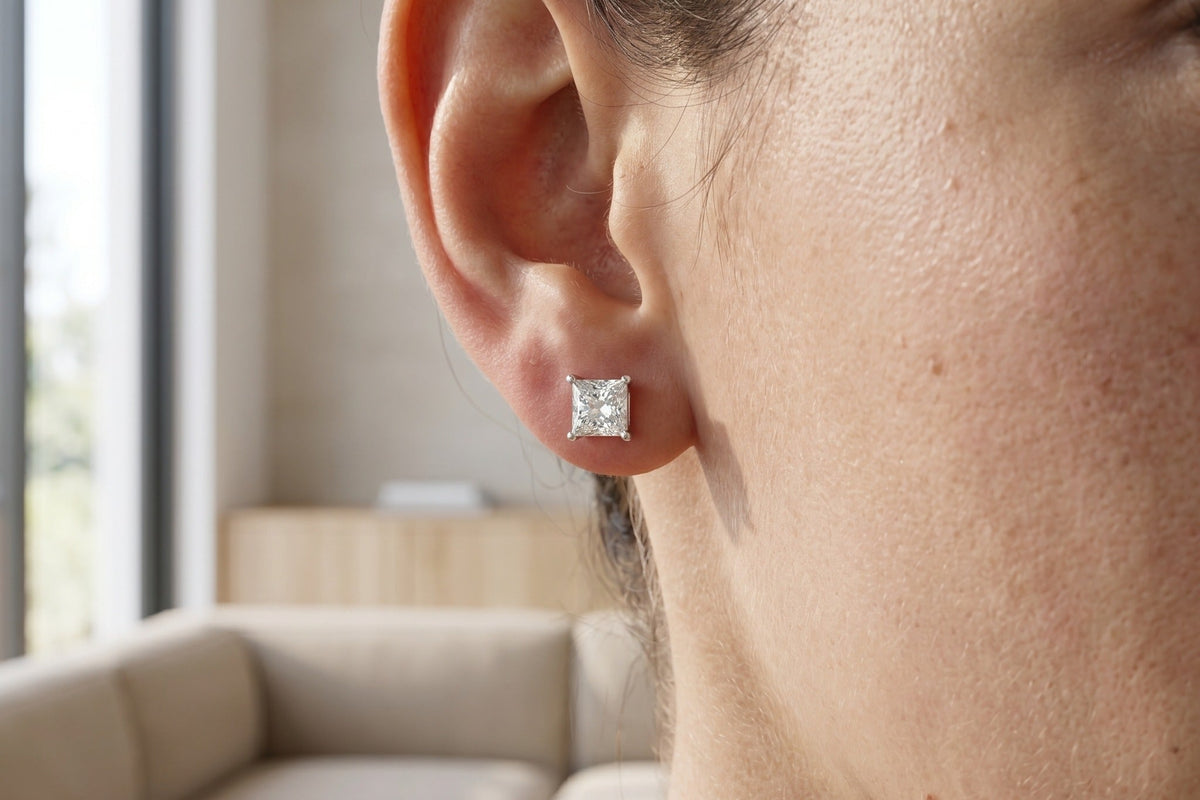
Consider the arithmetic. A 5 carat tennis bracelet at CAD 2,720 in 10K becomes CAD 1,904 in silver. The CAD 816 released is enough to add a 1 carat pair of studs at CAD 711 and still have change. The diamonds in both pieces are identical in specification to the gold version.
The trade offs are real and worth stating. Silver is softer than any gold alloy, so it marks more readily. It tarnishes and needs occasional polishing. And it does not carry the same resale or sentimental weight that gold does for many buyers.
Where it makes most sense is on pieces worn occasionally rather than daily, and on large carat weights where the metal saving is largest in absolute terms. Where it makes least sense is on an engagement ring worn every day for decades.

How should you choose a metal?
Five questions settle it, in this order.
Daily wear favours harder alloys. Choose 10K or 14K gold for a piece worn every day, and consider 18K or silver for pieces worn occasionally, where scratch resistance matters less.
White, yellow and rose cost the same at any karat, so colour is a free decision. Note that lower karats produce stronger rose tones, because more alloy means more copper.
White gold needs replating periodically as the plating wears. If you would rather never think about it, choose platinum, which is naturally white, or pick yellow or rose gold, which are not plated.
Metal is a percentage of the base, so moving from platinum to silver on a large piece frees a substantial sum. If maximum stone size matters more than the mount, take the lighter metal and buy the carats.
Platinum is the densest option and hoops or drops hang from the lobe. For heavy earring designs, a lighter metal is more comfortable as well as less expensive.
Whatever you choose, the stones do not change. Every Draco diamond is IGI certified at E to F colour and VS2 or better clarity in all five metals, so the metal decision is about the mount, the maintenance and the money rather than about quality.
Browse the full range in the complete collection, or see the entry level pieces in the under 2,000 collection.

Metal choice FAQ
How much more does 18K gold cost than 14K?
At Draco, 18K adds 38 percent to the 10K base and 14K adds 18 percent, so 18K costs about 20 percent of the base more than 14K. On the 5 carat emerald cut tennis bracelet that is CAD 3,210 in 14K against CAD 3,754 in 18K, a difference of CAD 544.
Does white, yellow or rose gold cost more?
No. All three colours cost exactly the same at any given karat, because gold alloys of equal purity cost effectively the same to produce. Choose the colour you prefer with no price consequence.
Is platinum worth the extra 45 percent?
It depends on the piece. Platinum never needs rhodium replating, and it displaces rather than wears away when scratched, which makes prongs more secure over decades. On a ring worn daily for many years that is a defensible premium. On a piece worn occasionally it mostly buys weight.
Why is 10K gold cheaper than 14K if both are gold?
Karat measures gold content out of 24. 10K is 41.7 percent gold and 14K is 58.3 percent, so 14K contains materially more of the expensive component. As a side effect 10K is also harder and more scratch resistant, because it contains more hardening alloy.
Will sterling silver tarnish?
Yes. Silver reacts with sulphur compounds in air and darkens over time. It is not damage and polishes off with a cloth. Silver runs 30 percent below the 10K base, which makes it the most effective way to reach a larger carat weight on a fixed budget.
Does the metal change the diamonds?
No. Every Draco stone is IGI certified at E to F colour and VS2 or better clarity regardless of which metal you select. The metal changes the mount, the weight, the maintenance and the price, and nothing about the stones.
Which metal is best for everyday rings?
14K gold for most people. It contains enough alloy to resist scratching well while still reading as proper gold, which is why it is the fine jewellery standard for daily wear. Platinum is the alternative if you want maximum prong security and no replating.
References
- Draco Diamond catalogue pricing, read August 27, 2026.
- International Gemological Institute, diamond grading standards.
Send us a comparable band and we will beat it almost every time
Same IGI certified specification, direct pricing, up to 64 percent below Blue Nile. Founder reviewed, no obligation, a quote back in one to three business days. Every Draco band is IGI certified, E to F colour, VS2 and better, with 30 day returns, a Lifetime Authenticity Guarantee, free resizing, free insured worldwide shipping to 25 markets, and signature on delivery.