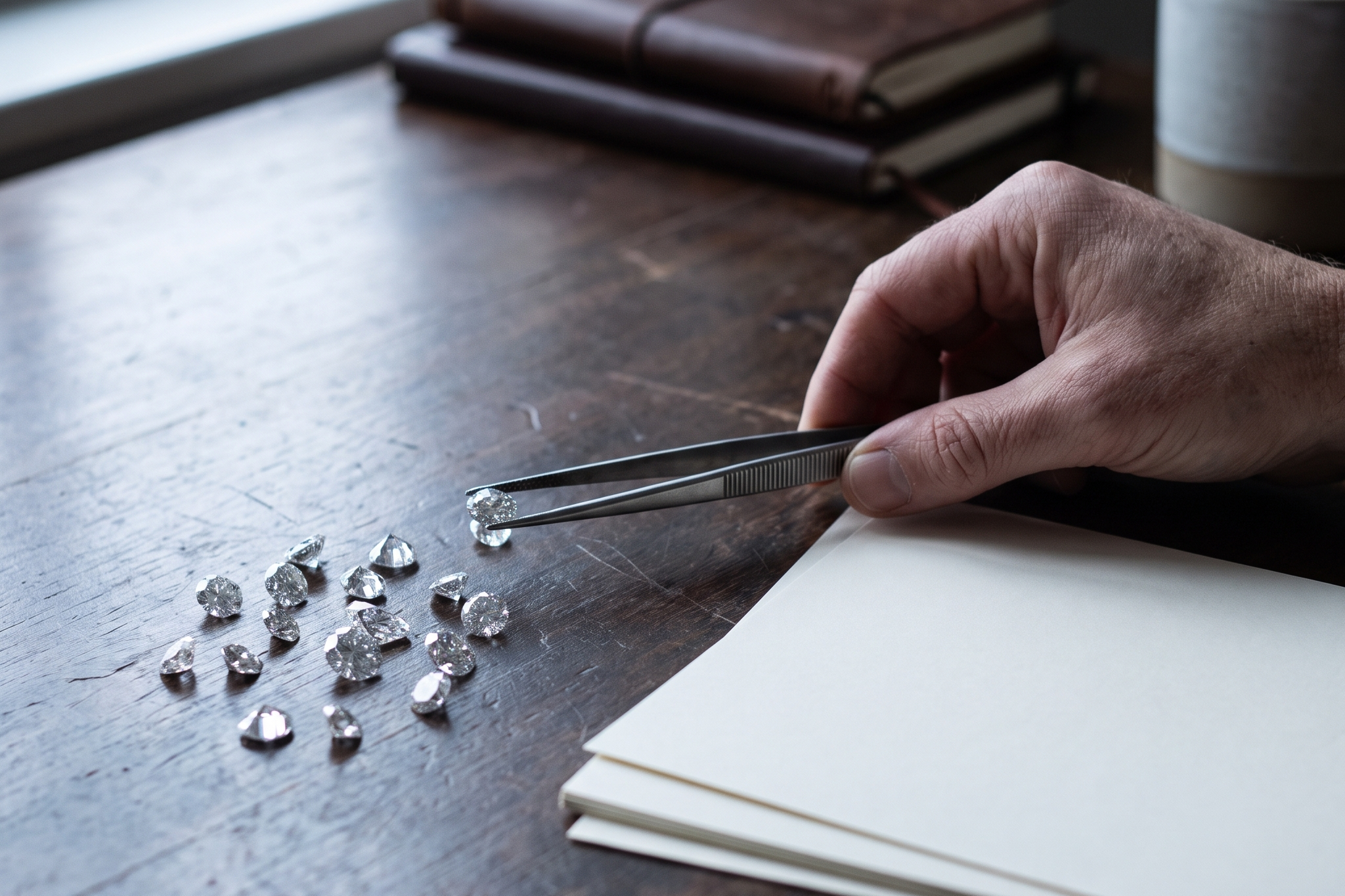
The New Quiet Luxury. When Diamonds Stop Performing
How luxury moved from logos to silence, and what twenty four carats of lab grown diamond look like when the performance is stripped away.
This is a cultural essay on the 2026 quiet luxury moment with the diamond category as the primary case study. The author is the founder of Draco Diamond, a direct to consumer lab grown diamond brand, and discloses this position. Cultural analysis is cited from independent sources.

Key Takeaways
- Quiet luxury is not minimalism. It is the conscious refusal of luxury as performance, theatre, or logo equity.
- The diamond category was reorganized most violently by the shift. Lab grown wholesale prices fell 74 percent between 2020 and 2026, and the heritage retail markup model lost its cultural permission to operate.
- Three forces converged to accelerate the shift: generational succession in luxury spending, direct to consumer infrastructure maturity, and a price gap that heritage retail could not defend with story alone.
- What remains when performance is stripped away is the work. The material. The specification. The maker. A 24 carat lab grown diamond bracelet without a brand stamp is the literal embodiment of this shift.
The shift was visible before anyone gave it a name
The shift was visible before anyone gave it a name. Italian loafers without logos. Cashmere coats in unnamed grey. Watches with movements that cost more than the case. The wealthy stopped advertising themselves around 2022, and by 2024 the rest of the market had caught on. By 2026 the term was everywhere and the meaning was already worn out.
Quiet luxury was the cultural reset of the post pandemic decade. It was sold as minimalism, but it was never about minimalism. The new wealthy did not want less. They wanted more, but distributed differently. More provenance. More craft. More private knowledge. Less performance.
The diamond industry was the last category to absorb the shift, and the most violently rearranged by it. What replaced the old model is still being defined.

What does quiet luxury actually mean?
The phrase escaped fashion criticism around 2022 and entered the broader lexicon within eighteen months. Vogue Business, Business of Fashion, and the Financial Times all published their explanatory pieces. Bain and Company devoted a chapter of its 2025 luxury report to it.1 The shorthand version, repeated everywhere, was simple: stealth wealth, no logos, recognition only by those who know.
The shorthand missed the deeper shift.
Quiet luxury is not minimalism, although it can look like minimalism. It is not stealth wealth, although the wealthy adopted it first. It is not anti consumption, although it rejects certain forms of consumption. It is something more specific: the conscious refusal of luxury as performance.
A logo is a performance. A heritage story written by marketing is a performance. A retail markup that has no defensible relationship to product cost is a performance. Quiet luxury rejects these as theatre dressed up as substance.
Loud Luxury
- Logo on display, brand as identity signal
- Heritage story written by marketing
- Retail markup defended by access and theatre
- Object communicates arrival to an audience
- Price reflects positioning, not production
Quiet Luxury
- Unmarked craft, recognition only by those who know
- Verifiable provenance over invented heritage
- Honest pricing tied to the actual cost of work
- Object exists for the owner, not the audience
- Material substance over performance theatre
Why did the luxury market shift so fast?
Three forces converged.
The first was generational. Millennials and Generation Z replaced Boomers as the dominant luxury spenders around 2024. The new generation values experience over object, transparency over heritage marketing, and craft authentication over brand status. Bain estimates that under 40 buyers will account for over 70 percent of the global luxury market by 2030.2
The second was technological. Direct to consumer infrastructure matured to the point where heritage retail no longer controlled distribution. A buyer in Toronto could now access the same craftsmanship that previously required a New York or London visit.
The third was economic. The price gap between heritage retail and direct to consumer expanded faster than heritage retail could respond. By 2026 the typical gap on a comparable specification piece was 40 to 60 percent across categories.3 Heritage brands defended the gap with story rather than substance, and the story stopped working.
The result was a structural rearrangement of where the cultural permission to call a product luxury actually sits. It no longer sits in the logo. It sits in the work.

What does quiet luxury look like in diamonds?
The diamond category was structurally unprepared for the shift.
The data that ended the scarcity argument
Lab grown diamond wholesale price per carat, 2020 to 2026. 1 carat round brilliant, VS clarity, DEF color. Indexed to 100 at January 2020.
Source: Edahn Golan Diamond Research quarterly wholesale tracking, 2020 to 2026. The collapse broke the scarcity argument that underpinned diamond category pricing for ninety years.
For ninety years, the industry built its narrative on artificial scarcity, romance marketing, and retail markup levels that would not survive in any category with normal price transparency. Lab grown diamonds, mature since 2018, broke the scarcity argument. Direct to consumer brands broke the markup. By 2026 a five carat IGI certified oval tennis bracelet ships for under two thousand US dollars from a Canadian brand and prices closer to five thousand five hundred from a US legacy retailer, and the diamonds are physically and certifiably identical.4 The structural backdrop is analyzed in the companion piece on the 74 percent lab diamond wholesale price collapse.
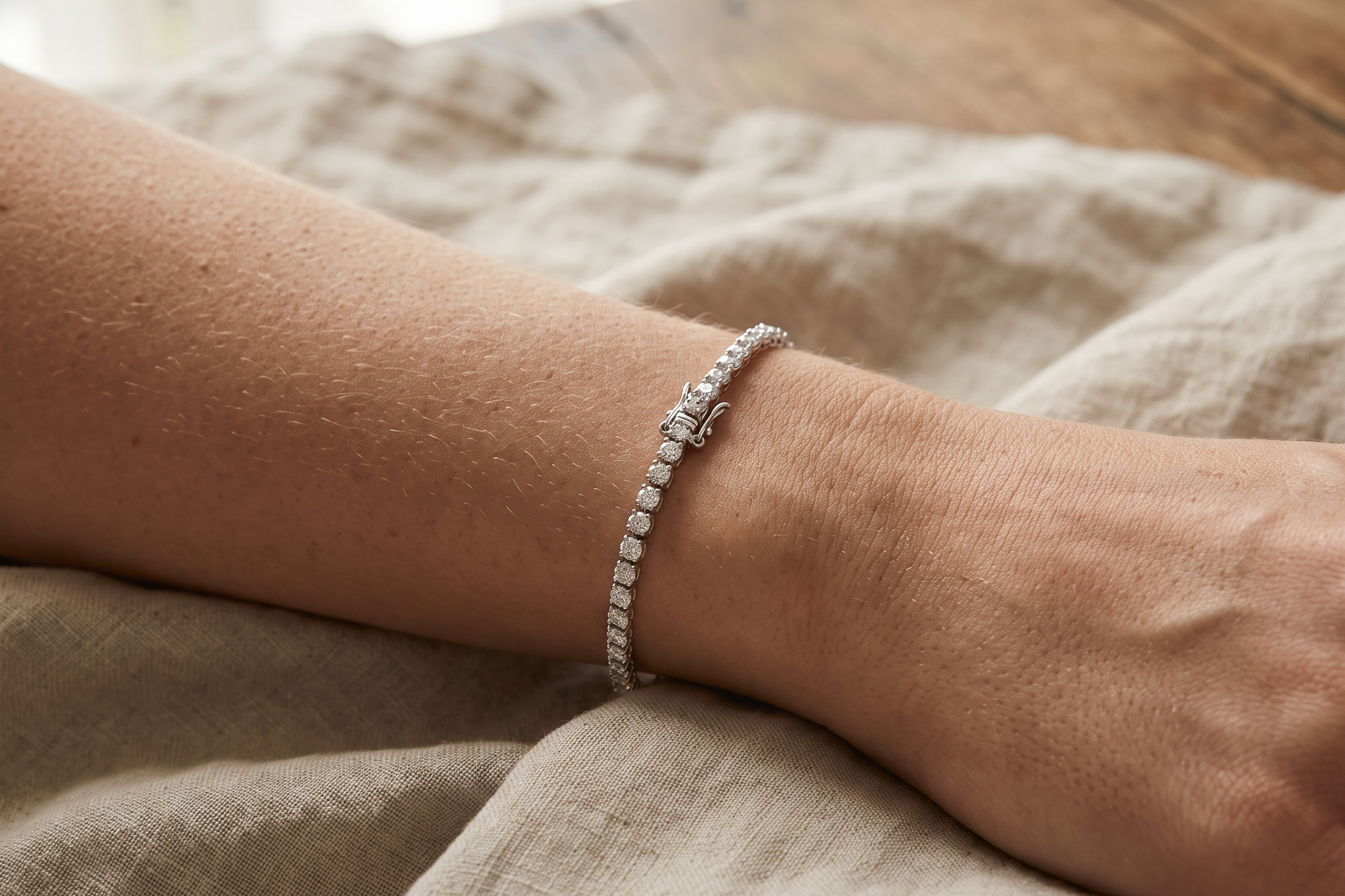
The Clover bracelet is one expression of what quiet luxury actually looks like in this category. Twenty four point five four total carat weight. Two hundred and ninety eight individually IGI certified stones. Available in white gold or yellow gold. A piece that would price in the mid to high five figures from a heritage retailer in 2020 now ships from Canada for approximately the cost of a serious watch movement.
It does not have a logo on the clasp. The maker is not stamped across the box. The price reflects the actual cost of the work. The provenance is verifiable. The certification travels with the piece.
Quiet luxury is not the absence of luxury. It is the absence of performance.
The Draco Editorial

What happens when luxury stops needing to perform?
The first thing to fall away is the markup that funded the performance. Without the boutique experience, without the celebrity campaign, without the heritage story, the retail price collapses toward something close to the actual cost of making the object. This is what direct to consumer brands across categories have been demonstrating for fifteen years. The diamond category was simply the last to be exposed to it. The structural margin migration analysis tracks exactly where the captured value went.
The second thing to fall away is the moat. Heritage brands previously protected their economics behind a moat made of story and access. When access becomes universal and story becomes commodified, the moat is gone. What remains is the work itself, and brands without genuine work to defend find themselves with nothing.
The third thing that happens is harder to measure. The cultural meaning of owning the object shifts. A logo bag once communicated that the buyer had arrived. A logo bag in 2026 communicates that the buyer wants to be seen arriving. The new luxury buyer wants neither. The object is for the owner, not for the audience.
A 24 carat diamond bracelet without a brand stamp is the literal embodiment of this shift.
Frequently asked questions about quiet luxury in 2026
What is quiet luxury? +
When did quiet luxury start? +
How does quiet luxury apply to diamonds? +
Is quiet luxury a sustainable trend? +
What is the Clover bracelet? +
Sources and citations
- Bain and Company. Altagamma Worldwide Luxury Market Monitor. 2025 edition. Chapter on cultural shifts in luxury consumption and the emergence of quiet luxury as a structural market force.
- Bain and Company estimates on generational succession in luxury market participation through 2030. Published in the firm's recurring luxury market analysis.
- Cross category direct to consumer versus heritage retail price gap analysis. Estimated 40 to 60 percent gap typical across luxury watches, leather goods, jewelry, and fashion in 2026.
- Draco Diamond catalog pricing as of May 2026. Comparable specification verification against major US online legacy retailers. All Draco pieces ship with full IGI certification.
Shop the same specifications, at quiet luxury prices
IGI certified across the catalog. Free worldwide shipping to 25 markets. Lifetime authenticity guarantee. Thirty day returns.