Lab Diamond Price Per Carat 2026: $409 to $600 by Size
Lab Grown Diamond Price Per Carat 2026: Full Data by Size
US retail ranges, Canadian direct to consumer pricing, and natural diamond comparisons from 0.5ct to 10ct. Every figure is sourced. Updated May 2026.
- Lab diamond prices fell 74% between 2020 and 2025
- A 2ct lab diamond is $999 CAD direct vs roughly $24,000 for the natural equivalent
- US retailers held margins near 74% as wholesale prices collapsed
- Canadian direct pricing runs 40 to 60% below US retail
Find your price or check a quote.
Drag the slider to see live pricing at any carat weight. Or paste a quote you have been given to see what the markup actually is.
US retail: approximate market range for E/VS2 round brilliant. Natural: US retail estimate, wide variance by stone. Draco: May 2026 catalog, verified. CAD prices reflect actual purchase price for Canadian buyers. Methodology
1ct lab diamond wholesale price has fallen 80% in five years.
USD per carat at wholesale. Major online retail prices follow this curve at a 3 to 5x markup.
A 1 carat lab grown diamond lost 93% of its wholesale value between 2020 and 2025, per Edahn Golan Diamond Research. Most buyers have no idea what that collapse means for what they pay at retail today. This guide documents lab grown diamond retail prices per carat from 0.5ct to 10ct, with US retail ranges, verified Canadian pricing, and natural diamond comparisons. Every figure is sourced.
Section 01 · Reference TableFull Price Table: 0.5ct to 10ct
The table below documents lab grown diamond retail prices across the full carat range. US retail reflects approximate E/VS2 market ranges at major online retailers. Draco Diamond prices are verified May 2026 catalog prices in CAD. Natural diamond ranges are approximate US retail estimates for comparison.
| Carat Weight | US Retail Range (USD) | Natural Diamond (USD) | Price Gap vs Natural | Draco Diamond (CAD) |
|---|---|---|---|---|
| 1ct | $600–$1,100 | $5,000–$8,000 | ~87% cheaper | $711 (1ctw studs) → |
| 2ct | $1,800–$3,000 | $18,000–$30,000 | ~90% cheaper | $999 (2ctw studs) → |
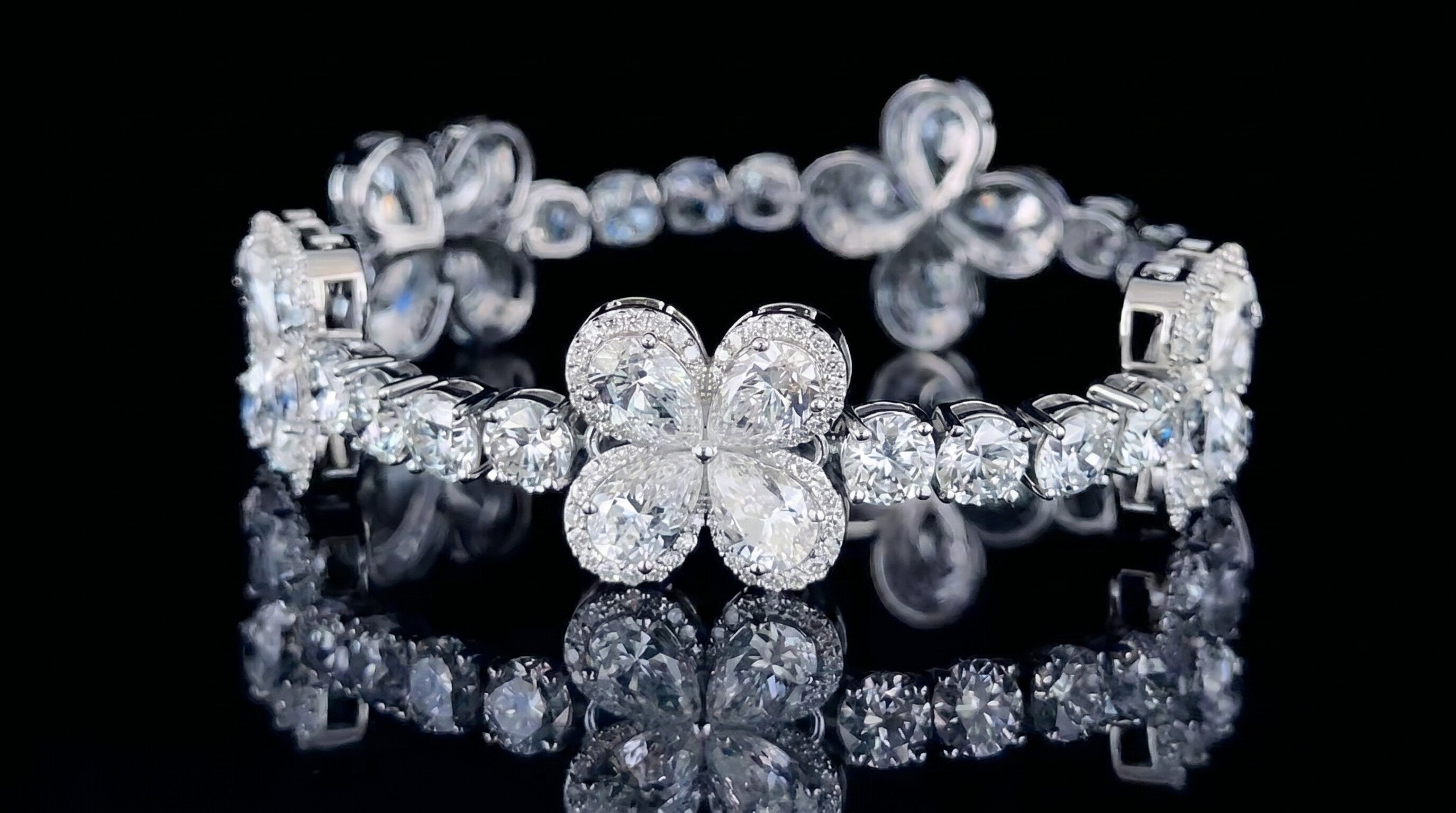
| 3ct | $3,500–$5,500 | $40,000–$65,000 | ~91% cheaper | $1,801 (bracelet) → |
| 5ct | $7,000–$12,000 | $120,000+ | ~93% cheaper | $2,720 (bracelet) → |
| 10ct | $15,000–$25,000 | $500,000+ | ~95% cheaper | $5,200 (9.33ct) → |
US retail: approximate market ranges for E/VS2, round brilliant at major online retailers. Natural diamond prices: approximate US retail estimates, wide variance by retailer and individual stone. Draco Diamond: May 2026 catalog in CAD. IGI certified, E–F color, VS+ clarity. Price gap calculated against approximate natural diamond retail midpoint. Lab grown prices vary significantly by retailer, cut quality, and certification. Exchange rate: 1 CAD = 0.73 USD.
Edahn Golan documented that US specialty jewelers grew gross margins on lab diamonds from 48.9% in 2020 to approximately 74% by 2025. Lab diamond prices fell at the market level, but legacy retailers absorbed much of that decline as margin rather than passing it to buyers. Canadian buyers shopping from US retailers pay that margin plus currency conversion. A Canadian direct to consumer retailer pricing in CAD and sourcing directly reflects the actual market price.
"The lab diamond price collapse was not a promotion. It was a structural market shift driven by manufacturing scale that no single company can reverse."
Garrett McMartin, Founder, Draco Diamond · White Rock, BC
Section 02 · Canadian PricingWhat Canadian Buyers Actually Pay
The following prices are verified from Draco Diamond's May 2026 catalog. All pieces carry full IGI grading reports verifiable at verify.igi.org. E–F color, VS+ clarity minimum across the catalog. All prices in Canadian dollars.
See the gap by product. Same specs. Different retailers.
Draco Diamond: May 2026 catalog in CAD. IGI certified, E–F color, VS+ clarity. James Allen and Blue Nile: January 2026 listed prices in USD. Grown Brilliance also reviewed; pricing falls within the same USD range as Blue Nile. Exchange rate: 1 CAD = 0.73 USD.
Section 03 · Featured PiecesPieces Referenced in This Report
Every Draco price in this report ties to a specific IGI-certified piece. The catalog is fixed-price, not dynamic. What you see here is what you pay at checkout. Free worldwide shipping to 25 markets. Lifetime authenticity guarantee. 30 day returns.


Section 04 · The Natural GapThe Lab vs Natural Price Gap in 2026
The price gap between lab grown and natural diamonds widens non linearly as carat weight increases. A 1ct natural diamond is approximately 7 to 9 times more expensive than its lab grown equivalent at retail. A 5ct natural diamond is approximately 15 times more expensive. A 10ct natural diamond can be 20 times more expensive. This is because large natural diamonds are increasingly rare and command scarcity premiums that lab grown diamonds do not.
Below 1ct, lab is roughly 8x cheaper. Above 5ct, lab is roughly 20x cheaper. The bigger the stone you want, the more lab grown wins.
Natural diamonds above 3 carats are geologically rare. Each large stone is unique and supply is inelastic. Lab grown diamonds above 3 carats can be produced at scale with similar economics to smaller stones. As carat weight increases, natural diamond prices rise exponentially while lab grown prices increase roughly linearly. This is why a 10ct natural diamond can cost 20 times more than its lab grown equivalent while a 1ct natural is only 8 to 10 times more expensive.
Section 05 · Market StructureWhy Lab Grown Diamond Prices Are Low in 2026
Lab grown diamond prices fell 74% from 2020 to 2025, per Edahn Golan Diamond Research. The cause was a 300% expansion in global CVD manufacturing capacity across hundreds of independent producers across global manufacturing hubs. No single company controls supply. The knowledge, equipment, and infrastructure are distributed. This is structurally different from natural diamond mining, where De Beers and a small number of producers historically controlled supply and therefore price.
The annual rate of price decline decelerated to high single digits entering 2026, per Edahn Golan. Prices are stabilizing at historically low levels, not recovering toward 2020 pricing. By 2025, 85.9% of lab diamonds sold were colorless, per BriteCo's November 2025 report, because the premium between colorless and near colorless grades compressed as prices fell. Buyers are now accessing top tier color and clarity at prices that would have been impossible five years ago.
Section 06 · Quick AnswersFrequently Asked Questions
A 1 carat lab grown diamond in E/VS2 specification retails for approximately $600 to $1,100 USD at major online retailers in 2026. At Draco Diamond in Canada, 1ctw stud earrings (0.5ct per ear) are $711 CAD, and a 2ct engagement ring with approximately 1ct center stone starts from $1,801 CAD. Lab grown is approximately 87% cheaper than a natural diamond of equivalent specifications.
A 2 carat lab grown diamond in E/VS2 specification retails for approximately $1,800 to $3,000 USD at major online retailers in 2026. At Draco Diamond in Canada, a 2ct IGI certified engagement ring starts from $1,801 CAD and a 2ctw stud earring set is $999 CAD. The equivalent 2ct natural diamond retails for approximately $18,000 to $30,000 USD, making lab grown approximately 90% cheaper at equivalent specifications.
A 3 carat lab grown diamond in E/VS2 specification retails for approximately $3,500 to $5,500 USD at major online retailers in 2026. At Draco Diamond in Canada, a 3ct IGI certified tennis bracelet is $1,801 CAD. The equivalent 3ct natural diamond retails for approximately $40,000 to $65,000 USD. The price gap widens at higher carat weights because large natural diamonds are increasingly rare while large lab grown diamonds can be produced at scale.
Lab grown diamond prices fell 74% from 2020 to 2025, driven by a 300% expansion in global CVD manufacturing capacity across global manufacturing hubs, per Edahn Golan Diamond Research. No single company controls supply. Prices are now stabilizing at historically low levels. The annual rate of decline decelerated to high single digits entering 2026, meaning prices are finding a floor rather than continuing to fall at 2024 rates.
The structural forces keeping lab grown diamond prices low remain intact. Global CVD manufacturing capacity is distributed across hundreds of independent producers across global manufacturing hubs who operate without coordination. No single company or policy change can reverse the fundamental economics. Edahn Golan Diamond Research estimates the annual rate of price decline has decelerated to high single digits in 2026, suggesting prices are stabilizing at current levels rather than recovering toward 2020 prices.
Most lab diamond price data is published in USD by US based retailers. Canadian buyers face currency conversion on top of US retailer margins. Edahn Golan documented that US specialty jewelers grew gross margins on lab diamonds from 48.9% to 74% between 2020 and 2025, absorbing the price decline as margin rather than passing it to buyers. A Canadian direct to consumer retailer pricing in CAD and sourcing directly reflects the actual market price without that additional margin layer.
Stop paying retail markup. Shop verified Canadian pricing.
Every Draco piece carries a full IGI grading report. E–F color, VS+ clarity minimum across the catalog. 30 day returns. Lifetime authenticity guarantee. Free resizing.
Shop IGI Certified Lab Diamonds at These Prices
Shop these per carat prices directly. Every piece is IGI certified, E to F color, VS2+ clarity, in 10K to 18K gold, made to order in Canada with free insured shipping and 30 day returns.