Diamond True Cost Calculator: What You Are Really Paying For
When you pay $5,000 for a diamond ring, how much of that is the actual stone? Industry margin data shows where the money goes and how much a direct to consumer piece saves.
The author is the founder of Draco Diamond. Retail margin figures cite Edahn Golan Diamond Research industry data. Cost breakdowns are estimates based on industry average gross margin data and individual retailer margins vary. Draco prices are in CAD and reflect the published catalog at the time of writing. Every Draco piece is IGI certified, E to F color, VS2 clarity or better, and verifiable at IGI.org.

Where a $5,000 legacy ring price goes
Estimated split of a $5,000 legacy retail price across cost components, based on Edahn Golan industry average gross margin data.
Source: Edahn Golan Diamond Research industry average gross margin data, 2025. Estimated breakdown, individual retailer margins vary.
What makes up a diamond ring price?
Most buyers assume the price of a diamond ring reflects the cost of the diamond. In reality, a large portion of what you pay at a traditional retailer covers costs that have nothing to do with the stone. Edahn Golan Diamond Research is the primary source for retail margin data in the diamond industry. Their documentation of the 74 percent average gross margin at US specialty jewelers in 2025 is the clearest picture of where retail diamond money actually goes. Understanding the breakdown changes how you shop.
| Component | Share of price | What it covers |
|---|---|---|
| The actual diamond | 25 to 35% | The IGI certified stone. Rises to 45 to 55% at direct to consumer. |
| Setting and metalwork | 8 to 12% | Precious metal, craftsmanship, finishing. The unavoidable tier. |
| Retail overhead | 25 to 35% | Infrastructure, staff, advertising, photography, returns. |
| Retailer profit margin | 20 to 30% | Captured as wholesale prices fell, not passed to the buyer. |
A 14k gold setting in a standard solitaire runs $300 to $600 CAD at most price points, the one tier that does not move much by retailer. The gap between a legacy price and a direct to consumer price lives almost entirely in overhead and margin.
"Lab diamond prices fell 74 percent at the wholesale level from 2020 to 2025. Retail prices at legacy chains did not fall proportionally. The buyer who does not compare is paying 2020 era margins on a stone that costs a fraction of what it did in 2020."
Garrett McMartin, Founder, Draco Diamond
How does the cost break down by retailer type?
The following shows how a $5,000 CAD ring price is distributed across cost components depending on where you buy. Legacy retailer figures are based on Edahn Golan industry gross margin data. Draco figures reflect the published catalog and direct to consumer cost structure.
| Cost component | Legacy retailer (USD) | Draco Diamond (CAD) | Difference |
|---|---|---|---|
| Actual diamond | ~$1,375 (27.5%) | ~$2,500 (50%) | More diamond for the same spend |
| Setting and metal | ~$500 (10%) | ~$500 (10%) | Same |
| Retail overhead | ~$1,500 (30%) | ~$600 (12%) | $900 extra at legacy |
| Retailer profit margin | ~$1,625 (32.5%) | ~$400 (8%) | $1,225 extra at legacy |
| Total price | $5,000 USD | ~$2,750 to $3,000 CAD | Equivalent or better spec, lower price |
Estimated breakdown. Legacy retailer figures based on Edahn Golan industry average gross margin data. Draco figures based on published catalog pricing and direct to consumer cost structure. Individual retailer margins vary.

What do verified price comparisons show?
The following uses verified January 2026 listed prices from leading US online retailers against the Draco catalog. All pieces are IGI certified, VS+ clarity, E to F color, white gold. Competitor figures are shown as a tier range of top US online listings rather than single named prices.
| Product | Draco Diamond (CAD) | Leading US online retailers (USD) |
|---|---|---|
| 2ct engagement ring | From $1,801 | $3,800 to $5,000+ |
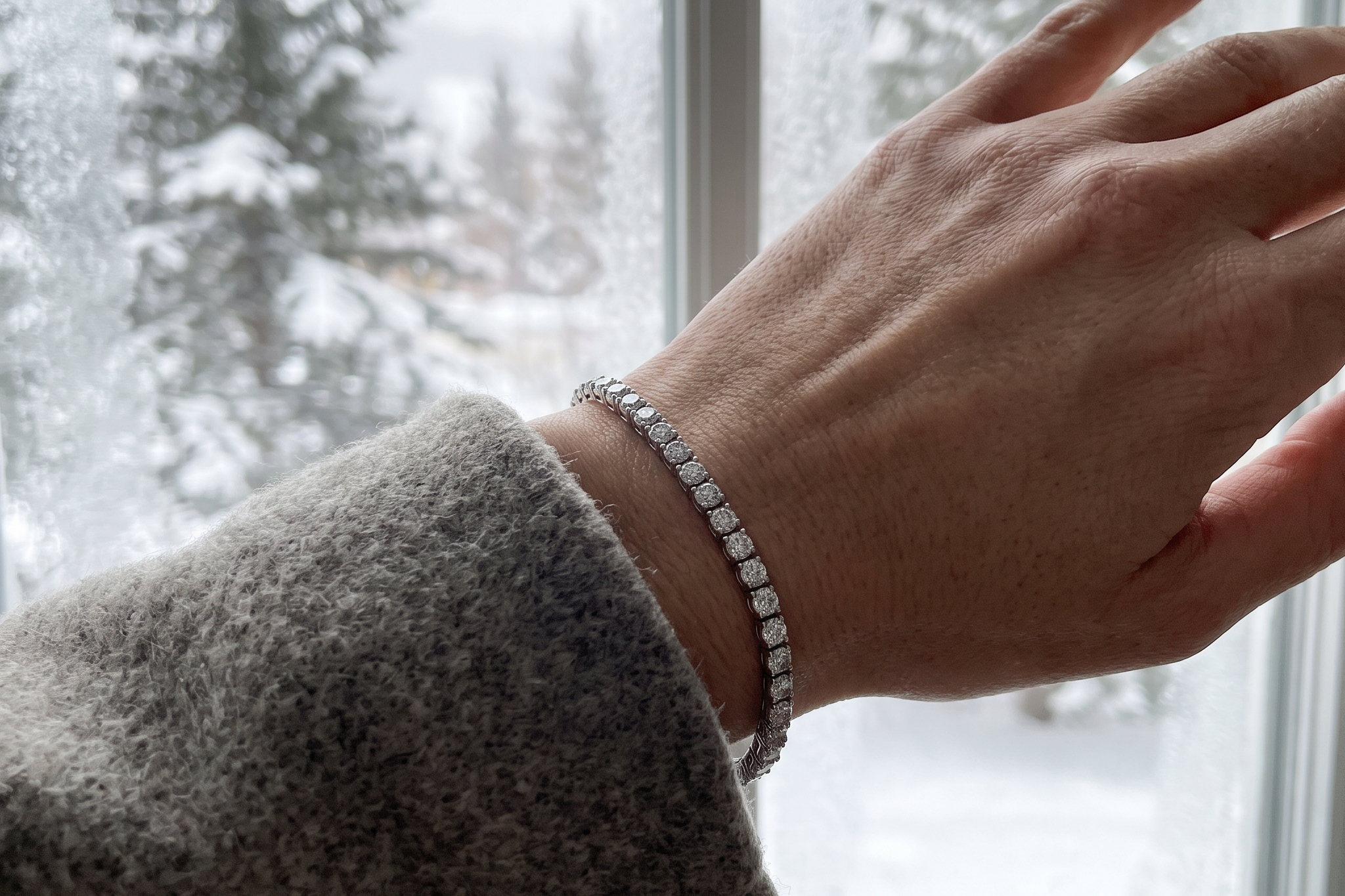
| 3ct tennis bracelet | $1,811 | $3,180 to $4,045 |
| 5ct tennis bracelet | $2,799 | $5,200 to $5,715 |
| 10ct tennis bracelet | $3,970 | $9,400 to $13,890 |
| 1ctw stud earrings | $611 | $780 to $950+ |
Draco: published catalog in CAD, IGI certified, E to F color, VS+ clarity. Competitor ranges: January 2026 listed prices in USD across top US online retailers. Exchange rate 1 CAD equals 0.73 USD. Compare the live catalog at tennis bracelets and earrings.

Why do legacy retailers not lower prices as costs fall?
Lab diamond prices fell 74 percent at the wholesale level from 2020 to 2025, per Edahn Golan Diamond Research. Yet retail prices at legacy chains did not fall proportionally. The reasons are structural, not conspiratorial, but the effect on buyers is the same. As wholesale costs fell, many retailers maintained dollar amount gross income by increasing their percentage markups. If a stone that previously cost $500 wholesale now costs $200, a retailer can charge $600 at retail and still make roughly the same gross income per sale. From the buyer's perspective the price dropped. The retailer captured most of the cost reduction.
Legacy retailers with digital showrooms, staff, and heavy advertising spend have fixed costs that do not move with wholesale diamond prices. These floors mean price reductions can only go so far before margins collapse. Online only direct to consumer brands have significantly lower floor costs and can pass more savings to the buyer.

The full data behind the trend is in the Lab Diamond Price Trend Report 2020 to 2026.
How do you read a diamond price the right way?
Start with the certificate, not the price tag. A full IGI grading report tells you exactly what the stone is, so two listings become comparable. With lab pricing low, the question is no longer whether you can afford the stone; it is how much of your spend reaches it. Ask what share of the price is the diamond, watch for paid certification upgrades on stones that should already carry a full report, and treat resizing or vague processing fees as part of the total. At Draco the certificate is included with every order. To confirm a specific stone first, the report is available on request, and every report verifies at IGI.org.

Diamond true cost FAQ
What percentage of a diamond ring price is the actual diamond?
At a legacy retailer, approximately 25 to 35 percent of what you pay goes toward the actual diamond. The remaining 65 to 75 percent covers retail overhead, retailer profit margin, and setting costs. Edahn Golan documented that US specialty jewelers maintained average gross margins of 74 percent on lab diamonds in 2025. At a direct to consumer retailer that figure rises to approximately 45 to 55 percent going to the diamond.
How much do diamond retailers mark up their prices?
Edahn Golan Diamond Research documented that US specialty jewelers grew gross margins on lab diamonds from 48.9 percent in 2020 to approximately 74 percent by 2025. As wholesale prices fell, retailers absorbed the decline as margin rather than passing it to buyers. A stone that cost a retailer $200 per carat may retail for $600 to $800 per carat at a legacy chain.
Why are lab diamonds cheaper at direct to consumer brands?
Direct to consumer lab diamond brands eliminate the retail overhead layer, operate with lower margin targets, and source directly from manufacturers. Draco prices 40 to 60 percent below comparable leading online listings on identical IGI certified pieces. A 3ct tennis bracelet is $1,811 CAD at Draco versus $3,180 to $4,045 USD across top US online retailers.
Are there hidden fees when buying lab diamonds?
At reputable retailers, the listed price should be your total cost before shipping and applicable taxes. Watch for paid certification upgrades on stones that should already carry a full IGI report, resizing fees, and vague processing fees at checkout. Every Draco piece ships with a full IGI grading report verifiable at IGI.org. No additional certification fees.
How much can I save buying direct to consumer versus a legacy retailer?
In 2020 the gap was 20 to 30 percent. By 2026 it has grown to 40 to 60 percent, because legacy retailers captured the 74 percent wholesale price decline as margin rather than passing it to buyers. On a $5,000 USD legacy ring, the comparable Draco piece often lands near $2,750 to $3,000 CAD on equivalent or better spec.
References
- Edahn Golan, The Lab-Grown Diamond Contradiction, retail gross margin data, accessed June 2026.
- Edahn Golan Diamond Research, quarterly wholesale price reports, accessed June 2026.
- Competitor pricing: leading US online retailer publicly listed prices, January 2026 (USD). Exchange rate 1 CAD equals 0.73 USD.
- Draco Diamond published catalog, dracodiamond.com. Accessed June 2026. Draco prices CAD.
Direct to consumer pricing, no legacy markup
Every Draco piece is IGI certified, E to F color, VS2 clarity or better, in 10K to 18K gold, platinum, or silver. The certificate is included with every order. Free insured worldwide shipping, free ring resizing, 30 day returns, Lifetime Authenticity Guarantee.